On this page
A conservation report may move from a plant's 茎(くき) to its 栽培(さいばい), then from a captive 蝶(ちょう) to its 飼育(しいく) and 繁殖(はんしょく). N1 vocabulary turns the simple outdoor scene from the N4 garden lesson into a record of classification, management and results.
This eight-item set also tests whether you follow the assigned reading instead of the most familiar picture. 種(しゅ), 象(しょう) and 実(じつ) do not mean the same things as 種(たね), 象(ぞう) and 実(み).
Eight records, three jobs
The first pair describes plants. The next three describe animals or biological processes. The final three are reading-sensitive words used in classification and formal reporting.
| Role | Word | Reading | Sense and word class | Phrase to keep |
|---|---|---|---|---|
| Plant part | 茎 | くき | stem, stalk; noun | 茎が伸びる, the stem grows |
| Plant management | 栽培 | さいばい | cultivation; noun / する noun | 野菜を栽培する, cultivate vegetables |
| Animal management | 飼育 | しいく | keeping, raising, rearing; noun / する noun | 動物を飼育する, keep animals |
| Classification | 種 | しゅ | kind, variety, species; noun / suffix | 蝶の一種, a species of butterfly |
| Formal word element | 象 | しょう | form, image, appearance; noun / compound element | 現象を観察する, observe a phenomenon |
| Truth or substance | 実 | じつ | truth, substance, result; noun | 実を上げる, produce results |
| Animal | 蝶 | ちょう | butterfly; noun | 蝶が羽化する, a butterfly emerges |
| Biological process | 繁殖 | はんしょく | reproduction, propagation; noun / する noun | 飼育下で繁殖する, breed in captivity |
Kotobank's entries for 茎, 栽培, 飼育, 種, 象, 実, 蝶 and 繁殖 verify the readings and senses taught here. The definitions come from several published dictionaries and encyclopedias gathered on the service; they establish Japanese usage, not an official JLPT level.
茎 names the plant structure; 栽培 names human management
茎 is the plant axis that supports leaves and buds and carries material through the plant. In an ordinary description, it is the stem or stalk:
この植物は、春になると茎が急に伸びる。
この しょくぶつは、はるに なると くきが きゅうに のびる。
This plant's stems grow rapidly when spring arrives.
傷んだ茎を根元から切った。
いたんだ くきを ねもとから きった。
I cut the damaged stem at its base.
栽培 shifts the focus from the plant's body to deliberate human care. The crop takes を, and the place often takes で:
この農園では薬草を無農薬で栽培している。
この のうえんでは やくそうを むのうやくで さいばいしている。
This farm grows medicinal herbs without pesticides.
The core contrast is 茎が伸びる, where the stem itself grows, against 植物を栽培する, where someone cultivates a plant. Kotobank defines 栽培 as planting seeds or seedlings and raising plants, while also recording specialised extensions such as cultivating aquatic resources. “Plants and crops” is therefore the reliable default, not an absolute boundary for every technical field.
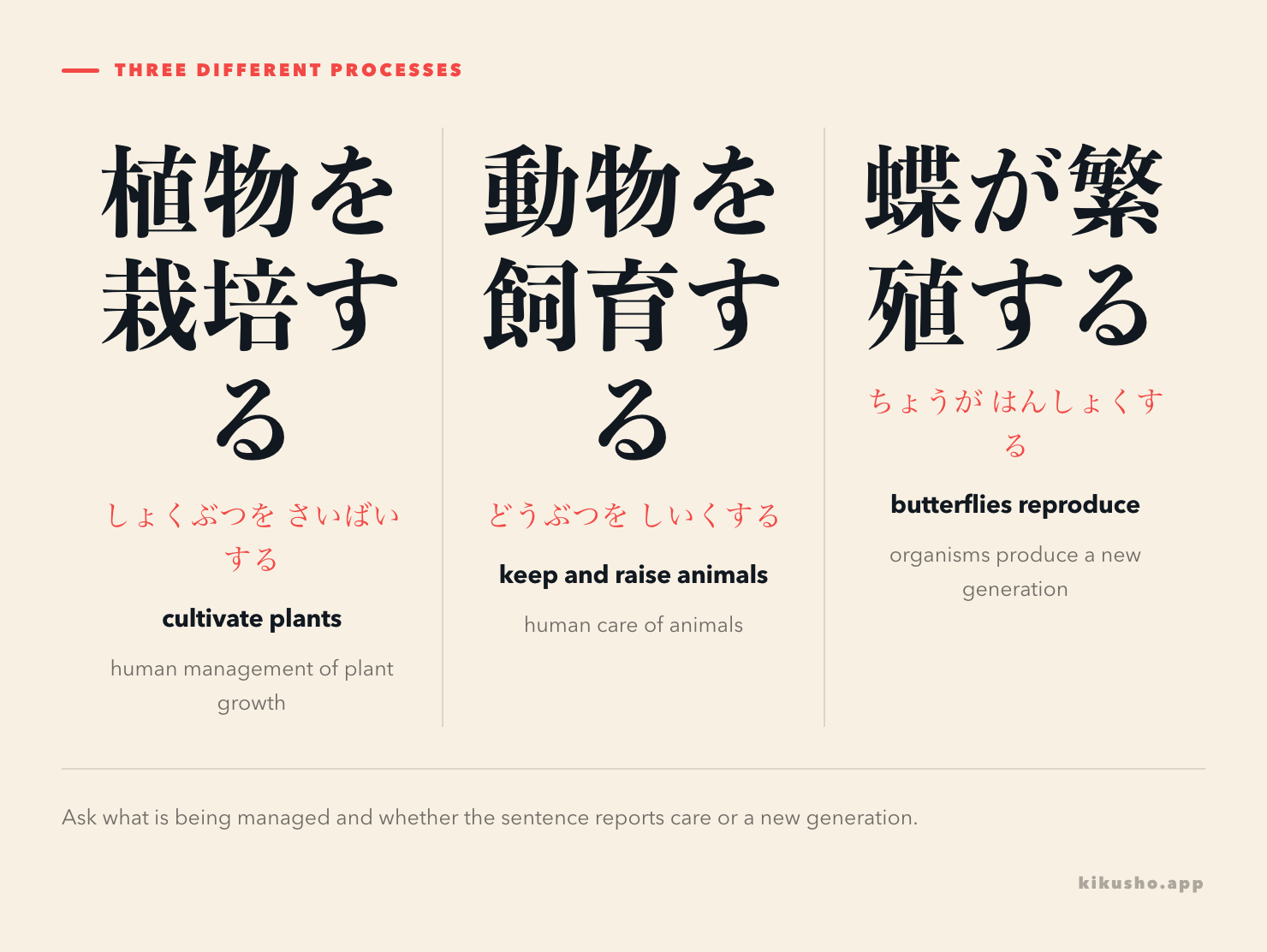
栽培, 飼育 and 繁殖 track different parts of one project
The English verb “raise” can blur three separate viewpoints. Japanese keeps them apart:
| Focus | Natural object or subject | What the phrase reports |
|---|---|---|
| 栽培する | plants and crops with を | a person manages plant growth |
| 飼育する | animals with を | a person feeds, houses and cares for animals |
| 繁殖する | organisms with が or は | organisms reproduce and increase |
研究所では希少な蝶を飼育している。
けんきゅうじょでは きしょうな ちょうを しいくしている。
The research institute keeps rare butterflies.
この蝶は飼育下でも繁殖する。
この ちょうは しいくかでも はんしょくする。
This butterfly reproduces even in captivity.
The first sentence says people maintain the animals. The second says the butterflies reproduce. 飼育下(しいくか) means “under captive conditions” and is common in zoo, laboratory and conservation writing.
繁殖 can cover animals, plants and microorganisms. It stresses the creation of new individuals or an increase in number. The related 生殖(せいしょく) focuses more narrowly on the biological act or system of reproduction. Kotobank's encyclopedia entry for 繁殖 explicitly distinguishes that broader population focus.
蝶 and 種 turn an observation into classification
蝶(ちょう) is the standard noun “butterfly.” In scientific labels, katakana チョウ is also common, but the assigned record tests the kanji spelling and the long vowel ちょう.
調査中に珍しい蝶を発見した。
ちょうさちゅうに めずらしい ちょうを はっけんした。
We discovered a rare butterfly during the survey.
種(しゅ) then classifies it:
この蝶は、この地域にしか生息しない種だ。
この ちょうは、この ちいきにしか せいそくしない しゅだ。
This butterfly is a species found only in this region.
調査では三種の蝶が確認された。
ちょうさでは さんしゅの ちょうが かくにんされた。
Three species of butterfly were confirmed in the survey.
Here 種 works as a biological noun and as a counter-like suffix after a number. It also appears in 希少種(きしょうしゅ), a rare species, 外来種(がいらいしゅ), a non-native species, and 絶滅危惧種(ぜつめつきぐしゅ), an endangered species.
Do not switch to たね. 種(たね) is the concrete seed you sow and can also mean a source or cause. 種(しゅ) is the classification reading assigned here. One independent comparison list places a headword 種 at N3 but links it as たね; that is a different spelling-reading record, not evidence against the N1 しゅ record.
象 and 実 leave the literal garden when their readings change
Two characters look as if they should name an animal and a fruit. Their assigned readings activate different senses.
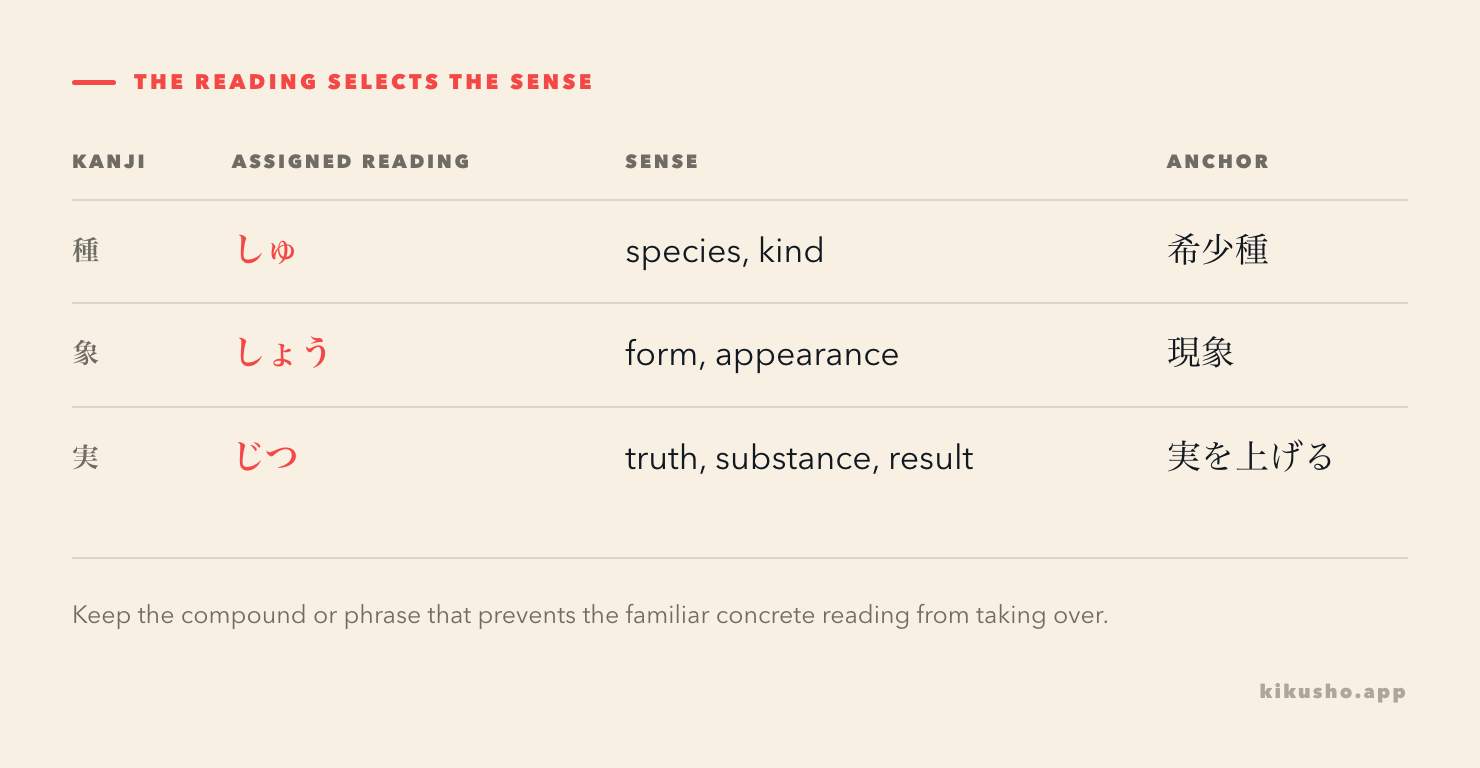
象(しょう) carries “form,” “appearance” or “image.” Modern readers meet it most often inside compounds:
| Compound | Reading | Meaning |
|---|---|---|
| 現象 | げんしょう | phenomenon |
| 気象 | きしょう | weather or atmospheric phenomena |
| 印象 | いんしょう | impression |
| 対象 | たいしょう | object or target of attention |
この現象は気温の上昇と関係している。
この げんしょうは きおんの じょうしょうと かんけいしている。
This phenomenon is related to the rise in temperature.
The standalone noun 象(しょう) can mean a form or appearance in formal or literary language, but it is not the ordinary modern replacement for 現象. An elephant is 象(ぞう). Reading it しょう because the surrounding topic mentions animals creates exactly the error this record is meant to prevent.
実(じつ) names truth, substance or a concrete result:
実を言うと、計画はまだ完成していない。
じつを いうと、けいかくは まだ かんせいしていない。
To tell the truth, the plan is not finished yet.
長年の保護活動がようやく実を上げた。
ながねんの ほごかつどうが ようやく じつを あげた。
Years of conservation work finally produced results.
The plant's fruit is 実(み). The same spelling can therefore remain inside a nature article while the reading moves from a physical fruit to truth, substance or achievement.
Read the report by relationships, not isolated translations
All eight records can fit one short conservation report:
研究施設では希少種の植物を栽培し、茎の成長を記録している。同時に蝶を飼育し、飼育下で繁殖できる条件を調べている。こうした現象を継続して観察した結果、保全活動は着実に実を上げている。
けんきゅうしせつでは きしょうしゅの しょくぶつを さいばいし、くきの せいちょうを きろくしている。どうじに ちょうを しいくし、しいくかで はんしょくできる じょうけんを しらべている。こうした げんしょうを けいぞくして かんさつした けっか、ほぜんかつどうは ちゃくじつに じつを あげている。
The research facility cultivates plants of a rare species and records their stem growth. At the same time, it keeps butterflies and studies the conditions in which they can reproduce in captivity. Continued observation of these phenomena has helped the conservation work produce steady results.
The relationships carry the vocabulary: people 栽培する plants and 飼育する butterflies; organisms 繁殖する; 種 classifies them; 現象 is observed; an effort 実を上げる.
If you capture a greenhouse label, zoo panel or research summary in Kikusho, keep the phrase that selects the reading. 希少種, 現象 and 実を上げる prevent the card from drifting back to たね, ぞう or み when it returns for review.
No exhaustive official JLPT vocabulary list fixes these records to a level. Kikusho's retained baseline inventory places all eight spelling-reading records at N1. Seven have matching observations in two snapshots from the same Tanos/Waller family; 象(しょう) has only one. Nihongo Master independently tags 茎, 栽培, 飼育, 種(しゅ), 蝶 and 繁殖 at N1. Its 象 page labels しょう as “phenomenon” but pairs it with elephant examples that require ぞう, so this lesson rejects those examples and follows the checked dictionary distinction instead. Independent N1 placement for 象(しょう) and 実(じつ) remains unestablished; the level is a study estimate.
Test the report
Field check 1
A diagram labels the plant's stem 茎. Which reading belongs to the label?
- ア. くき
- イ. えだ
- ウ. けい
- エ. み
Field check 2
Which spelling matches しいく, the raising and care of animals?
- ア. 栽培
- イ. 飼育
- ウ. 繁殖
- エ. 生育
Field check 3
Complete the default pairing: 温室で植物を( )。動物園で動物を( )。
- ア. 飼育する / 栽培する
- イ. 繁殖する / 栽培する
- ウ. 栽培する / 飼育する
- エ. 栽培する / 繁殖する
Field check 4
Which sentence focuses on the organisms producing a new generation?
- ア. 研究員が蝶を飼育している。
- イ. 農家が薬草を栽培している。
- ウ. この蝶は春に繁殖する。
- エ. 研究員が茎を観察している。
Field check 5
In 希少種を保護する, how is 種 read and what does it mean?
- ア. たね, seed
- イ. しゅ, species
- ウ. み, fruit
- エ. しょう, form
Field check 6
Which statement correctly distinguishes the two readings of 象?
- ア. しょう means elephant, while ぞう means phenomenon.
- イ. Both readings always mean elephant.
- ウ. ぞう means elephant, while しょう carries form or appearance in words such as 現象.
- エ. しょう is the reading of 蝶.
Field check 7
What does 保護活動が実を上げた mean here?
- ア. The conservation work grew fruit.
- イ. The conservation work produced results.
- ウ. The conservation work planted seeds.
- エ. The conservation work counted species.
Field check 8
Read the sentence: 施設では希少種の植物を栽培し、蝶を飼育して繁殖条件を調べている。 Which summary is accurate?
- ア. The facility cultivates rare plants and keeps butterflies to study breeding conditions.
- イ. The facility grows butterflies and classifies plant stems as fruit.
- ウ. The facility studies elephants but does not manage living organisms.
- エ. The facility reports that every butterfly is a new species.
Review all three reading switches, then open the solutions.
Answers and explanations
Report solution 1
ア. くき. 茎(くき)is a plant stem or stalk. 枝(えだ)is a branch, while 実(み)is a fruit. The on-reading けい appears in compounds such as 地下茎(ちかけい).
Report solution 2
イ. 飼育. 飼育(しいく)is the keeping and raising of animals. 栽培 is cultivation, 繁殖 is reproduction, and 生育 is growth or development.
Report solution 3
ウ. 栽培する / 飼育する. Plants are normally the object of 栽培する, while animals are the object of 飼育する. The pair separates plant cultivation from animal care.
Report solution 4
ウ. この蝶は春に繁殖する. The butterfly is the organism reproducing. The other sentences describe human management or observation.
Report solution 5
イ. しゅ, species. 希少種 means a rare species. 種(たね)is a seed; the surrounding compound selects しゅ.
Report solution 6
ウ. ぞう means elephant, while しょう carries form or appearance in words such as 現象. The spelling alone is insufficient; the reading and compound select the sense.
Report solution 7
イ. The conservation work produced results. 実(じつ)can mean substance or a concrete result, and 実を上げる means to achieve or produce results. Fruit would be 実(み).
Report solution 8
ア. The facility cultivates rare plants and keeps butterflies to study breeding conditions. 栽培 takes the plants as its object, 飼育 takes the butterflies, and 繁殖条件 names the conditions for reproduction.
Common questions
What is the difference between 栽培 and 飼育?
栽培(さいばい)normally focuses on cultivating plants or crops, while 飼育(しいく)focuses on keeping and raising animals under human care. 野菜を栽培する and 動物を飼育する show the basic division.
What is the difference between 飼育 and 繁殖?
飼育 describes human care and management. 繁殖(はんしょく)describes organisms reproducing and increasing in number. An animal can be 飼育される without successfully 繁殖する.
Is 種 read たね or しゅ?
Both readings exist, but they select different uses. 種(たね)is a seed or source. The assigned N1 record 種(しゅ)means a kind or biological species and appears in 一種, 希少種 and 外来種.
Does 象(しょう)mean elephant?
No. Elephant is 象(ぞう). The reading しょう carries the idea of form, appearance or phenomenon and is usually encountered in compounds such as 現象, 気象, 印象 and 対象.