
How to start reading manga in Japanese before you're ready
Nearly all manga prints furigana over every kanji, so the character count is not what stops you. The real wall is dialogue written the way people talk.
10 September 2026 KikushoDownload
 Japanese
Japanese punishes passive study more than most languages: three scripts, readings that shift with context, and a politeness system you only really learn by being corrected. These are notes on keeping what you meet.
Nearly all manga prints furigana over every kanji, so the character count is not what stops you. The real wall is dialogue written the way people talk.
10 September 2026
The same word turns up in kanji one place and kana another. For most words that is a register-and-readability choice, not a right answer — here is how to read it.
6 September 2026
Japanese drops the subject because the sentence already encodes who: giving verbs, feeling words and honorifics all point to a person. Here is how to read them.
4 September 2026
You know the word, then it vanishes the moment you need to say it. Understanding and producing are two different skills, and most study trains only one.
3 September 2026
Japanese groups digits by four, not three, so a million is 百万 — a hundred ten-thousands. Why big numbers stall you, and the comma trick that fixes it.
30 August 2026
Stroke order matters for handwriting and dictionary lookup, not for reading or typing. How much to learn if you capture and review instead of writing by hand.
30 August 2026
Textbook Japanese sounds stiff because it teaches the one register that's safe to teach: explicit and fully polite. What sounds natural is mostly what natives leave out.
29 August 2026
Japanese has no spaces because it doesn't need them: the switch between kanji, hiragana and katakana marks every word boundary. Why, and how to read it.
28 August 2026
You know every word, yet the sentence blurs past. Spoken Japanese drops the gaps, wears down the vowels and fuses whole phrases — and that is what to train.
24 August 2026
You can read the katakana perfectly and still not get the word. Japanese rebuilds a loanword's sound, cuts its length, and often moves its meaning.
19 August 2026
Look-alike kanji stop competing the moment you meet them inside a word. Why the pairs confuse, and why studying them side by side makes it worse.
18 August 2026
Most shōnen manga prints the reading above every kanji, so the character count is not the wall. What stops you is the spoken register underneath.
17 August 2026
Japanese first-person words are nouns, not pronouns, so each says something about you. The commonest choice of all is to leave the word out.
17 August 2026
Japanese has hundreds of counters and you will use about six. Which ones matter, why the numbers reshape them, and what to say when one escapes you.
16 August 2026
Pitch distinguishes fewer words than the famous pairs suggest, and context settles most of them. What it costs, what it buys, and when to start.
14 August 2026
は marks what you and your listener already share; が introduces what they do not yet know. The rule that settles the cases a textbook leaves ambiguous.
13 August 2026
A kanji carries a borrowed Chinese sound and a native Japanese word, sometimes several of each. Where they came from, and how to tell which one applies.
12 August 2026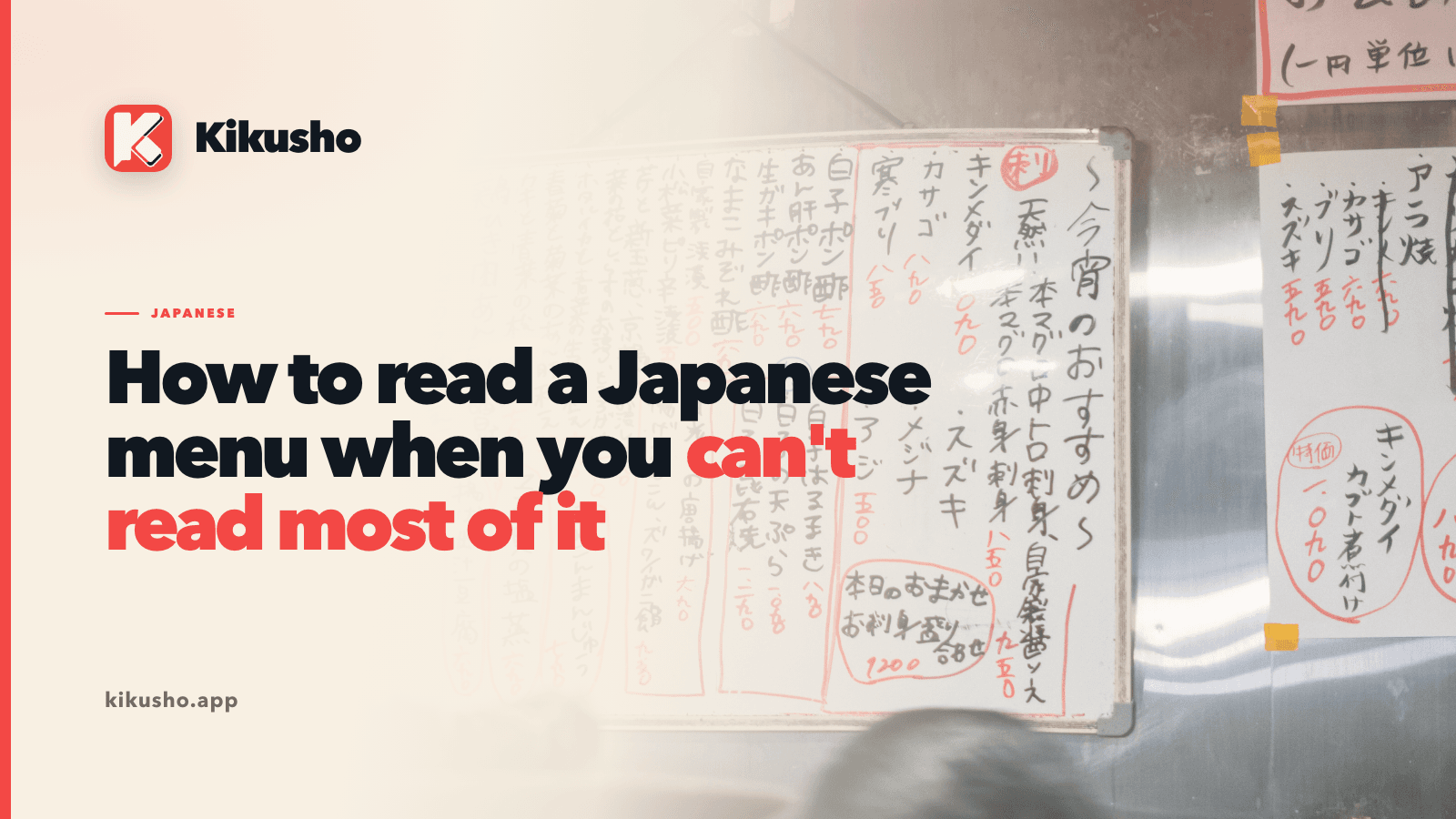
You don't need to read the whole menu: the price, a short list of repeating words, and a way to hold onto the one word that stops you.
11 August 2026
Keigo is not a second vocabulary. It is three levels, two productive patterns and about eight irregular verbs — here is how they fit together.
10 August 2026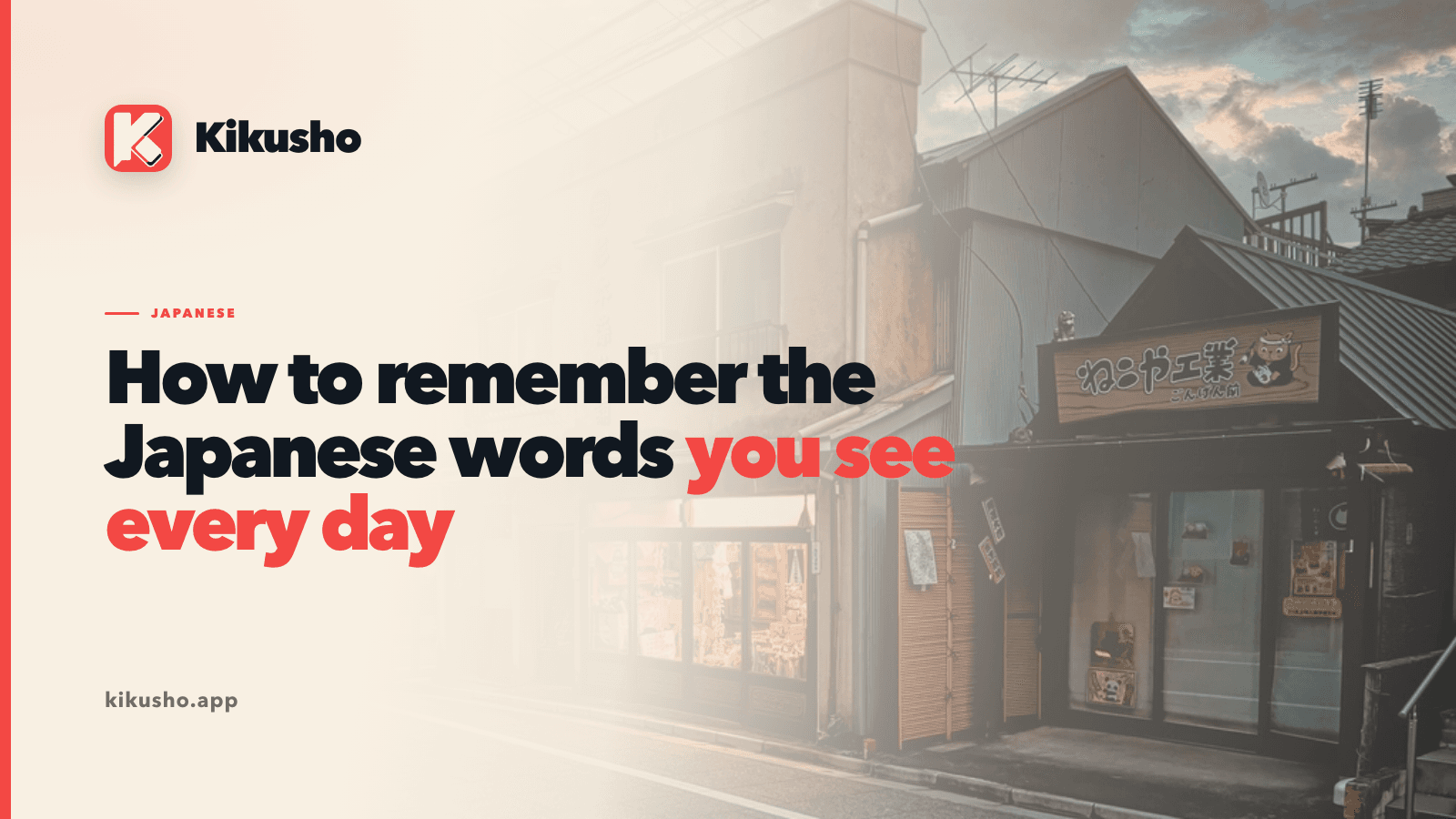
The Japanese on signs, menus and in conversation is the vocabulary most worth keeping. Here is how to hold on to it without a study session.
10 August 2026Other sections
Every level, grammar and vocabulary apart: what each point does, where it stops, and which of two forms the sentence in front of you wants.
Read the section →Spaced repetition, memory, immersion and the habits that decide whether a word survives the week you met it.
Read the section →