
On this page
A complete N3 travel plan needs more than a hotel and a reservation. You take 休暇, check a パスポート, go on a 旅, do some 観光, choose a 宿, arrange 宿泊, describe your 滞在, make a 変更, perhaps 泊める a guest, and return with a 土産.
The ten exact records are 観光(かんこう), 休暇(きゅうか), 宿泊(しゅくはく), 滞在(たいざい), 旅(たび), 泊める(とめる), パスポート, 変更(へんこう), 土産(みやげ) and 宿(やど). Their English glosses overlap, so the useful lesson is the role each word plays: the place, the overnight act, the duration, the host's action, or the change to an existing plan.
Ten records carry one trip from leave to return
| Headword | Part of speech and sense here | Useful combination |
|---|---|---|
| 観光(かんこう) | noun; する verb: sightseeing, tourism | 京都を観光する, sightsee in Kyoto |
| 休暇(きゅうか) | noun: authorised leave, vacation | 休暇を取る, take leave |
| 宿泊(しゅくはく) | noun; する verb: lodging overnight | ホテルに宿泊する, stay overnight at a hotel |
| 滞在(たいざい) | noun; する verb: remain somewhere for a period | 日本に一週間滞在する, stay in Japan for a week |
| 旅(たび) | noun: trip, journey, travel | 旅に出る, set out on a journey |
| 泊める(とめる) | transitive ichidan verb: accommodate someone overnight | 友達を家に泊める, put a friend up at home |
| パスポート | noun: passport | パスポートを提示する, present a passport |
| 変更(へんこう) | noun; する verb: change an established matter | 予約を変更する, change a reservation |
| 土産(みやげ) | noun: souvenir; gift brought from a trip or visit | お土産を買う, buy a souvenir |
| 宿(やど) | noun: lodging, inn, place to stay | 宿を探す, look for lodging |
The table is a route rather than a bag of translations. 休暇 creates the time, 旅 names the journey, 観光 names one purpose, 宿 names the place, and 宿泊 and 滞在 describe two views of being there. The remaining words handle the traveller, the booking, the host and what comes home.
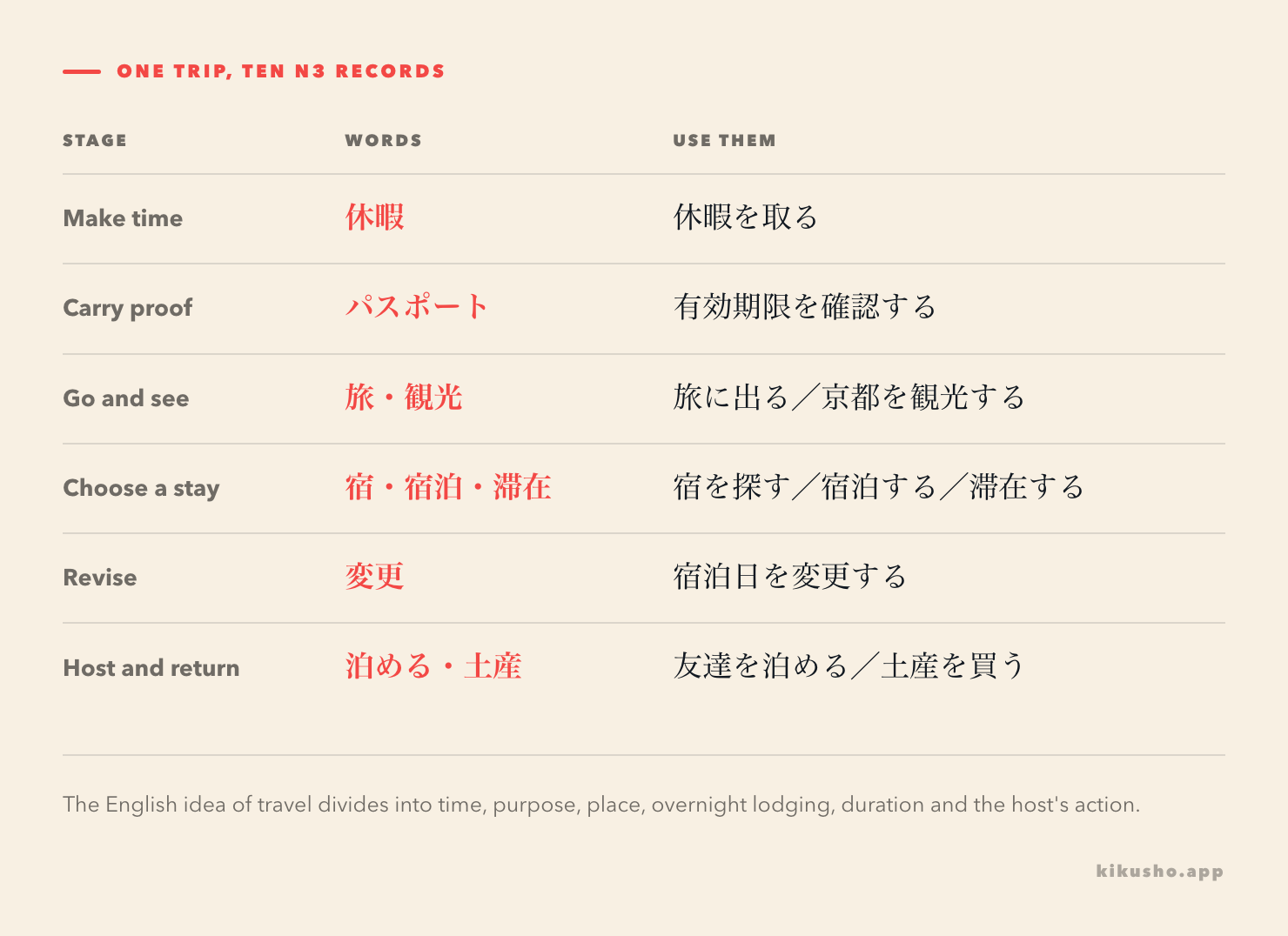
休暇, 旅 and 観光 describe time, journey and purpose
休暇(きゅうか) is time away from work, school or another duty. Its central combination is 休暇を取る. The dictionary definition describes leave recognised by a company, public office or school beyond ordinary scheduled holidays. That makes it narrower and more institutional than the everyday 休み, which can mean a break, a day off, closure or absence.
来月、三日間の休暇を取ります。
らいげつ、みっかかんの きゅうかを とります。
I will take three days of leave next month.
旅(たび) names travel or a journey as an experience. Common shapes include 旅に出る, 一人旅, 旅の途中 and 旅を続ける. 旅行(りょこう) is the more neutral word for a trip as an organised activity and forms 旅行する freely. You can call the same holiday a 旅行 when discussing the itinerary and a 旅 when presenting the journey itself.
観光(かんこう) is sightseeing or tourism. It can take a place as its object in 京都を観光する, and it builds compounds such as 観光地, 観光客 and 観光案内所. The 観光 entry centres seeing the scenery, historic sites and culture of another place. The N4 hotels and sightseeing lesson gives the narrower contrast: a traveller may 観光する across Kyoto and 見物する one temple, festival or garden.
休暇中は奈良を観光してから、京都へ旅を続けます。
きゅうかちゅうは ならを かんこうしてから、きょうとへ たびを つづけます。
During my vacation, I will sightsee in Nara and then continue my journey to Kyoto.
宿, 宿泊 and 滞在 answer three different questions
Ask three questions: Where is the lodging? Did the person stay overnight? How long did the person remain in the area? The answers point to different words.
- 宿(やど) is the lodging place: 宿を探す, 宿を予約する, 宿に着く.
- 宿泊(しゅくはく) is the act or service of lodging overnight: ホテルに宿泊する, 宿泊費, 宿泊者.
- 滞在(たいざい) is remaining in a place for a period: 京都に三日間滞在する, 滞在期間, 滞在先.
The 宿 entry includes a temporary place to stay, an inn and the act of lodging. Modern travel sentences most often use it for the place. 宿 is broad: it does not by itself promise a ryokan, hotel or particular room style.
宿泊 requires an overnight component. Bunpro's N3 宿泊 entry classifies it as a noun and する verb and defines it as staying overnight at an establishment. The Tourism Agency likewise defines legal 宿泊 through using a facility with bedding, which keeps the idea tied to an overnight lodging service.
滞在 is about time spent elsewhere. The dictionary entry defines it as going elsewhere and remaining there for a period. It therefore works for 空港に三時間滞在する, 日本に一年間滞在する and a multi-night hotel visit. Only some of those are naturally 宿泊.
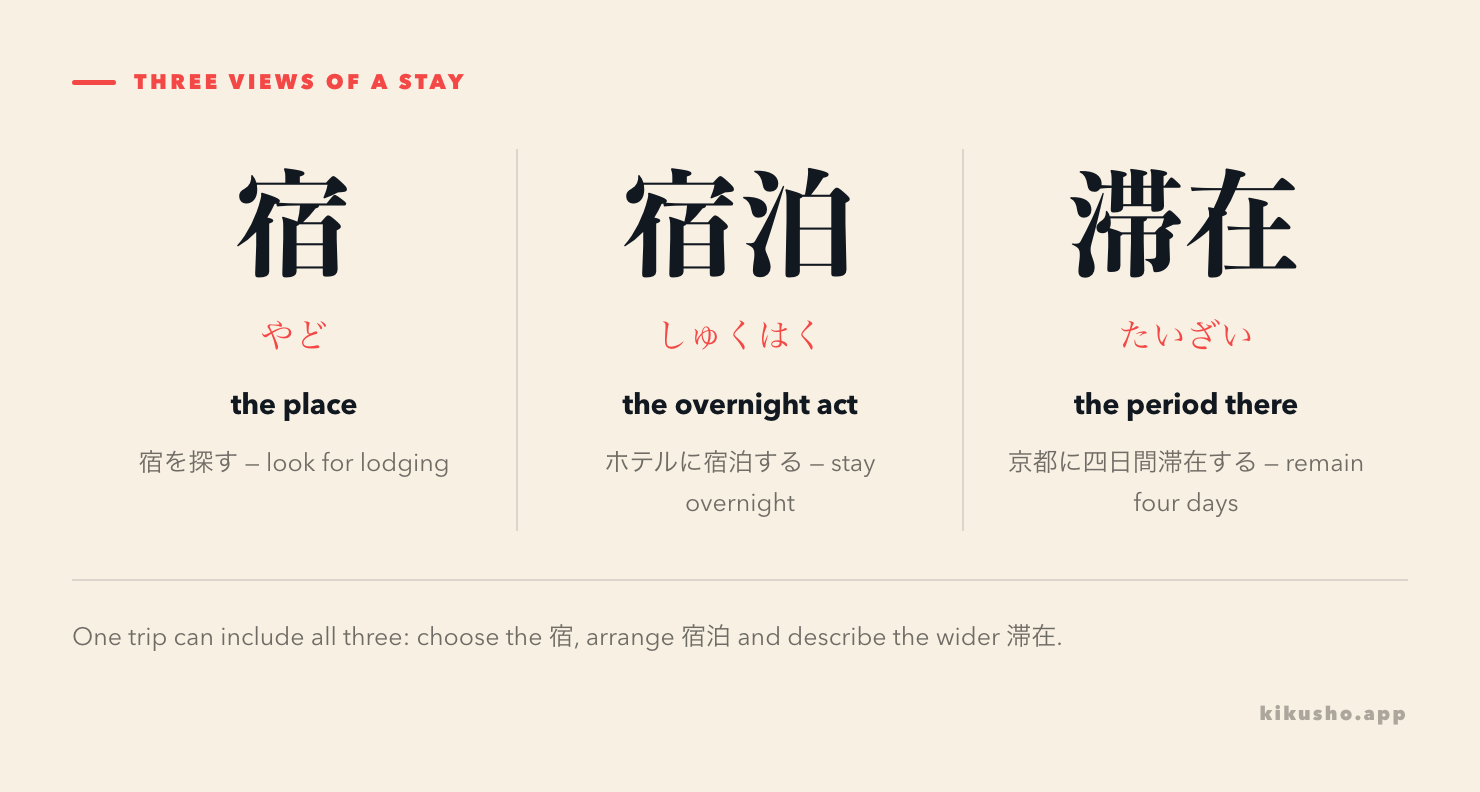
駅の近くに宿を取り、そこに二泊しました。京都には三日間滞在しました。
えきの ちかくに やどを とり、そこに にはくしました。きょうとには みっかかん たいざいしました。
I found lodging near the station and stayed there for two nights. I remained in Kyoto for three days.
The city stay lasts three days, while the lodging accounts for two nights. That is why replacing every 滞在 with 宿泊 loses information rather than merely changing style.
泊める gives the host the transitive role
The N4 verb 泊まる(とまる) describes the guest staying overnight. 泊める(とめる) gives the host control of that event and takes the person accommodated as its object.
友達が私の家に泊まります。
ともだちが わたしの いえに とまります。
My friend will stay at my house.
私は友達を家に泊めます。
わたしは ともだちを いえに とめます。
I will put my friend up at my house.
The dictionary entry for 泊める gives both accommodating someone and anchoring a vessel. This lesson uses the first sense. It is an ichidan verb: 泊めます, 泊めて, 泊めた, 泊めない. 一晩泊めてもらえませんか reverses the social viewpoint: the guest asks to receive the favour of being accommodated for one night.
The level label is disputed. Kikusho's assigned open N3 row places 泊める at N3, while its two Tanos/Waller descendants place it at N2 and Bunpro also labels it N2. The form remains in this N3 set because it is the precise transitive partner learners need beside familiar 泊まる; the article records the disagreement rather than pretending the lists agree.
パスポート and 変更 keep the reservation usable
パスポート normally means the official passport or 旅券 in this travel set. Useful combinations are パスポートを申請する, パスポートを提示する, パスポートの有効期限 and パスポート番号. The word can also mean an admission pass, as in 年間パスポート, but the travel document is selected by the airport and overseas context.
出発前にパスポートの有効期限を確認してください。
しゅっぱつまえに パスポートの ゆうこうきげんを かくにんしてください。
Please check your passport's expiration date before departure.
Japan's Ministry of Foreign Affairs passport guidance uses パスポート, 有効期間 and 残存有効期間 in exactly this planning context. It also warns that destination countries can require a certain period of validity to remain.
変更(へんこう) is a change to something already decided, arranged or specified. The dictionary entry gives 計画を変更する as its model. Travel adds 予約を変更する, 宿泊日を変更する, 変更を申し込む and 変更可能.
都合が悪くなったので、宿泊日を金曜日に変更しました。
つごうが わるく なったので、しゅくはくびを きんようびに へんこうしました。
My circumstances changed, so I moved the lodging date to Friday.
変化(へんか) usually describes a condition changing, such as weather or appearance. 変更 instead fits an intentional revision to a reservation, schedule, address or setting. The booking exists first; someone then changes one of its defined details.
土産 is the item that comes home or arrives with a visitor
土産 is read みやげ in this set. お土産 is the ordinary polite or friendly form for a souvenir bought on a trip or a gift brought back for someone. It can also be a gift carried when visiting a person, especially in 手土産(てみやげ).
家族に京都の菓子をお土産として買いました。
かぞくに きょうとの かしを おみやげとして かいました。
I bought Kyoto sweets as a souvenir for my family.
The 土産 reference covers both local products brought home from travel and gifts taken on a visit. The spelling has a second reading that should not steal this word from N3: どさん is a rare, formal word for the produce of a region. The rare-kanji reading lesson teaches that recognition problem; everyday souvenir sentences here use みやげ.
One itinerary uses every record without flattening them
来月、休暇を取って京都へ旅に出ます。観光のため、駅の近くの宿を予約しました。宿泊日を変更したので、宿に新しい日程を伝えました。京都には四日間滞在し、帰る前に家族への土産を買います。外国から来る友達を、旅行の前日に私の家に一晩泊める予定です。友達にはパスポートの有効期限も確認してもらいました。
らいげつ、きゅうかを とって きょうとへ たびに でます。かんこうの ため、えきの ちかくの やどを よやくしました。しゅくはくびを へんこうしたので、やどに あたらしい にっていを つたえました。きょうとには よっかかん たいざいし、かえる まえに かぞくへの みやげを かいます。がいこくから くる ともだちを、りょこうの ぜんじつに わたしの いえに ひとばん とめる よていです。ともだちには パスポートの ゆうこうきげんも かくにんして もらいました。
Next month I will take leave and set out for Kyoto. For sightseeing, I reserved lodging near the station. Because I changed the lodging date, I informed the inn of the new schedule. I will stay in Kyoto for four days and buy souvenirs for my family before returning. I plan to put up a friend arriving from abroad at my home the night before the trip. I also asked my friend to check the passport's expiration date.
Each noun retains its job. The 宿 receives the reservation, 宿泊日 is the overnight detail that changes, and Kyoto is the place of 滞在. The friend is marked by を with 泊める because the speaker is hosting, while the passport remains the friend's document.
The N3 rail lesson continues the same journey with 発車, ダイヤ, 乗客, 遅れ and 混雑. Together the two lessons separate the accommodation plan from the transport system used to reach it.
Current N3 resources independently place 観光, 宿泊 and other travel language around this level. Onigiri Anki's N3 travel-and-places guide includes 観光 and 宿泊, while Bunpro independently labels 宿泊, 滞在 and 休暇 as N3. Kikusho's two principal baseline files share the Tanos/Waller family, so they count as one evidence family. The JLPT publishes no exhaustive current vocabulary syllabus; these labels guide study rather than define an official word boundary.
When you capture one of these words in Kikusho, save the clause that reveals its role. 宿 alone means lodging, but 宿を探す marks it as the place sought; 京都に滞在する records duration and place; 友達を泊める preserves the transitive host viewpoint. That small piece of context is what stops three English translations of “stay” from collapsing into one card.
Complete the travel plan before opening the explanations
1 — Read the overnight-lodging word. How is 宿泊 read?
- ア. しゅくどまり
- イ. しゅくはく
- ウ. やどはく
- エ. じゅくぱく
2 — Choose the period in a place. Which word best completes the sentence?
仕事で大阪に五日間__しました。
- ア. 宿
- イ. 土産
- ウ. 滞在
- エ. 変更
3 — Name the lodging place. Which word completes the sentence naturally?
今夜泊まる__を探しています。
- ア. 宿
- イ. 休暇
- ウ. 観光
- エ. パスポート
4 — Give the host the action. Which sentence means “I will put my friend up at my house”?
- ア. 友達が私の家を泊めます。
- イ. 友達を私の家に泊めます。
- ウ. 友達に私の家を宿泊します。
- エ. 友達を私の家に滞在されます。
5 — Take authorised time away. Which combination is natural?
- ア. 休暇を取る
- イ. 休暇を泊める
- ウ. 休暇に提示する
- エ. 休暇が宿泊する
6 — Revise the reservation. Which sentence says the lodging date was changed to Friday?
- ア. 宿泊日が金曜日を観光しました。
- イ. 宿泊日を金曜日で土産しました。
- ウ. 宿泊日を金曜日に変更しました。
- エ. 宿泊日に金曜日を滞在しました。
7 — Read the everyday souvenir. In 京都で家族への土産を買いました, how is 土産 read and what does it mean?
- ア. どさん, the region's produce as a formal category
- イ. とさん, an accommodation charge
- ウ. みやげ, a souvenir or gift from the trip
- エ. つちうみ, a tourist destination
8 — Read the whole arrangement. What is planned?
休暇中に京都を観光します。駅前の宿に三泊し、京都には四日間滞在します。帰国する友達を前日に家に泊める予定です。
- ア. A four-night hotel stay with no guest and no sightseeing.
- イ. Three nights at lodging during a four-day Kyoto stay, plus hosting a departing friend the previous day.
- ウ. A passport change and a four-day business meeting at the station.
- エ. Buying three souvenirs before cancelling the vacation.
Answers and explanations
The questions move from individual readings to the roles inside the final itinerary.
1. Choose イ, しゅくはく. 宿泊 is the noun and する verb for lodging overnight. 宿 by itself can be read やど in the lodging-place sense, but that reading does not carry over to this compound.
2. Choose ウ, 滞在. The five-day period spent in Osaka selects 滞在する. The sentence does not say whether every night was spent in commercial lodging, so 宿泊 would add information that is not present.
3. Choose ア, 宿. 泊まる宿を探す means look for the lodging where one will stay. The other choices name leave, sightseeing and a document, not the place.
4. Choose イ. The host is the omitted subject, the guest 友達 takes を, and the hosting location takes に: 友達を家に泊める. 泊まる would instead make the friend the subject of staying.
5. Choose ア. 休暇を取る is the standard combination for taking leave or vacation. The other verbs assign 休暇 roles it cannot fill.
6. Choose ウ. A defined booking detail takes を with 変更する, and the new date takes に: 宿泊日を金曜日に変更する.
7. Choose ウ, みやげ. In an ordinary travel sentence, 土産(みやげ) is a souvenir or gift. どさん is a real but rare reading for regional produce and does not fit the family-gift context.
8. Choose イ. 宿に三泊 gives three lodging nights, 京都には四日間滞在 gives the wider four-day presence, and 友達を家に泊める makes the speaker the host for the friend on the preceding day.
Common questions
What is the difference between 宿泊 and 滞在?
宿泊(しゅくはく) specifically involves lodging overnight. 滞在(たいざい) means remaining in a place for a period, whether that period is one afternoon, several hotel nights or a year abroad. A hotel guest can both ホテルに宿泊する and 京都に三日間滞在する, but the words describe different parts of the stay.
What is the difference between 泊まる and 泊める?
泊まる(とまる) is intransitive: the guest stays overnight, as in 友達が家に泊まる. 泊める(とめる) is transitive: a host accommodates someone, as in 友達を家に泊める. The person being accommodated takes を with 泊める.
What is the difference between 旅 and 旅行?
Both can mean a trip or travel. 旅行 is the neutral word for an organised trip and readily forms 旅行する. 旅(たび) often presents the journey as an experience and appears in combinations such as 旅に出る, 一人旅 and 旅の途中.
How is 土産 read in everyday Japanese?
土産 is normally read みやげ when it means a souvenir or a gift brought from a trip or visit; お土産 is especially common. The rare reading どさん means the produce of a region and belongs to a different, advanced recognition problem.