On this page
Japanese uses 生物(せいぶつ) for living organisms and 植物(しょくぶつ) for plants. This N3 set adds eight animal names, four familiar trees or crops, the verb 飼う, and a complete plant cycle from 種 to 実.
The 22-word set
| Group | Word | Reading | Word class and core sense | Phrase to keep |
|---|---|---|---|---|
| Category | 生物 | せいぶつ | noun; living thing, organism | 海の生物 |
| Category | 植物 | しょくぶつ | noun; plant, vegetation | 植物が育つ |
| Animal | 兎 | うさぎ | noun; rabbit, hare | 兎を飼う |
| Animal | 牛 | うし | noun; cow, cattle | 牛を飼う |
| Animal | 馬 | うま | noun; horse | 馬に乗る |
| Animal | 猿 | さる | noun; monkey | 野生の猿 |
| Animal | 象 | ぞう | noun; elephant | 象の鼻 |
| Animal | 虎 | とら | noun; tiger | 虎の模様 |
| Small creature | 蚊 | か | noun; mosquito | 蚊に刺される |
| Small creature | 貝 | かい | noun; shell, shellfish | 貝を拾う |
| Animal care | 飼う | かう | transitive godan verb; keep or raise an animal | 犬を飼う |
| Crop | 稲 | いね | noun; rice plant | 稲を育てる |
| Tree | 梅 | うめ | noun; Japanese apricot, its tree or fruit | 梅の花 |
| Tree | 桜 | さくら | noun; cherry tree or blossom | 桜が咲く |
| Tree | 松 | まつ | noun; pine tree | 松の木 |
| Plant stage | 種 | たね | noun; seed, source or material | 種をまく |
| Plant stage | 芽 | め | noun; sprout, bud | 芽が出る |
| Plant part | 根 | ね | noun; root | 根を張る |
| Growth | 生える | はえる | intransitive ichidan verb; grow or emerge | 草が生える |
| Development | 育つ | そだつ | intransitive godan verb; grow, develop | 木が育つ |
| Change | 散る | ちる | intransitive godan verb; scatter, fall | 花が散る |
| Result | 実 | み | noun; fruit, nut, seed | 実がなる |
The broad N3 label does not make these words equally difficult. 牛, 馬 and 桜 are concrete, while 生物 has a reading-sensitive homograph and 種, 根 and 実 extend beyond botany. Learn the phrase in the last column so the intended sense arrives with the word.
生物 is wider than 植物
生物(せいぶつ) means a living thing or organism. Animals, plants and microorganisms can all be 生物. 植物(しょくぶつ) is the narrower plant category. Kotobank's overview of 植物 describes plant structures including roots, stems, leaves and buds.
池にはさまざまな生物が暮らしている。
Various organisms live in the pond.
この植物は日陰でもよく育つ。
This plant grows well even in the shade.
Do not import the wrong reading from the source gloss. 生物(なまもの) can mean raw or perishable food, but the assigned record is 生物(せいぶつ), “organism.” A science passage, 生物学 and 海の生物 all select せいぶつ.
The N4 garden lesson names 枝, 葉, 草 and 虫. This lesson moves from those visible parts to the wider category and the processes of growth.
Eight animal names and one care verb
The mammal names form three useful scenes. On a farm you meet 牛(うし) and 馬(うま). In a zoo or wildlife report you may meet 猿(さる), 象(ぞう) and 虎(とら). 兎(うさぎ) can be wild or kept at home.
- 牛を飼う: keep cattle
- 馬に乗る: ride a horse
- 野生の猿: a wild monkey
- 象の鼻: an elephant's trunk
- 虎の模様: a tiger's markings
- 兎が跳ねる: a rabbit hops
牧場では牛と馬を飼っている。
The farm keeps cattle and horses.
動物園で象の親子と二頭の虎を見た。
I saw a parent and baby elephant and two tigers at the zoo.
飼う(かう) takes the animal with を and means keeping or raising it under human care. It does not mean merely feeding one animal once.
子どものころ、白い兎を飼っていた。
When I was a child, I kept a white rabbit.
蚊(か) and 貝(かい) are short enough to confuse in listening. A mosquito is the agent in 蚊に刺される, where に marks what bites you. 貝 covers a shell or shellfish, and 浜辺で貝を拾う means picking up shells at the beach.
蚊に刺されたので、腕がかゆい。
My arm itches because I was bitten by a mosquito.
子どもたちは浜辺で貝を拾った。
The children picked up shells on the beach.
The independently written Amiko N3 animals-and-nature list supplies connected uses such as 犬を飼う and 蚊に刺される. Its topic overlaps this lesson, while Kikusho keeps the assigned 22-record scope and the reading distinctions visible.
稲, 梅, 桜 and 松 name different plants
稲(いね) is the rice plant growing in a field. The harvested grain is 米(こめ), and cooked rice is ご飯(ごはん). Keep the stage clear: 田んぼで稲を育てる, “grow rice plants in a paddy.”
梅(うめ) can name the Japanese apricot tree, its blossom or its fruit. 桜(さくら) likewise names the cherry tree and its blossoms. Their natural seasonal phrases differ:
二月には梅の花が咲き始める。
Japanese apricot blossoms begin to open in February.
春の風で桜の花が散った。
The cherry blossoms scattered in the spring wind.
松(まつ) is a pine. 松の木 makes the tree sense explicit, and 松葉 means pine needles. 梅 and 松 also appear in the traditional ranking 松・竹・梅; this lesson teaches their plant senses.
Follow a plant from 種 to 実
A growth cycle connects seven assigned words without treating them as synonyms:
- 種をまく: sow a seed.
- 芽が出る: a sprout appears.
- 根を張る: roots spread and take hold.
- 茎や葉が生える: stems or leaves emerge.
- 植物が育つ: the plant develops.
- 花が咲き、散る: flowers bloom and fall.
- 実がなる: fruit grows or is borne.
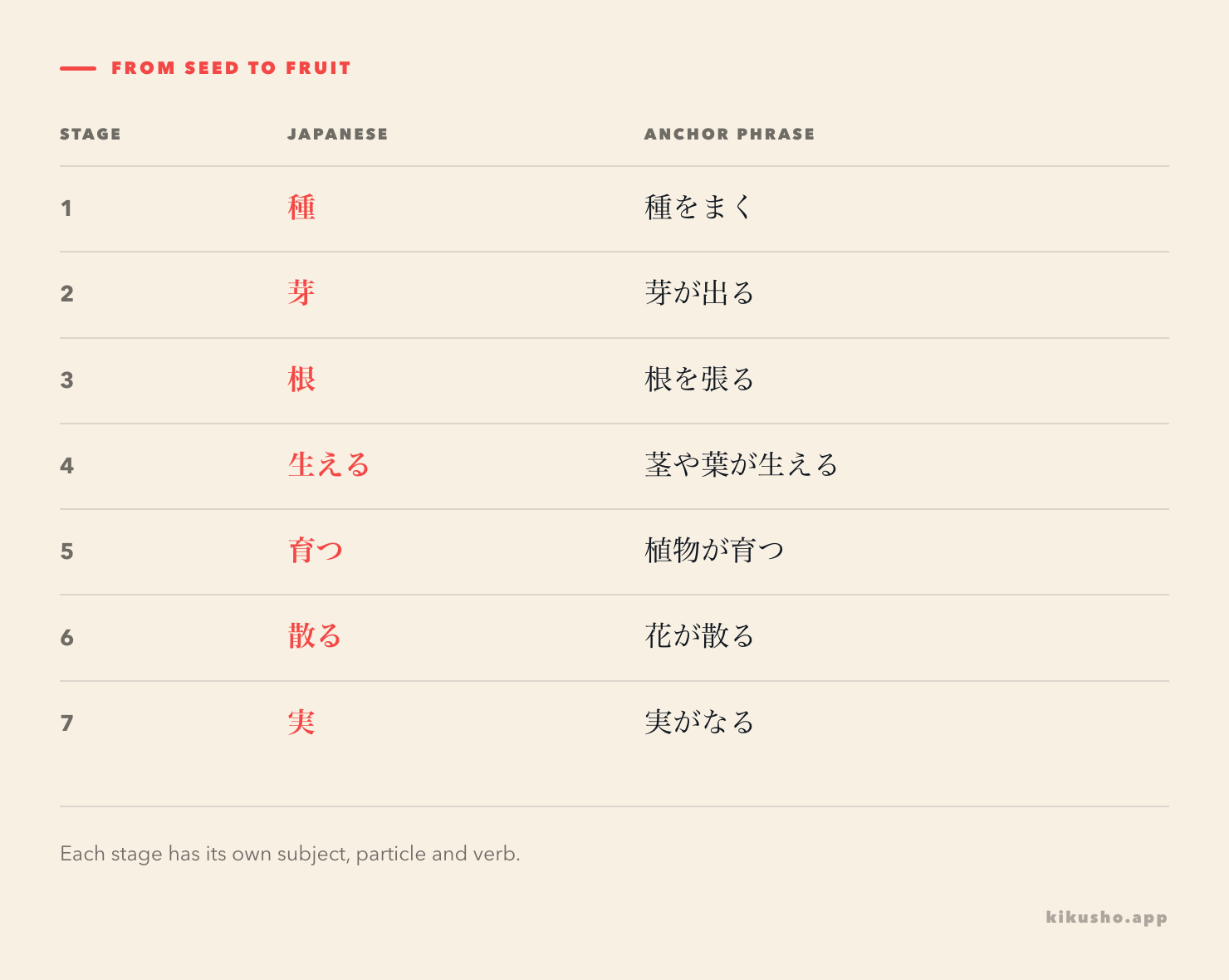
芽(め) is a sprout or bud. Kotobank's 芽 entry also shows its botanical use for new growth. 根(ね) is a root; Kotobank documents the plant structure and its wider uses.
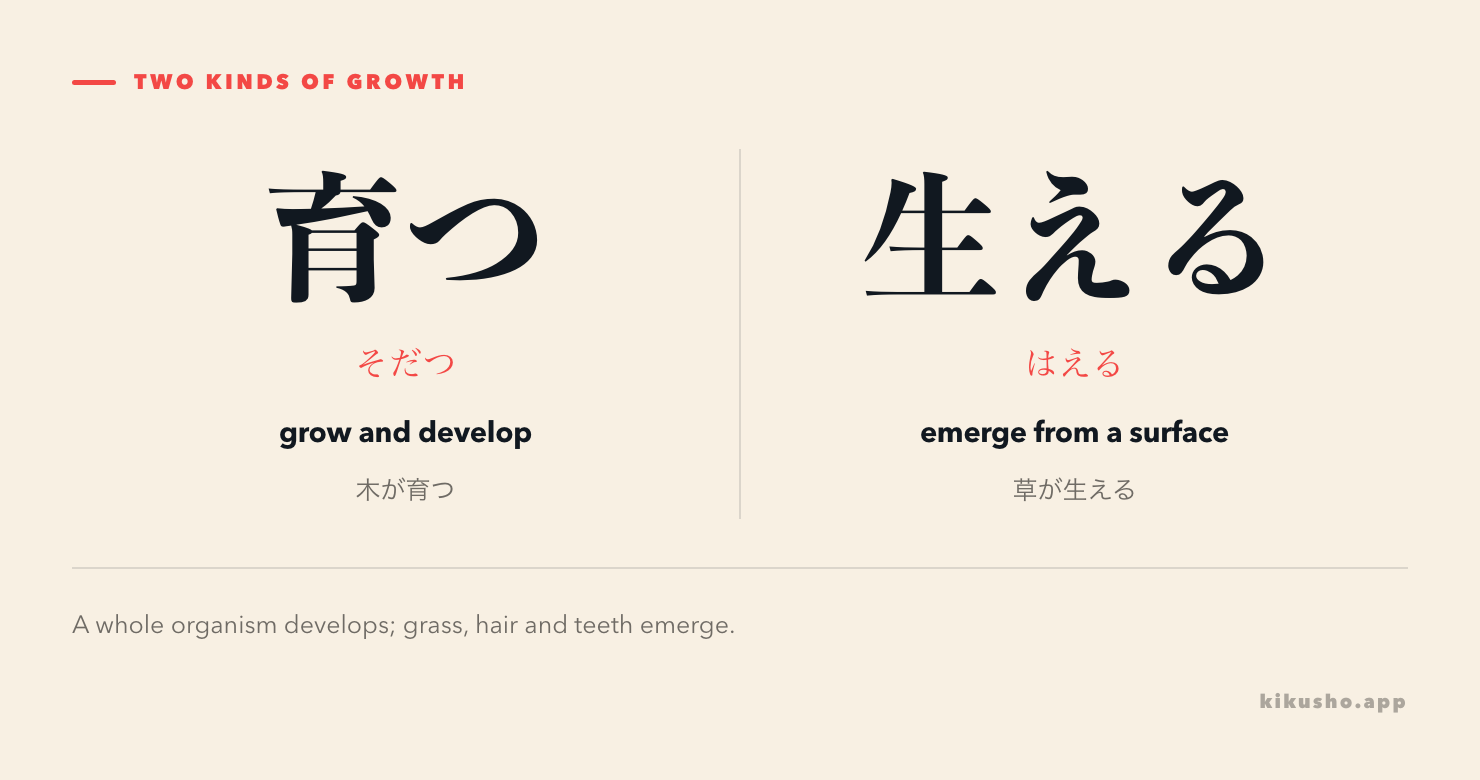
生える(はえる) focuses on emergence from a surface: grass grows from the ground, hair grows on a head, and teeth come in. 育つ(そだつ) focuses on development over time and can take plants, animals, children or abilities as its subject.
雨の後、庭に草が生えた。
Grass grew in the garden after the rain.
温かい場所では苗が早く育つ。
Seedlings grow quickly in a warm place.
散る(ちる) is intransitive: 花が散る. The blossoms themselves fall or scatter. 実(み) names fruit, nuts or seeds produced by a plant in this set: 木に赤い実がなった, “red fruit grew on the tree.” Do not confuse this reading with 実(じつ), “truth” or “substance,” taught in the N1 biological-report lesson.
Meanings branch beyond the garden
Three plant nouns are productive metaphors. 話の種 is material for conversation, 問題の根 is the root of a problem, and 努力が実を結ぶ says effort bears fruit. The concrete meanings remain the best starting point because the metaphor preserves the same structure: origin, foundation and result.
In Kikusho, keep a whole event on the card: 種をまく, 根を張る, 蚊に刺される or 兎を飼う. That phrase prevents the one-kanji nouns from collapsing into a list of English labels.
The two retained baseline files agree on most N3 placements but descend from the same list family. They place 蚊, 貝, 散る and 生える at both N3 and N2 across snapshots. Those are study estimates, not official boundaries. According to the official JLPT FAQ, the former Test Content Specifications are no longer released for the revised exam.
Practice the living-world map
Question 1
Supply the hiragana pronunciation for 植物.
Question 2
Select the kanji used for “mosquito.”
- A. 蚊
- B. 貝
- C. 芽
- D. 根
Question 3
Choose the word that completes the sentence.
庭に種をまいたら、一週間後に小さな__が出た。
- A. 虎
- B. 芽
- C. 貝
- D. 牛
Question 4
Which phrase means that grass emerged from the ground?
- A. 草が育てた
- B. 草を生えた
- C. 草が生えた
- D. 草を育った
Question 5
Choose the natural sentence about animal care.
- A. 牧場で牛を飼っている。
- B. 牧場で牛が飼っている。
- C. 牧場で牛を散っている。
- D. 牧場で牛が生えている。
Question 6
In which sentence is 生物 read せいぶつ?
- A. 生物なので、早く冷蔵庫に入れてください。
- B. 海の生物を観察する。
- C. 生物を刺身にして食べる。
- D. この店は生物を扱っている。
Question 7
Put the four plant stages in order: 実がなる / 根を張る / 種をまく / 芽が出る.
Question 8
Read the passage and select the supported description.
春に畑へ種をまいた。やがて芽が出て、根を張り、夏の間に大きく育った。秋には赤い実がなった。
- A. A rabbit was raised until it became a horse.
- B. Seeds were sown, then the plants sprouted, rooted, grew and produced red fruit.
- C. Cherry blossoms scattered before any buds appeared.
- D. Mosquitoes and shellfish were found in a rice field.
Answers and explanations
1 · Category reading
しょくぶつ. 植物 means a plant or vegetation. The wider category for living organisms is 生物(せいぶつ).
2 · Small creature
A, 蚊. 蚊 is read か and means mosquito. 貝 is shell or shellfish, 芽 is a sprout, and 根 is a root.
3 · First growth
B, 芽. 芽が出る is the natural phrase for a sprout appearing after a seed is sown.
4 · Emergence
C, 草が生えた. 生える is intransitive, so the emerging grass takes が. 育てる is transitive and would require a person to raise something.
5 · Keeping cattle
A. The animal kept under human care takes を with 飼う: 牛を飼う.
6 · Organisms
B. 海の生物 means marine organisms and is read せいぶつ. The other sentences use 生物 for raw or perishable food, normally read なまもの.
7 · Plant cycle
種をまく → 芽が出る → 根を張る → 実がなる. A seed is sown, a sprout appears, roots take hold and fruit is produced.
8 · Connected growth
B. The passage follows the plant cycle from 種 through 芽 and 根 to growth and red 実.
Let the predicate classify the noun
Short animal and plant words become much clearer beside a predicate. 飼う calls for an animal under human care; 生える reveals something emerging; 育つ reports development; 散る makes a flower fall; なる turns a blossom into fruit. In a dense N3 passage, those verbs often identify the living thing before you have translated every noun.
Common questions
What is the difference between 育つ and 生える?
育つ(そだつ)describes a person, animal or plant developing and growing. 生える(はえる)describes something emerging from a surface, such as grass, hair or teeth. A tree 育つ; grass 生える.
Is 生物 read せいぶつ or なまもの?
The assigned reading せいぶつ means a living thing or organism. The same spelling can be read なまもの for raw or perishable food. Context and the supplied reading select the sense.
What is the difference between 植物 and 生物?
植物(しょくぶつ)means a plant or vegetation. 生物(せいぶつ)is the wider category of living organisms, including plants, animals and microorganisms.
How do 種, 芽, 根 and 実 form a plant cycle?
A seed is 種(たね), a sprout or bud is 芽(め), a root is 根(ね), and a fruit or nut is 実(み). Natural phrases are 種をまく, 芽が出る, 根を張る and 実がなる.