On this page
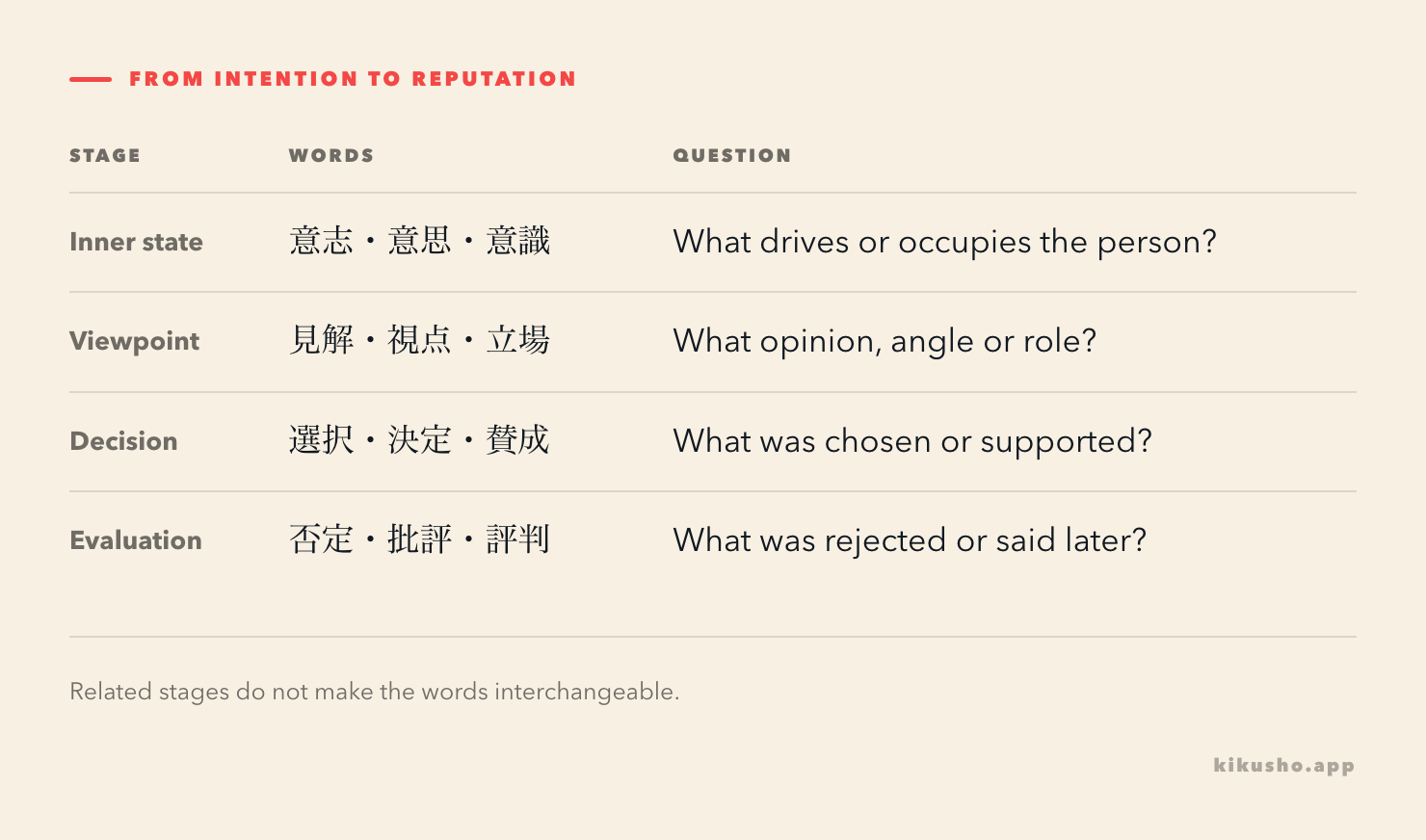
A Japanese discussion can move from 意志 (will) and 意思 (intention) to a 選択 (choice) and then a 決定 (final decision). To follow that process, you also need words for the angle people take, whether they agree, and how the result is evaluated afterward.
This lesson teaches twelve words as one sequence. The key is to keep inner resolve, stated intention, analytical viewpoint, participant position, evaluation and reputation in separate slots.
The twelve words form four practical groups
| Headword | Reading | Class | Core sense | Useful combination |
|---|---|---|---|---|
| 意志 | いし, ishi | noun | will, resolve | 強い意志を持つ |
| 意思 | いし, ishi | noun | intention, wishes | 意思を伝える |
| 意識 | いしき, ishiki | noun + する | consciousness, awareness | 問題を意識する |
| 見解 | けんかい, kenkai | noun | considered opinion | 見解を示す |
| 視点 | してん, shiten | noun | viewpoint, analytical angle | 別の視点から見る |
| 立場 | たちば, tachiba | noun | position, role, circumstances | 相手の立場に立つ |
| 選択 | せんたく, sentaku | noun + する | choice, selection | 方法を選択する |
| 決定 | けってい, kettei | noun + する | decision, determination | 方針を決定する |
| 賛成 | さんせい, sansei | noun + する | agreement, support | 案に賛成する |
| 否定 | ひてい, hitei | noun + する | denial, rejection of validity | 事実を否定する |
| 批評 | ひひょう, hihyō | noun + する | criticism, critical review | 作品を批評する |
| 評判 | ひょうばん, hyōban | noun | reputation, public report | 評判がいい |
The two readings いし are identical, so context has to separate 意志 from 意思. The shared 評 in 批評 and 評判 points toward evaluation, but only 批評 normally becomes a する verb in this pair.
意志 is resolve, 意思 is intention, and 意識 is awareness
意志(いし) is the will or resolve that supports deliberate action. It appears in 強い意志を持つ (have strong will), 自分の意志で決める (decide of one's own will) and 意志を貫く (carry one's resolve through). Kotobank's 意志 entry includes purposeful resolve and also notes overlap with 意思 in modern usage.
彼女は最後まで研究を続ける強い意志を持っている。
かのじょは さいごまで けんきゅうを つづける つよい いしを もっている。
She has a strong resolve to continue the research to the end.
意思(いし) is what a person intends, wants or chooses. Other people can ask about it, respect it or receive it as a message: 本人の意思を確認する, 意思を尊重する, 意思を伝える. The compound 意思決定 means decision making. Kotobank gives the sense of what a person wants or intends and records its formal legal use.
参加する意思をメールで伝えた。
さんかする いしを メールで つたえた。
I communicated by email that I intended to participate.
意識(いしき) belongs to a different family. It can mean consciousness, as in 意識を失う (lose consciousness), or awareness and deliberate attention, as in 安全を意識する (be mindful of safety). With を, Xを意識する means to keep X in mind or be conscious of it. Kotobank's 意識 entry covers both consciousness and awareness.
読者を意識して、説明を短くした。
どくしゃを いしきして、せつめいを みじかくした。
Keeping the readers in mind, I shortened the explanation.
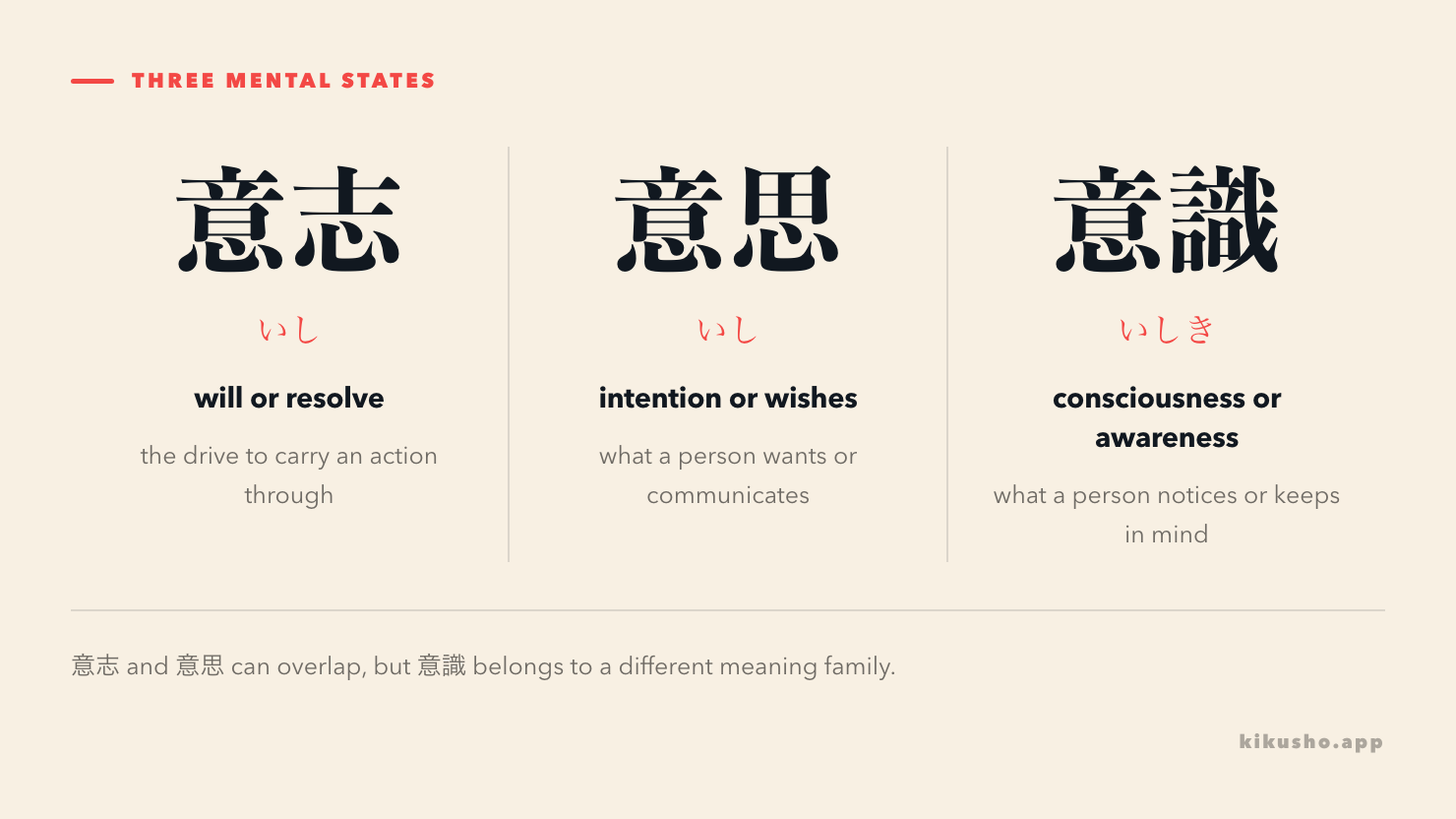
The border between 意志 and 意思 is not absolute. In everyday writing, both may refer to an intention. Use 意志 when resolve or volition matters, 意思 when communicating or respecting someone's wishes, and 意識 for consciousness or awareness.
見解 is the opinion, 視点 is the angle, and 立場 is the position
見解(けんかい) is a considered opinion or judgement about a matter. You can 見解を示す (state a view), ask for 専門家の見解 (an expert's opinion), or disagree over この問題についての見解. Kotobank defines it as a way of seeing and judging a matter.
専門家は新しい計画について見解を示した。
せんもんかは あたらしい けいかくについて けんかいを しめした。
The expert stated an opinion about the new plan.
視点(してん) is the point or angle from which you examine something. A report can look at a policy 利用者の視点から (from the users' viewpoint), and new evidence can make you 視点を変える (change your angle). Kotobank records this observational and intellectual point-of-view sense.
立場(たちば) is a person's position, role or set of circumstances. A manager and a customer may examine the same facts from different 立場 because they participate in the situation differently. Common patterns include 会社の立場から説明する, 相手の立場に立つ and 賛成の立場を取る. Kotobank covers both social position and a standpoint grounded in one's situation.
利用者の視点から考えると、会社の立場も理解できる。
りようしゃの してんから かんがえると、かいしゃの たちばも りかいできる。
Thinking from the users' viewpoint, I can also understand the company's position.
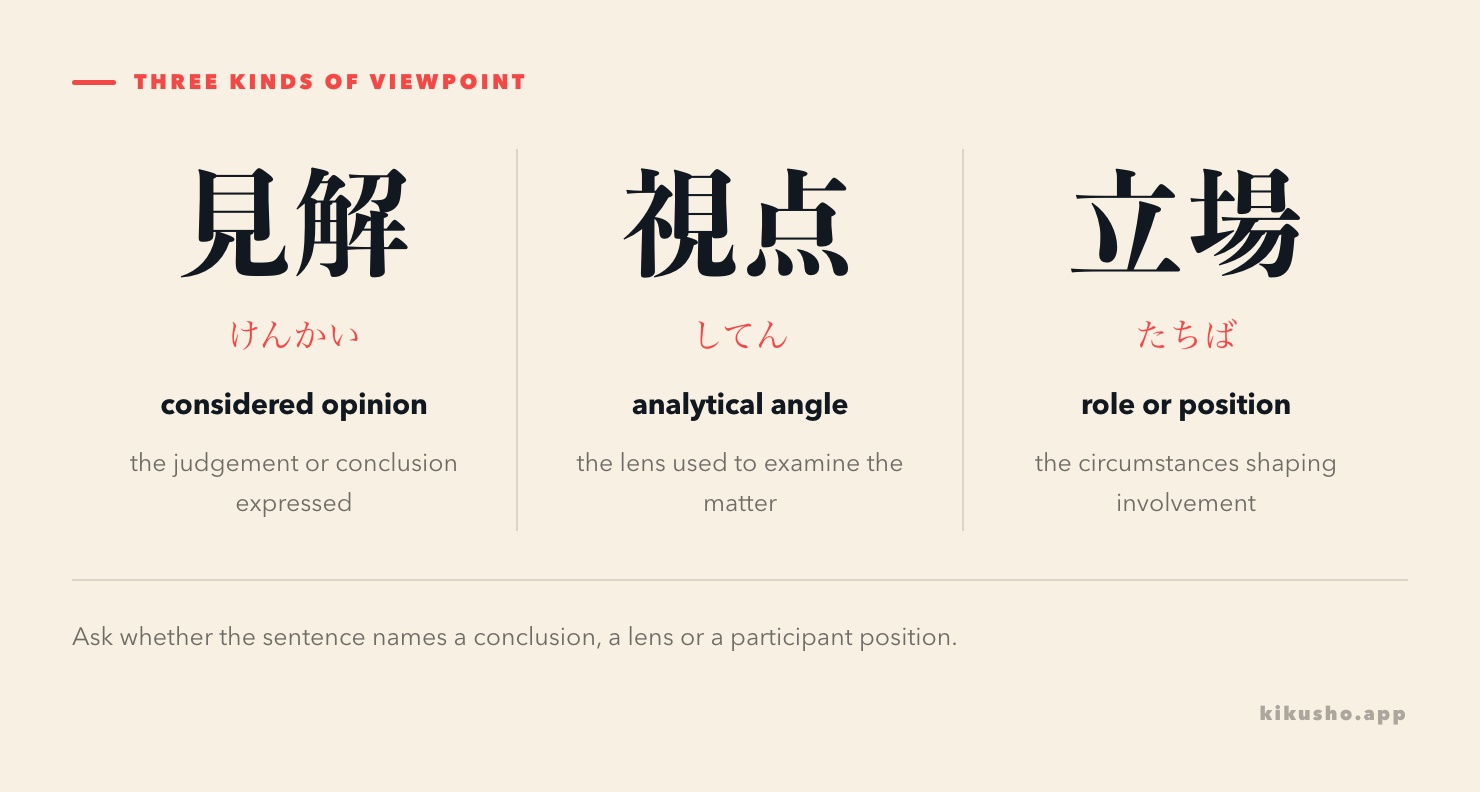
Ask three questions to choose among them:
- What conclusion or opinion did the person express? 見解
- Through what lens did they examine the matter? 視点
- What role or circumstances shape their involvement? 立場
選択 chooses among options; 決定 settles what will happen
選択(せんたく) focuses on choosing from alternatives. It appears in 方法を選択する, 選択肢 (options) and 正しい選択 (the right choice). Kotobank defines it as choosing one or more candidates from several possibilities.
決定(けってい) focuses on making something definite. A committee can 方針を決定する (decide a policy), 決定を下す (make a ruling or decision), or later 決定を変更する. Kotobank covers both deciding and the resulting decision.
三つの案から一つを選択し、来月から実施すると決定した。
みっつの あんから ひとつを せんたくし、らいげつから じっしすると けっていした。
We selected one of three proposals and decided to implement it next month.
A single event can contain both words. 選択 names which option was picked; 決定 marks the point when the plan became settled.
賛成 takes に; 否定 usually takes を
賛成(さんせい) means agreement or support for an opinion, proposal or action. The target normally takes に: 提案に賛成する. Kotobank gives agreement with another person's opinion or action and the pattern 原案に賛成する.
私は変更案に賛成です。
わたしは へんこうあんに さんせいです。
I am in favor of the revised proposal.
否定(ひてい) means denying a fact or rejecting the truth, existence or validity of something. The denied claim usually takes を: うわさを否定する, 可能性を否定する. Kotobank contrasts this denial with 肯定, affirmation.
担当者はそのうわさを否定した。
たんとうしゃは その うわさを ひていした。
The person in charge denied that rumor.
If you oppose a proposal, 案に反対する is the direct counterpart to 案に賛成する. 否定する instead rejects a statement, possibility, value or existence. For more language around evidence and conclusions, continue with N3 reasoning and explanation vocabulary.
批評 evaluates a work; 評判 circulates among people
批評(ひひょう) is the act of examining and discussing the value of a work or idea. It can contain praise as well as negative criticism: 小説を批評する, 映画批評. Kotobank describes judging and discussing a work's merits or faults.
評判(ひょうばん) is what people say about someone or something, and therefore its reputation. Use 評判がいい/悪い, 評判になる or 〜と評判だ. It does not normally form the する verb meaning “review.” Kotobank records both public report and reputation.
批評家がその映画を高く評価し、観客の間でも評判になった。
ひひょうかが その えいがを たかく ひょうかし、かんきゃくの あいだでも ひょうばんに なった。
Critics rated the film highly, and it gained a reputation among audiences too.
The N2 lesson on noticing, doubting and judging compares 評価する and 批判する. Here, 批評 is the critical discussion itself, while 評判 is the social result that can spread afterward.
One meeting can use all twelve words
委員長には改革を進める強い意志があり、最初に自分の意思を全員に伝えた。委員は利用者を意識し、それぞれの立場から別の視点を出した。専門家の見解も聞いたうえで三つの案から一つを選択し、来月実施すると決定した。多くの委員は案に賛成したが、一人は効果を否定した。発表後、新聞が計画を批評し、その内容は市民の間で評判になった。
The chair had a strong resolve to pursue reform and first communicated their intention to everyone. The committee members kept the users in mind and offered different viewpoints from their respective positions. After also hearing the expert's opinion, they selected one of three proposals and decided to implement it the following month. Most members supported the proposal, but one denied its effectiveness. After the announcement, newspapers critiqued the plan, and its content became a topic of public discussion.
Notice the sequence: inner state, expressed view, analytical process, formal choice, reaction and public evaluation. The words are related because they can describe successive stages, not because they are interchangeable.
For formal reports and committee procedure, continue with the N1 set on intentions, objections, decisive choices and compromise.
The N3 label is useful, but 視点 has mixed placement
Kikusho's September 2026 reference inventory places the twelve assigned spelling-and-reading records in this N3 lesson. Eleven have stable N3 placement across its two dated source snapshots. 視点 is disputed: one snapshot places it at N3 and the other at N1, while Japanesetest4You currently lists 視点 at N2. Japanesetest4You lists 見解 at N3.
The official JLPT FAQ says the revised test no longer supplies itemised vocabulary, kanji and grammar specifications. A single official list therefore cannot settle the placement of 視点. Treat the levels here as study guidance; the reading and usage contrast remains useful at any placement.
When one of these nouns appears in a meeting note, review or article, Kikusho can turn the full phrase into a card. Save the particle and collocation with the headword, such as 案に賛成する or 評判がいい, because the phrase is what makes the next encounter easier to interpret.
Practice: ten N3-style questions
Answer all ten before opening the explanations.
1 · Resolve. Which word best completes the sentence?
彼は困難があっても研究を続ける強い__を持っている。
A. 意識
B. 意思
C. 意志
D. 見解
2 · Intention. The manager wants to confirm whether each employee intends to participate. Which phrase fits?
A. 参加する意識を批評する
B. 参加する意思を確認する
C. 参加する意志に評判する
D. 参加する視点を決定する
3 · Awareness. Which reading and meaning fit 安全を意識する?
A. いしき, be mindful of safety
B. いし, communicate a safety decision
C. けんかい, deny a safety claim
D. たちば, support a safety proposal
4 · Opinion or angle. A specialist states the conclusion they reached about a policy. Pick the line that reports that conclusion.
A. 専門家は政策の視点に立った。
B. 専門家は政策の評判を選択した。
C. 専門家は政策について見解を示した。
D. 専門家は政策から立場を意識した。
5 · Point of view. Which phrase means “examine it from a different angle”?
A. 別の見解を否定する
B. 別の視点から見る
C. 別の立場を決定する
D. 別の評判に賛成する
6 · Role-based position. Which sentence asks someone to imagine the other person's circumstances?
A. 相手の見解を選択してください。
B. 相手の意識を決定してください。
C. 相手の立場に立って考えてください。
D. 相手の評判を批評してください。
7 · Two stages. Choose the pair that matches the order in the sentence.
三つの候補から一つを__し、来月使うことを__した。
A. 決定・選択
B. 選択・決定
C. 賛成・否定
D. 批評・評判
8 · Agreement and particle. Which sentence is correct?
A. 私はその提案に賛成です。
B. 私はその提案を賛成です。
C. 私はその提案から賛成です。
D. 私はその提案で賛成をします。
9 · Denial. The spokesperson says a rumor is untrue. Pick the report that rejects the rumor as false.
A. 広報はそのうわさに選択した。
B. 広報はそのうわさに賛成した。
C. 広報はそのうわさを否定した。
D. 広報はそのうわさから立場した。
10 · Critical review or reputation. Which pair completes the sentence?
雑誌が新作を__し、その記事をきっかけに店の__が広がった。
A. 評判して・批評
B. 批評して・評判
C. 否定して・意思
D. 意識して・選択
Open the decision-path answer key
- C. 意志 is will or resolve to act. 意思 is a person's intention or wishes, while 意識 is awareness.
- B. 参加する意思 is the person's intention to participate. 確認する naturally means to confirm it.
- A. 意識 is read いしき. Xを意識する means to remain conscious or mindful of X.
- C. A considered opinion about a policy is a 見解. 見解を示す means to state that view.
- B. 視点 is an analytical angle. 別の視点から見る means to view something from another angle.
- C. 立場 refers to a person's role or circumstances. 相手の立場に立つ asks you to place yourself in the other person's position.
- B. 選択 identifies the option chosen from the three candidates. 決定 makes the plan for next month definite.
- A. The proposal takes に in 提案に賛成する. The construction can also end with 賛成です.
- C. 否定する takes the denied statement or rumor with を. It rejects the rumor as untrue.
- B. A magazine can 批評する a new work. 評判 is the reputation or public report that then spreads; 評判する is not the intended verb here.
Common questions
What is the difference between 意志, 意思 and 意識?
意志 is will or resolve to act, 意思 is a person's intention or wishes, and 意識 is consciousness or awareness. Modern 意志 and 意思 sometimes overlap, but 意識 belongs to a different meaning family.
What is the difference between 見解, 視点 and 立場?
見解 is the opinion reached, 視点 is the angle used to examine something, and 立場 is a person's role, circumstances or position in the matter.
Is 批評 always negative?
No. 批評 examines and discusses the value of a work or idea, so it can include praise and criticism. 評判 is the reputation or public report that circulates about someone or something.