On this page
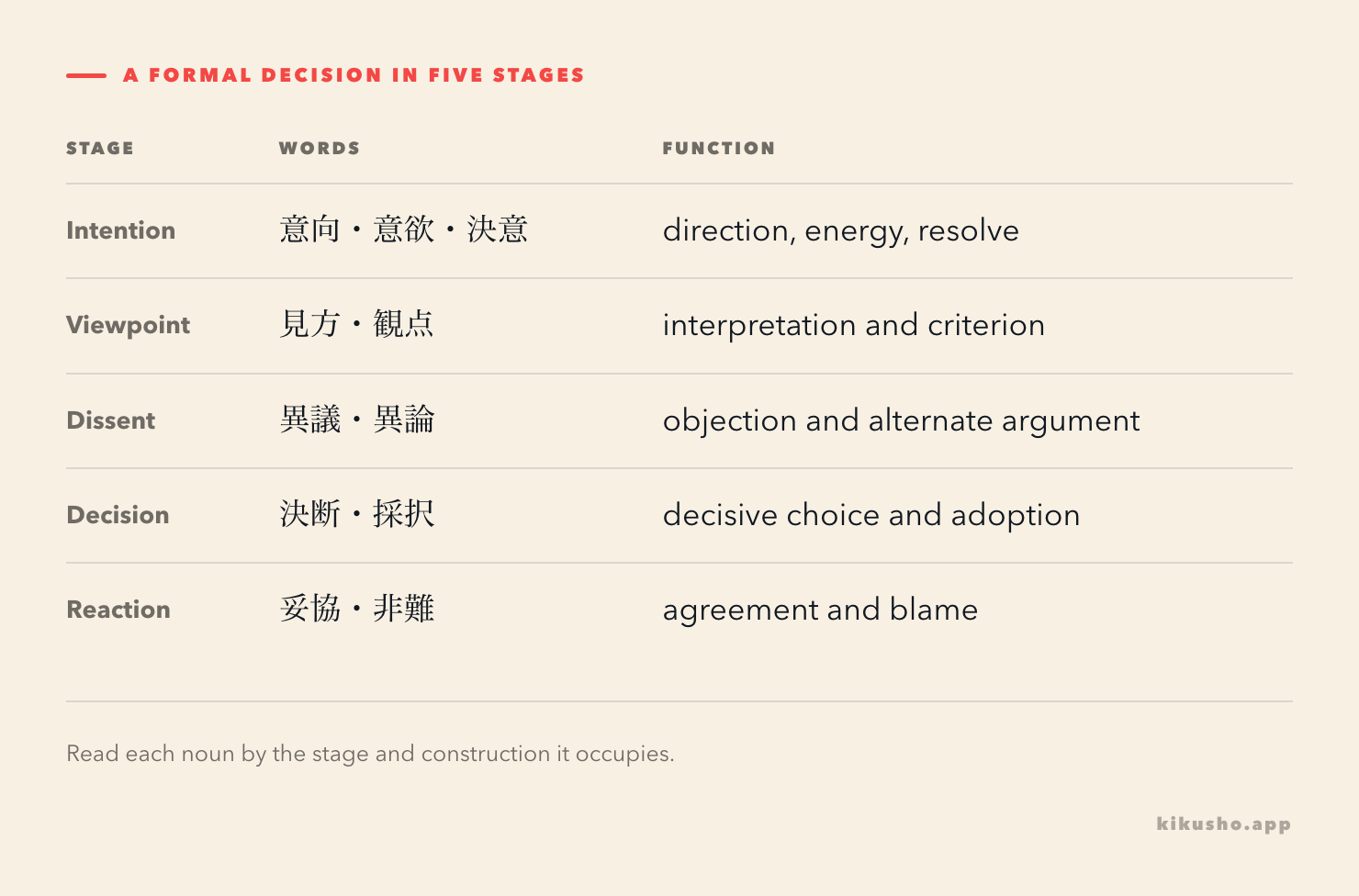
意向を示した tells you which course someone intends to take; it does not tell you that a final decision has been made. Formal reports then use different words for motivation, viewpoints, objections, a decisive choice, adoption, compromise and blame.
This N1 set follows one proposal from the intentions behind it to the reaction after a vote. The sequence helps because several English glosses collapse distinct Japanese stages into “intention,” “viewpoint,” “objection” or “decision.”
Eleven words trace a formal decision from start to finish
| Headword | Reading | Class | Sense taught | Useful combination |
|---|---|---|---|---|
| 意向 | いこう, ikō | noun | intended course, inclination | 意向を示す |
| 意欲 | いよく, iyoku | noun | active willingness, motivation | 意欲を見せる |
| 決意 | けつい, ketsui | noun + する | firm resolve | 決意を固める |
| 見方 | みかた, mikata | noun | way of seeing or understanding | 楽観的な見方 |
| 観点 | かんてん, kanten | noun | analytical standpoint, criterion | 安全性の観点から |
| 異議 | いぎ, igi | noun | objection, protest | 異議を唱える |
| 異論 | いろん, iron | noun | different opinion or argument | 異論が出る |
| 決断 | けつだん, ketsudan | noun + する | decisive judgement or choice | 決断を下す |
| 採択 | さいたく, saitaku | noun + する | formal adoption or selection | 決議案を採択する |
| 妥協 | だきょう, dakyō | noun + する | compromise through concessions | 妥協点を探る |
| 非難 | ひなん, hinan | noun + する | blame, censure | 対応を非難する |
意向 points ahead, 意欲 supplies energy, and 決意 fixes resolve
意向(いこう) is what someone is minded or inclined to do. It suits statements by a person, institution or government: 参加する意向を示す, 本人の意向を確認する, 会社の意向に沿う. Kotobank defines it as the direction of one's mind concerning what to do.
市は来年度も支援を続ける意向を示した。
しは らいねんども しえんを つづける いこうを しめした。
The city indicated its intention to continue support next fiscal year.
The sentence reports a stated course. Later negotiation, funding or a formal vote may still alter the outcome.
意欲(いよく) is the active desire or motivation to do something. Common combinations include 学習意欲, 創作意欲, 仕事への意欲 and 意欲を見せる. Kotobank centres the willingness to undertake something proactively.
若手の職員は改革に強い意欲を見せている。
わかての しょくいんは かいかくに つよい いよくを みせている。
The younger staff members are showing strong motivation for reform.
決意(けつい) is the firm resolve formed after someone settles their will. Use 決意を固める, 決意を表明する and 再挑戦を決意する. Kotobank describes clearly settling one's will, especially concerning an important matter.
彼女は批判を受けても計画を続ける決意を固めた。
かのじょは ひはんを うけても けいかくを つづける けついを かためた。
She strengthened her resolve to continue the plan despite criticism.
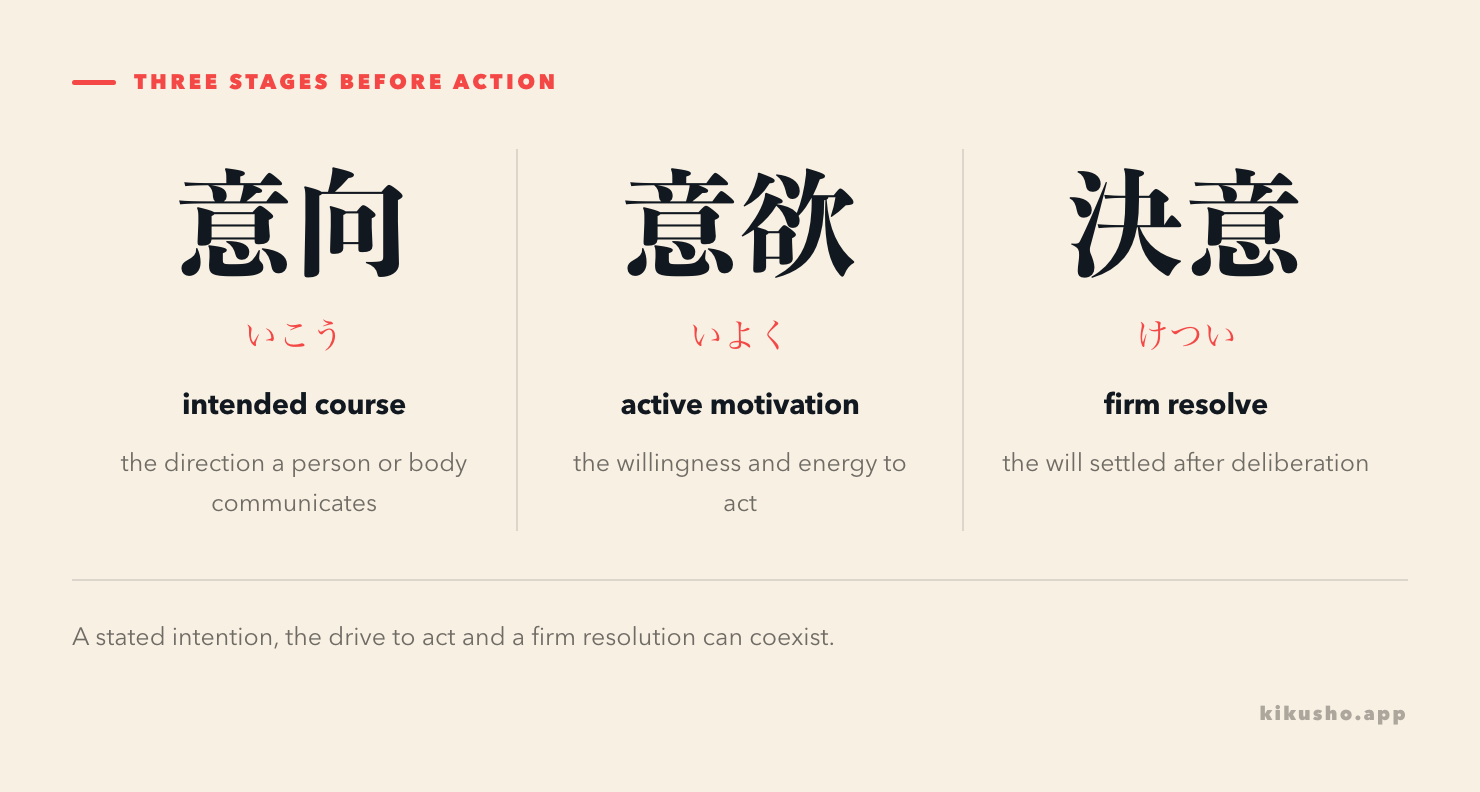
One person can have all three. Their 意向 is the course they communicate, their 意欲 is the energy they bring to it, and their 決意 is the will they have firmly settled.
見方 is a way of seeing; 観点 names the basis of analysis
見方(みかた) is broad. It can mean how to look at or understand something, as in 地図の見方 (how to read a map), or an interpretation, as in 楽観的な見方 (an optimistic view). Kotobank records both a method of looking and a way of thinking from a position.
この結果には別の見方もある。
この けっかには べつの みかたも ある。
There is another way to interpret this result.
Do not confuse 見方 with 味方(みかた), an ally or supporter. The reading is the same, but the first kanji tells you whether the sentence concerns seeing or taking someone's side.
観点(かんてん) specifies the standpoint or criterion that grounds an observation or judgement. Typical frames are 安全性の観点から, 教育的観点に立つ and 観点が違う. Kotobank describes the position that becomes a basis for observation and judgement.
費用の観点から見ると、第二案のほうが現実的だ。
ひようの かんてんから みると、だいにあんの ほうが げんじつてきだ。
From the standpoint of cost, the second proposal is more realistic.
A 見方 can be optimistic, pessimistic or unfamiliar. A 観点 often names the specific dimension applied to the analysis, such as cost, safety, fairness or feasibility. The meanings overlap, so use the surrounding construction rather than treating them as rigid replacements.
異議 objects to a move; 異論 supplies another argument
異議(いぎ) is an objection or expression of opposition. It is common in meetings and formal procedures: 決定に異議を唱える, 異議を申し立てる, 異議なし. Its legal sense refers to formally objecting to an act or decision. Kotobank and Kanjipedia both record the general and legal uses.
委員の一人が採決の方法に異議を唱えた。
いいんの ひとりが さいけつの ほうほうに いぎを となえた。
One committee member objected to the voting method.
異論(いろん) is a different opinion or line of argument. Use 異論が出る, 異論を唱える and 異論の余地がない. Kotobank defines it as an opinion or argument different from another.
効果の予測について、専門家から異論が出た。
こうかの よそくについて、せんもんかから いろんが でた。
An expert offered a different view of the projected effect.
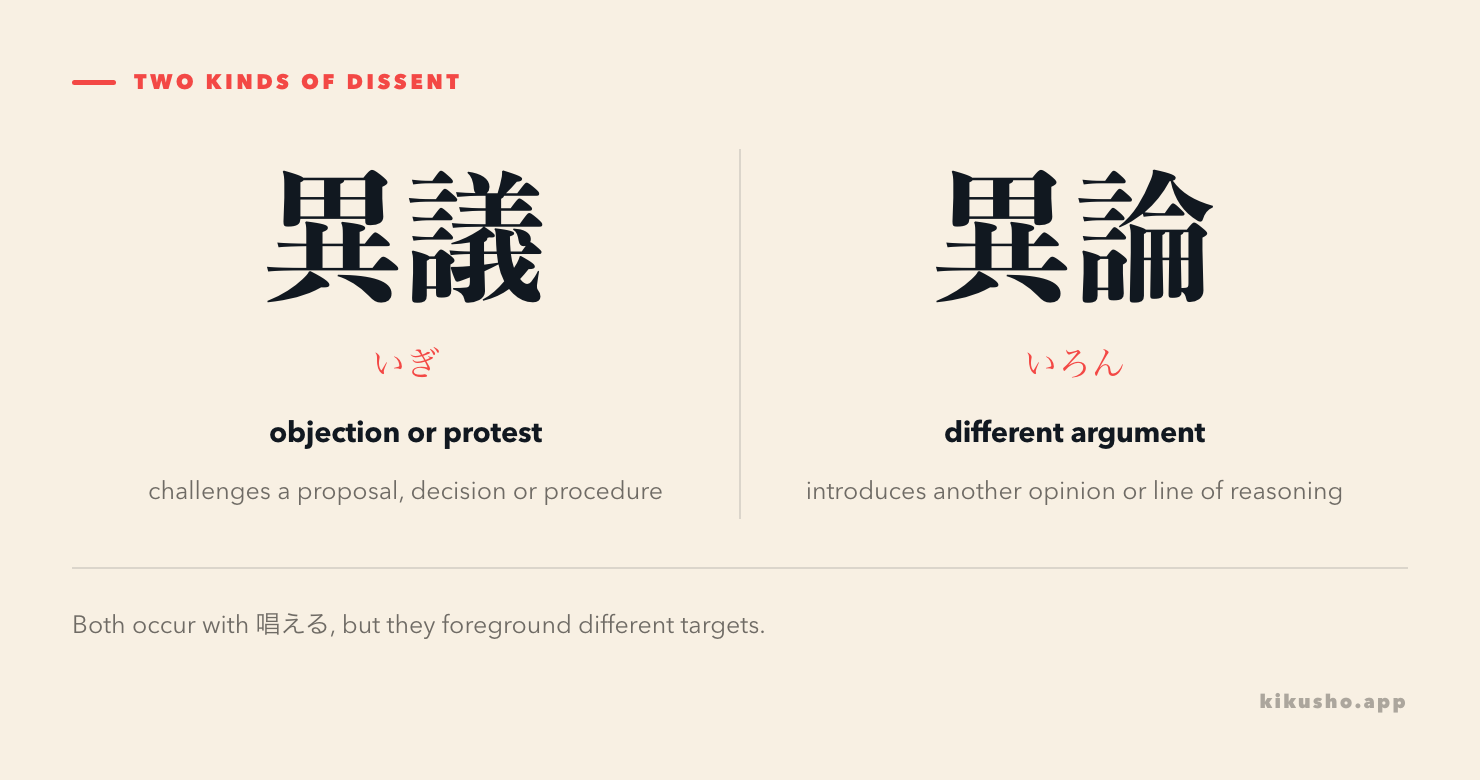
The distinction is a focus, not an absolute boundary. 異議 often targets a proposal, decision or procedure and signals opposition. 異論 foregrounds the content of a different argument. Both can occur with 唱える in ordinary debate.
For the legal setting of 証拠の解釈に異議を唱える, see the N1 law, crime and public-order vocabulary lesson.
決意 is resolve; 決断 is the decisive choice
決意 belongs to the person's settled will. 決断(けつだん) foregrounds making a clear, often difficult or consequential choice. It appears in 決断を下す, 決断を迫られる and 撤退を決断する. Kotobank records both firmly deciding and judging between right and wrong.
経営陣は赤字の事業から撤退する決断を下した。
けいえいじんは あかじの じぎょうから てったいする けつだんを くだした。
Management made the decision to withdraw from the loss-making business.
A leader can first 決意を固める, firm up their resolve, and later 決断を下す, make the consequential choice. In many sentences the nouns overlap, but 決断 more readily highlights the act or moment of choosing under pressure.
採択 makes a proposal official; 妥協 changes the path to agreement
採択(さいたく) means selecting and formally taking up one option among several. Resolutions, motions and proposals are common objects: 決議案を採択する. The passive 決議案が採択される reports that it passed or was adopted. Kotobank gives choosing and taking up one item from multiple possibilities.
修正された決議案は賛成多数で採択された。
しゅうせいされた けつぎあんは さんせいたすうで さいたくされた。
The amended resolution was adopted by a majority vote.
妥協(だきょう) means reaching agreement by bringing opposed demands closer through concessions. Its collocations show how the speaker evaluates it: 妥協点を探る can be constructive, while 安易に妥協する criticises an easy surrender. Kotobank defines it through mutual concessions and finding a point both sides can accept.
双方は予算額を調整し、妥協点を見いだした。
そうほうは よさんがくを ちょうせいし、だきょうてんを みいだした。
The two sides adjusted the budget and found a point of compromise.
Compromise is not the same as adoption. 妥協 can reshape the proposal before the vote; 採択 is the later act that gives the chosen text formal approval.
非難 assigns blame rather than merely examining a claim
非難(ひなん) takes a person, action or response as the target of blame: 政府の対応を非難する, 非難を浴びる, 非難の的になる. Kotobank and Goo's Daijisen entry define it as taking up faults or mistakes and censuring them.
市民団体は説明を後回しにした会社の対応を非難した。
しみんだんたいは せつめいを あとまわしにした かいしゃの たいおうを ひなんした。
The citizens' group condemned the company's decision to postpone an explanation.
批判 can mean examining and evaluating a claim, although it often becomes negative in ordinary use. 非難 more directly assigns fault or blame. The N1 grammar pattern 非難するには当たらない shows how a writer can reject an excessive censure.
A proposal can activate every word in the set
市長は制度を改める意向を示し、担当者も実施に強い意欲を見せた。市長は反発があっても改革を進める決意を固めたが、財政面からは悲観的な見方もあった。委員会は公平性の観点から案を検討した。採決の時期に異議を唱える委員がおり、効果の予測についても異論が出た。市長は一部を修正する決断を下し、双方が妥協した案は賛成多数で採択された。しかし、説明が遅れたことには市民から非難の声が上がった。
The mayor indicated an intention to revise the system, and the staff showed strong motivation to implement it. The mayor resolved to proceed despite opposition, although some took a pessimistic view from a financial perspective. The committee examined the plan from the standpoint of fairness. One member objected to the timing of the vote, and another argument emerged about the projected effect. The mayor decided to amend part of the plan. The compromise proposal was adopted by a majority, but citizens blamed the administration for its delayed explanation.
Track what changes at each clause. An intention is announced, viewpoints frame the analysis, objections interrupt or redirect it, a decisive choice changes the proposal, and adoption gives the revised text official status. 非難 occurs after the process because people judge how it was handled.
Current study lists disagree on two placements
Kikusho's September 2026 inventory places all eleven assigned spelling-and-reading records at N1, with no disagreement between its two Waller-derived snapshots. A current independent index agrees on 意向 at N1 but labels 意欲 at N2 and 見方 at N2.
The JLPT FAQ explains why no exhaustive official list settles those boundaries. Learn the constructions and contrasts rather than treating the assigned level as a guarantee about where each word will appear.
When a policy article contains one of these nouns, save the clause that reveals its role. In Kikusho, 採択 alone leaves you with a broad gloss; 修正案が賛成多数で採択された preserves the passive form, the object adopted and the voting context that made the word identifiable.
Practice: ten advanced reading decisions
Work through the complete set before revealing the key.
1 · Reading. How is 異議 read in 手続きに異議を唱えた?
カ. いぎ
キ. いろん
ク. いこう
ケ. ひなん
2 · Stated course. The organisation has announced what it intends to do next, but no vote has occurred. Complete the sentence.
団体は来年度も活動を続ける__を示した。
カ. 非難
キ. 意向
ク. 採択
ケ. 異議
3 · Motivation. Which line says that an applicant showed strong willingness to learn?
カ. 応募者は学ぶ意欲を見せた。
キ. 応募者は学ぶ異論を採択した。
ク. 応募者は学ぶ観点を非難した。
ケ. 応募者は学ぶ見方に異議した。
4 · Interpretation and criterion. Choose the pair that fits both blanks.
結果には別の__もあるが、安全性の__から再検討が必要だ。
カ. 観点・見方
キ. 異議・異論
ク. 見方・観点
ケ. 意欲・意向
5 · Two kinds of dissent. Which explanation best matches the passage?
委員は採決の方法に異議を唱え、費用の予測についても異論を述べた。
カ. The member approved the method and repeated the same forecast.
キ. The member objected to the procedure and offered a different argument about cost.
ク. The member compromised on the procedure and adopted the forecast.
ケ. The member blamed the forecast but expressed no objection.
6 · Resolve and decisive action. Which sequence is the most natural?
カ. 決断を固めてから、決意を下した。
キ. 採択を固めてから、意向を非難した。
ク. 見方を決意してから、観点を妥協した。
ケ. 決意を固めてから、難しい決断を下した。
7 · Formal adoption. The amended resolution passed. Which sentence reports that result?
カ. 修正案は多数の非難を決意した。
キ. 修正案は賛成多数で採択された。
ク. 修正案は観点から意欲された。
ケ. 修正案は異論に見方された。
8 · Compromise. Which phrase presents compromise as a search for mutually acceptable ground?
カ. 非難の的になる
キ. 異議を申し立てる
ク. 妥協点を探る
ケ. 決意を表明する
9 · Blame. Pick the sentence that directly censures an organisation for a fault.
カ. 市民は会社の不誠実な対応を非難した。
キ. 市民は会社の意向を採択した。
ク. 市民は会社の観点に決意した。
ケ. 市民は会社の見方を妥協した。
10 · Process order. Which sequence best matches a formal proposal moving toward a result?
カ. 非難 → 見方 → 意欲 → 異議
キ. 採択 → 意向 → 観点 → 決意
ク. 異論 → 非難 → 意欲 → 意向
ケ. 意向 → 観点 → 異議 → 決断 → 採択
Reveal the proposal-review key
- カ. 異議 is read いぎ. 異論 is いろん, 意向 is いこう, and 非難 is ひなん.
- キ. 意向 reports the course the organisation intends to take. It can be announced before a binding choice or vote.
- カ. 意欲 is active willingness or motivation. The natural frame is 学ぶ意欲を見せる.
- ク. 別の見方 is another interpretation. 安全性の観点から identifies safety as the criterion used for reconsideration.
- キ. 異議 targets the voting procedure; 異論 introduces a different argument about the projected cost. The sentence contains both kinds of dissent.
- ケ. 決意を固める describes firming inner resolve. 決断を下す describes making the consequential choice.
- キ. A resolution that passes is 採択された. The passive construction makes the amended proposal the adopted item.
- ク. 妥協点を探る means seeking a point both parties can accept. The other phrases name blame, a formal objection and a declaration of resolve.
- カ. 非難する directly blames or censures the company for its response. The object marked by を is the conduct being condemned.
- ケ. The intended course is stated first, a criterion frames examination, an objection emerges, a decisive choice is made, and the final proposal is adopted.
Common questions
What is the difference between 意向, 意欲 and 決意?
意向 is the course a person or organisation intends to take, 意欲 is active willingness or motivation, and 決意 is a firm inner resolve after the will has been settled.
What is the difference between 異議 and 異論?
異議 is an objection to a decision, proposal or procedure and has a formal legal use. 異論 is a different opinion or line of argument. They overlap in ordinary debate, especially with 異議を唱える and 異論を唱える.
Does 妥協 always mean giving up?
No. 妥協 can be a negotiated compromise in which the parties make concessions to reach agreement. Expressions such as 安易な妥協 give it a negative evaluation, while 妥協点を探る can be neutral or constructive.