
On this page
Choose the step before choosing the word: 眺める or 見渡す describes looking, 気付く marks awareness, 見落とす means a detail was missed, 疑う questions a claim, and 判断する reaches a conclusion. 評価する, 批判する, 認める, and 見直す then describe what someone does with that conclusion.
This is an N2 reading lesson with words from adjacent study levels. Our dated reference inventory places seven of the assigned words at N3, 見直す at N2, and 見落とす, 見渡す, and 認める(したためる) at N1. Japanesetest4You places 見渡す at N2, so that boundary is disputed. The JLPT FAQ explains why no exhaustive official word list resolves it. Earlier words are prerequisites revisited here; the rarer forms are a reach ahead.
Eleven entries follow a clue from sight to conclusion
| Headword | Reading | Class | Sense taught | Keep this combination |
|---|---|---|---|---|
| 眺める | ながめる | ichidan verb | gaze at, contemplate | 景色を眺める |
| 見渡す | みわたす | godan verb | scan a broad view | 周囲を見渡す |
| 気付く / 気づく | きづく | godan verb | become aware of | 間違いに気付く |
| 見落とす | みおとす | godan verb | fail to notice | 数字を見落とす |
| 疑う | うたがう | godan verb | doubt, suspect | 説明を疑う |
| 判断 | はんだん | noun + する | judge, decide | 資料から判断する |
| 評価 | ひょうか | noun + する | assess merit or value | 作品を評価する |
| 批判 | ひはん | noun + する | criticize faults | 方針を批判する |
| 認める | みとめる | ichidan verb | admit, recognize, approve | 間違いを認める |
| 見直す | みなおす | godan verb | review or reconsider | 計画を見直す |
| 認める | したためる | ichidan verb | write or compose prose | 手紙をしたためる |
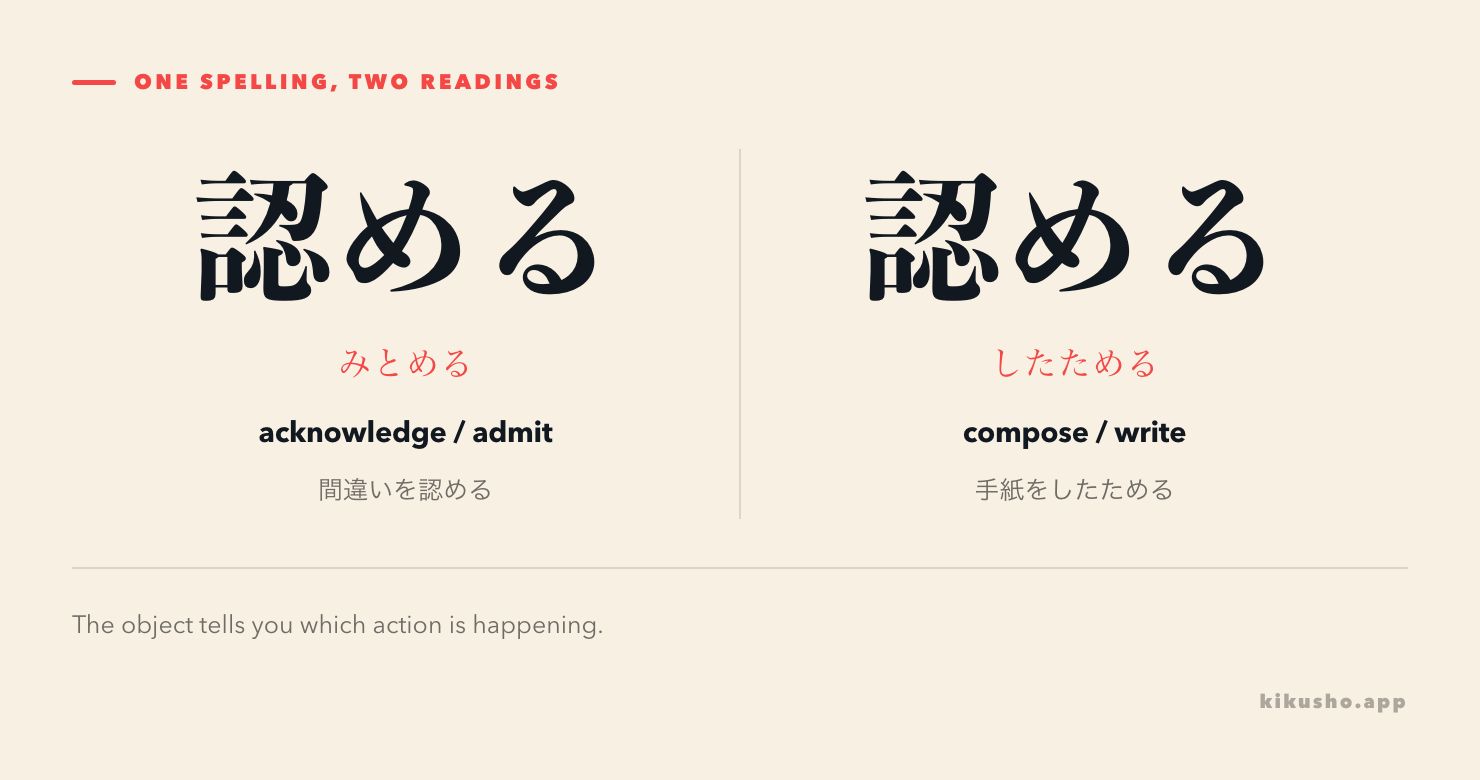
The final row is a separate reading and sense, not a synonym for “recognize.” Its place here is a reading trap: in literary prose, someone can 認める a letter, meaning “compose” it. Most modern writers spell this sense したためる in hiragana. Kokugo Jitenon gives the letter-writing sense, and Kotobank records the distinct reading. Older senses such as eating exist, but are outside this lesson.
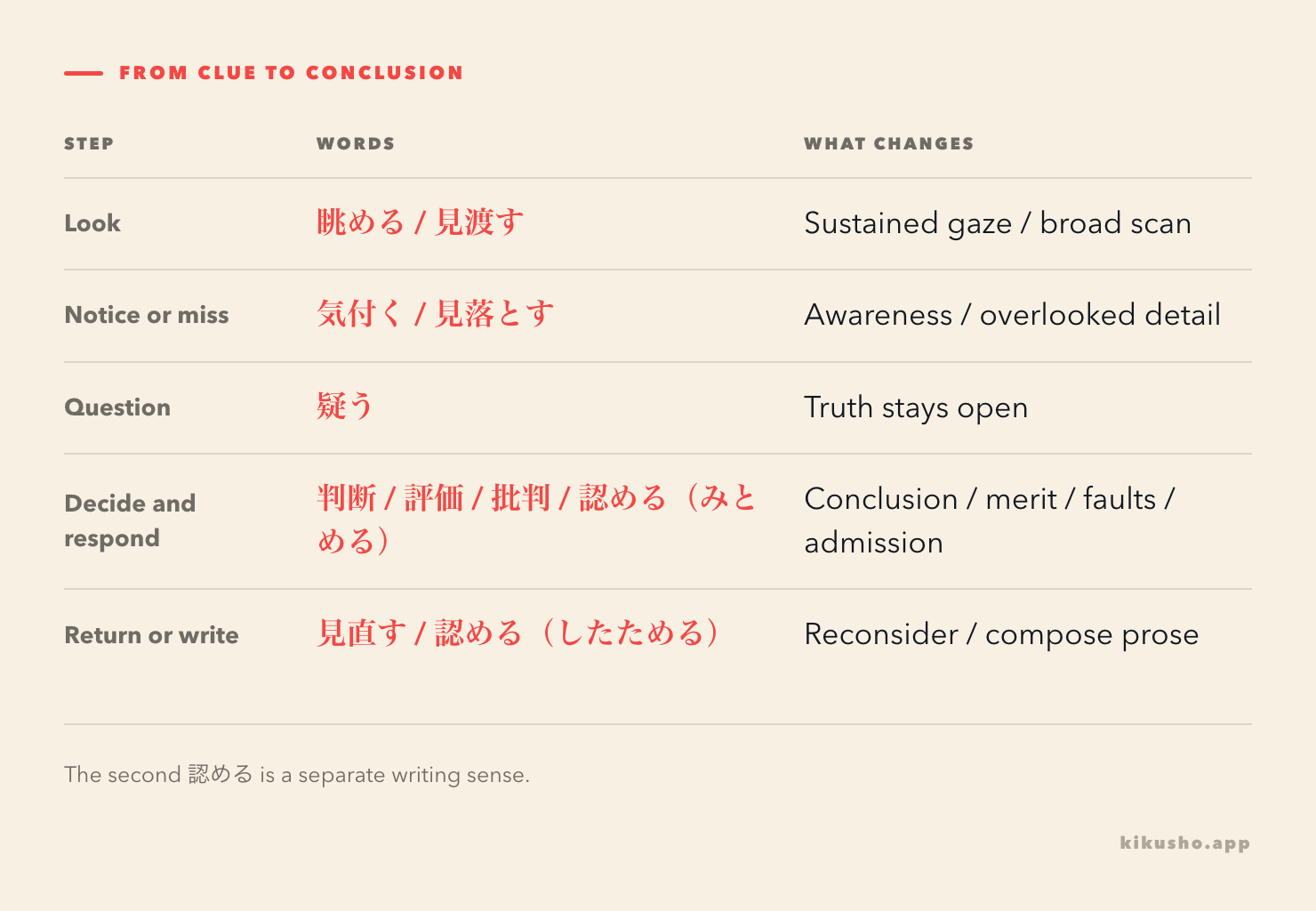
眺める and 見渡す look; 気付く and 見落とす change awareness
眺める(ながめる) can suggest a sustained gaze at the sea, a person's face, or an unfolding scene. 見渡す(みわたす) foregrounds breadth: across a classroom or as far as you can see. The senses overlap when both describe a wide view, so this is a focus difference, not an absolute replacement rule. Daijisen's 眺める entry includes broad and sustained looking; its 見渡す entry emphasizes range.
窓から海を眺めていた。
まどから うみを ながめていた。
I was gazing at the sea from the window.
教室を見渡して、空いている席を探した。
きょうしつを みわたして、あいている せきを さがした。
I looked across the classroom for an empty seat.
Looking does not guarantee noticing. 気付く(きづく) names the moment a fact enters awareness. Its target normally takes に: 誤りに気付く, “notice an error,” or 彼がいないことに気付く, “realize he is absent.” Kotobank gives 誤りに気付く; Nihongo Master independently confirms the reading and awareness sense. 見落とす(みおとす) is the failure to notice a detail that was there, with を marking the missed thing: 数字を見落とす. Kotobank and Nihongo Master describe this failure-to-notice sense.
表の小さな数字に気付いた。
ひょうの ちいさな すうじに きづいた。
I noticed the small number in the table.
最初に読んだとき、その数字を見落とした。
さいしょに よんだとき、その すうじを みおとした。
When I first read it, I missed that number.
For more object-particle contrasts, see five Japanese verb families and the particles they take.
疑う leaves a claim open; 判断 closes it for now
疑う(うたがう) means doubt or suspect. 説明を疑う questions an explanation; 人を疑う suspects a person. It does not itself mean you proved anyone wrong. Kotobank distinguishes uncertainty about truth from suspecting a bad possibility; Nihongo Master gives both doubt and suspect senses.
数字が合わないので、説明を疑った。
すうじが あわないので、せつめいを うたがった。
The numbers did not match, so I doubted the explanation.
判断(はんだん) is a noun that forms 判断する, “judge” or “decide.” 資料から判断する names the evidence with から; 必要だと判断する states the conclusion with と. A judgement can later change. Kotobank covers deciding, and Nihongo Master confirms the noun-plus-する form.
資料から判断して、予定を変えた。
しりょうから はんだんして、よていを かえた。
Judging from the documents, we changed the schedule.
If you are comparing ways to think rather than conclusions based on evidence, 思う and 考える address a different distinction.
評価, 批判, and 認める respond to the judgement
評価(ひょうか) assesses merit or value. 作品を評価する can be neutral; 高く評価する rates something highly. The word alone does not require praise. Kotobank includes appraisal of worth, and Nihongo Master records its noun and する forms.
審査員はその作品を高く評価した。
しんさいいんは その さくひんを たかく ひょうかした。
The judges rated that work highly.
批判(ひはん) also forms a する verb. Its broad dictionary sense is reasoned examination, but 方針を批判する in ordinary modern use often means pointing out faults in a policy and saying they should be corrected. It is more directed than a neutral 評価. Daijisen records both senses; Kanjipedia notes the modern negative drift.
記者は新しい方針を批判した。
きしゃは あたらしい ほうしんを ひはんした。
The reporter criticized the new policy.
認める(みとめる) can acknowledge a fact, admit a mistake, recognize merit, or approve a request. 間違いを認める is “admit a mistake,” not merely “notice it”; 彼の才能を認める recognizes ability. Nihongo Master lists these senses separately from Kotobank's したためる entry.
担当者は自分の間違いを認めた。
たんとうしゃは じぶんの まちがいを みとめた。
The person in charge admitted their mistake.
In a report, someone might evaluate work, criticize a flaw, and admit a mistake. The N2 newspaper vocabulary lesson gives more formal noun-plus-する examples.
見直す returns to the evidence; したためる writes it down
見直す(みなおす) can mean inspect something again, reconsider it, or revise it. 計画を見直す is a review of the plan. With a person as object, 彼を見直した can mean “I came to think better of him”; that positive sense is not present in every use. Kotobank and Nihongo Master both distinguish re-examination from a better opinion.
数字に誤りがあったので、計画を見直した。
すうじに あやまりが あったので、けいかくを みなおした。
There was an error in the numbers, so we reviewed the plan.
したためる means to compose or write down something, especially a letter or other prose. The uncommon kanji spelling 認める does not make it another use of みとめる. Kokugo Jitenon gives 手紙を認める for the writing sense; a contemporary usage note explains why hiragana is common.
祖父は友人への手紙をしたためた。
そふは ゆうじんへの てがみを したためた。
My grandfather composed a letter to a friend.
When you meet one of these words in a report, Kikusho lets you select the phrase in text or capture it from a page, check the drafted reading and nuance, then save a card for later review. Its free plan allows five captures a day and unlimited reviews; it does not supply an official JLPT syllabus.
Practice: six questions
Attempt all six before going to the answer block.
Question 1
How is 見落とす read in 重要な数字を見落とした?
ア. みおとす
イ. みわたす
ウ. みなおす
エ. みおろす
Question 2
Choose the spelling for みなおした in 提出前に計画をみなおした.
ア. 見落とした
イ. 見直した
ウ. 見渡した
エ. 見通した
Question 3
Which noun forms a する verb meaning “assess a work's merit” in 審査員は作品を__した?
ア. 評判
イ. 判断
ウ. 評価
エ. 批判
Question 4
Read the short passage and fill the blank.
報告書にその数字は載っていたが、担当者は存在に気付かなかった。つまり、その数字を__いた。
ア. 眺めて
イ. 見落として
ウ. 評価して
エ. 疑って
Question 5
Which paraphrase fits 会議で計画を見直すことになった?
ア. The plan was approved without discussion.
イ. The plan will be examined again and may be revised.
ウ. The plan was composed as a letter.
エ. The plan was criticized in public.
Question 6
Which sentence uses the assigned word with the right particle and meaning?
ア. 小さな誤りを気付いた。
イ. 小さな誤りに気付いた。
ウ. 小さな誤りに見落とした。
エ. 小さな誤りを判断した。
Answers and explanations
Answer 1
ア. みおとす. 見落とす means to miss a visible detail. みわたす reads 見渡す, to scan broadly; みなおす reads 見直す, to review. みおろす reads a different verb, 見下ろす, to look down.
Answer 2
イ. 見直した. The plan was examined again. 見落とした means “missed”; 見渡した means “looked across”; 見通した can mean “saw through” or “anticipated.” None of those expresses reviewing the plan.
Answer 3
ウ. 評価. 作品を評価する assesses merit. 判断する means judge or decide, but this question asks about value rather than a decision. 批判する foregrounds faults; 評判 is reputation or public opinion and does not form the intended する verb.
Answer 4
イ. 見落として. The report contained the number, but the person did not become aware of it. 眺める means gazing at it, 評価する would assess it, and 疑う would question it. Only 見落とす states the failure to notice.
Answer 5
イ. The plan will be examined again and may be revised. 見直す can mean re-examine or reconsider a plan. Approval, writing a letter, and public criticism are different events. The sentence does not say the new review will improve anyone's opinion.
Answer 6
イ. 小さな誤りに気付いた. 気付く takes に for what comes to awareness. 見落とす takes を for the missed object. 判断する can take を, but 誤りを判断した does not express noticing a small error in this context.
Common questions
Is every word on this page N2 vocabulary?
No. This N2 reading lesson revisits N3-listed words and reaches ahead to several N1-listed words. These are study-list estimates, not an official exhaustive JLPT vocabulary list.
Does 見直す always mean a better opinion?
No. It can mean to inspect or reconsider something again, such as a plan. With a person as object, it can mean forming a better opinion of them.
Can 認める have two readings?
Yes. みとめる means to acknowledge or approve. The separate reading したためる means to write a letter or other prose and is often written in hiragana in modern texts.