On this page
Use 順 and 順番 to order items, 種類・範囲・対象 to define what a report covers, and 比較・対照 to compare its results. 関連・共通・異なる describe connections and differences, while 同一・同様・等しい state three different kinds of sameness; 等(など) keeps a list open.
These fourteen N3 words form a practical workflow. Imagine preparing a survey: decide the order, classify the data, set the scope, compare groups, and report which features connect, differ or remain the same.
Four stages organise the fourteen words
| Stage | Words | Decision |
|---|---|---|
| Put things in order | 順, 順番 | What criterion sets the sequence, and whose turn is it? |
| Define the set | 種類, 範囲, 対象, 等(など) | What kinds, limits and examples are included? |
| Find relationships | 関連, 共通, 異なる | What is connected, shared or different? |
| Compare sameness | 比較, 対照, 同一, 同様, 等しい | Are we comparing, contrasting, identifying or measuring equality? |
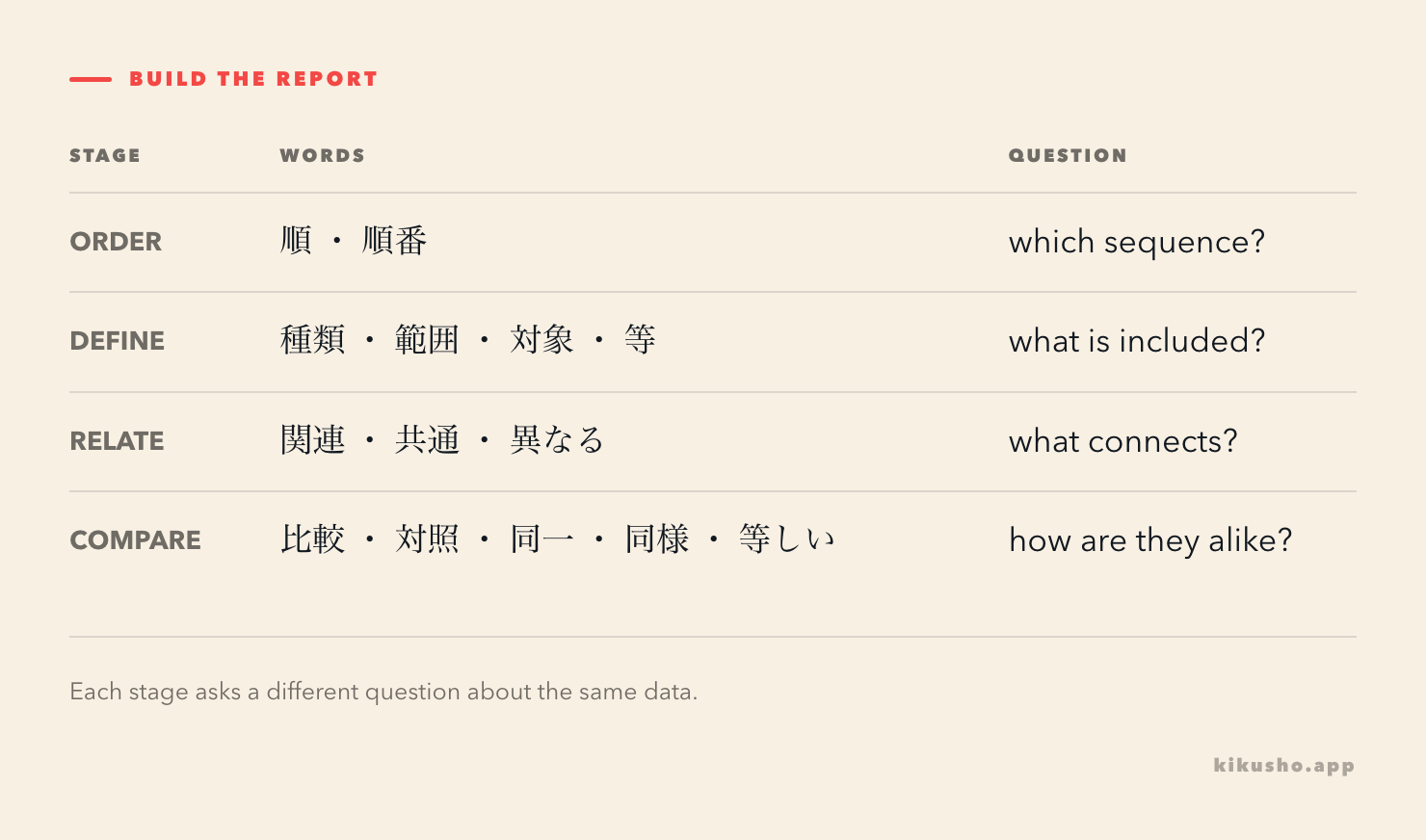
Several words overlap in English, but their Japanese frames reveal the difference. Learn 年齢順, 調査の対象, 両者に共通する, and 長さが等しい as complete units.
順 names the criterion; 順番 can name your turn
順(じゅん) is an arrangement based on a criterion. It commonly follows the noun that supplies that criterion.
応募者の名前を五十音順に並べてください。
おうぼしゃの なまえを ごじゅうおんじゅんに ならべて ください。
Please arrange the applicants' names in Japanese alphabetical order.
Other common compounds are 年齢順, by age; 到着順, by arrival; and 番号順, in numerical order. 順に without a preceding criterion means one after another in the established sequence.
質問に一つずつ順に答えます。
しつもんに ひとつずつ じゅんに こたえます。
I will answer the questions one by one in order.
順番(じゅんばん) can name that sequence as a whole and the turn assigned to one participant.
二番目と三番目の質問の順番を変えました。
にばんめと さんばんめの しつもんの じゅんばんを かえました。
I changed the order of the second and third questions.
次は私の順番です。
つぎは わたしの じゅんばんです。
It is my turn next.
The entries for 順 and 順番 both cover order. 順番 specifically includes taking turns according to that order, which explains 順番を待つ. Say 年齢順, not 年齢順番, when the noun simply names a sorting criterion.
種類 classifies; 範囲 draws the limit
種類(しゅるい) is a kind, type or category. It divides a larger set according to shared characteristics.
この調査では三種類の回答を集めました。
この ちょうさでは さんしゅるいの かいとうを あつめました。
We collected three types of responses in this survey.
Useful frames include 何種類, how many kinds; 種類が多い, there are many varieties; and 種類別に分ける, divide by type. The counter directly precedes 種類: 三種類, not 三つ種類.
範囲(はんい) is a limited extent, area or scope. It answers where the boundary lies rather than how the contents are classified.
今回は東京駅から五キロの範囲を調べます。
こんかいは とうきょうえきから ごキロの はんいを しらべます。
This time, we will examine the area within five kilometres of Tokyo Station.
分かる範囲で答えてください。
わかる はんいで こたえて ください。
Please answer to the extent that you can.
Shogakukan defines 範囲 as a fixed or limited extent and gives both spatial and ability-limited uses. A survey can include several 種類 of response inside one 範囲.
対象 is what the action points toward
対象(たいしょう) is the target, object or group toward which an action, study or rule is directed.
このアンケートは大学生を対象としています。
この アンケートは だいがくせいを たいしょうと しています。
This questionnaire is intended for university students.
十八歳未満は割引の対象です。
じゅうはっさいみまんは わりびきの たいしょうです。
People under eighteen are eligible for the discount.
The main patterns are Nを対象とする, target N; Nが対象になる, N becomes eligible or included; and compounds such as 対象者, target participants, and 対象範囲, the scope covered. The dictionary definition centres on the thing toward which an action is directed.
This word does not itself compare anything. That distinction becomes important because 対象 and 対照 have the same reading.
関連, 共通 and 異なる answer three relationship questions
関連(かんれん) says that matters connect or bear on one another. Common forms are Nに関連する, Nとの関連, and 関連がある.
睡眠時間と集中力には関連があります。
すいみんじかんと しゅうちゅうりょくには かんれんが あります。
Sleep duration and concentration are related.
A relationship is not automatically a cause. 関連がある reports a connection; AがBの原因だ makes the stronger causal claim.
共通(きょうつう) identifies a feature that applies to every member under discussion.
三つの案に共通する問題を見つけました。
みっつの あんに きょうつうする もんだいを みつけました。
We found a problem common to all three proposals.
The frames are Nに共通する + noun, 共通の + noun, and 共通点. Shogakukan's entry defines 共通 as something found in or applicable to two or more things.
異なる(ことなる) is a verb meaning to differ or be different. The comparison partner usually takes と, while the feature that differs often takes が.
地域によって回答の傾向が異なります。
ちいきによって かいとうの けいこうが ことなります。
Response trends differ by region.
この結果は前回の結果と異なります。
この けっかは ぜんかいの けっかと ことなります。
This result differs from the previous result.
異なる is more common in explanatory and written language than the everyday 違う. The dictionary usage note for 違う specifically identifies 異なる as the more literary choice in statements about differing values or conditions.
比較 is the general operation; 対照 makes a contrast visible
比較(ひかく) is the broad act of comparing two or more things. It can examine similarities, differences, size, price or any other criterion.
今年の結果を去年の結果と比較します。
ことしの けっかを きょねんの けっかと ひかくします。
We will compare this year's results with last year's.
The common structures are AとBを比較する, compare A and B; AをBと比較する, compare A with B; and Bと比較して, compared with B. 比較的 is a related adverb meaning relatively, but it is not another word for the action 比較.
対照(たいしょう) also compares, especially by placing things against each other so their difference becomes noticeable.
都市部と地方の回答を対照して読みます。
としぶと ちほうの かいとうを たいしょうして よみます。
We read the urban and regional responses against each other.
二人の性格は対照的です。
ふたりの せいかくは たいしょうてきです。
Their personalities are contrasting.
Shogakukan's 対照 entry records both checking things against each other and a pairing in which their differences stand out. That makes 比較 the neutral operation and 対照 a more focused contrast, although the verbs overlap in some comparison contexts.
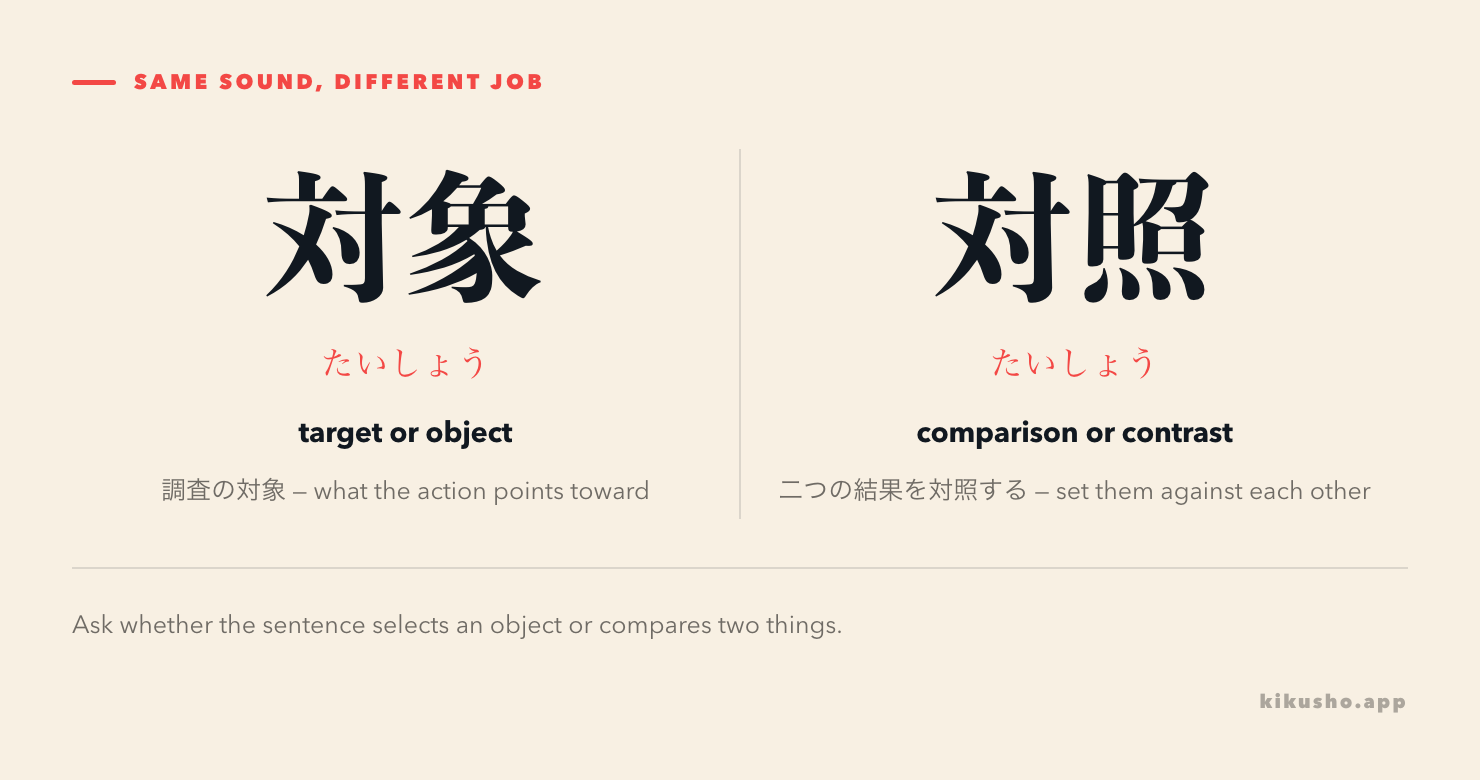
The kanji give a useful check. 象 in 対象 belongs to the object toward which attention is directed. 照 in 対照 suggests checking one thing against another. In 調査対象を比較する, the first word selects what is studied and the second names what the researcher does with those selected items.
同一, 同様 and 等しい do not assert the same degree of sameness
同一(どういつ) can identify the very same entity, or state that there is no difference.
二つの申込書は同一人物が書いたものです。
ふたつの もうしこみしょは どういつじんぶつが かいた ものです。
The two application forms were written by the same person.
Here 同一人物 means one person, not two similar people. Other common combinations are 同一の条件, identical conditions, and 同一商品, the identical product. The dictionary entry covers both being one and the same thing and having no difference.
同様(どうよう) means the same or almost the same in kind, state or manner. It allows two distinct cases to follow a similar pattern.
二回目の調査でも同様の結果が出ました。
にかいめの ちょうさでも どうようの けっかが でました。
The second survey produced similar results.
The common frames are 同様の + noun, Nと同様だ, and Nと同様に + verb. The 同様 definition explicitly includes “the same or almost the same,” so it should not automatically be upgraded to strict identity.
等しい(ひとしい) is an い-adjective. It usually says that quantity, degree, size, value or another comparable property is equal.
二つのグループは参加者の数が等しい。
ふたつの グループは さんかしゃの かずが ひとしい。
The two groups have an equal number of participants.
全員に等しく機会を与えます。
ぜんいんに ひとしく きかいを あたえます。
We give everyone an equal opportunity.
The adverb is 等しく. Shogakukan gives equality in quantity, degree or form as its first sense.
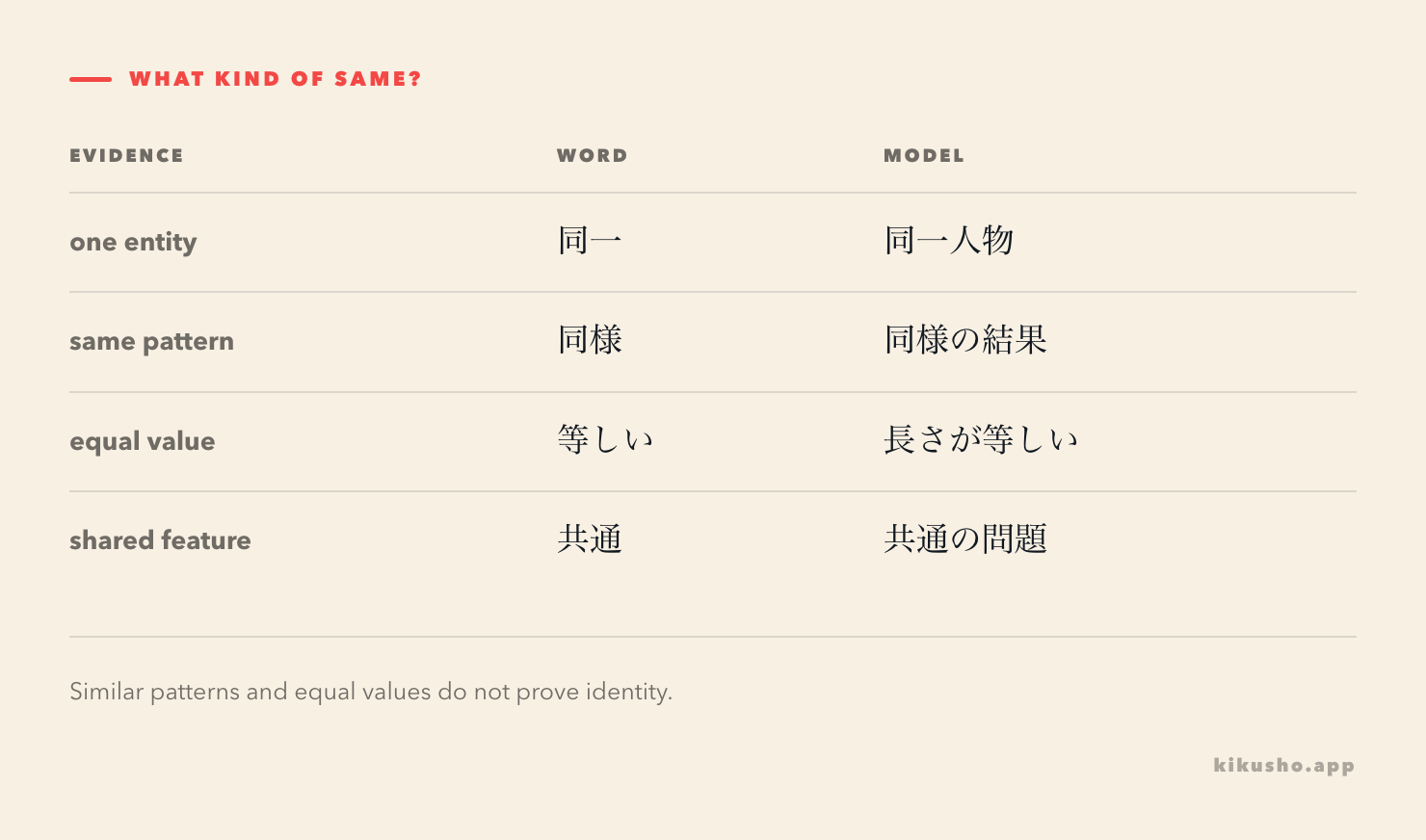
Ask what the evidence proves. Two surveys may produce 同様の結果 without producing identical numbers. Two groups can have 人数が等しい while sharing no other feature. Two records can contain a 共通の住所 without belonging to the 同一人物.
等(など) adds examples without closing the list
In this lesson, 等 is read など. It follows one example or a list and means “and so on,” “things such as,” or sometimes “something like.”
年齢、職業、住んでいる地域等を質問しました。
ねんれい、しょくぎょう、すんでいる ちいきなどを しつもんしました。
We asked about age, occupation, area of residence and similar matters.
The same sentence is often written with kana: 年齢、職業、住んでいる地域など. Writing 等 does not force the reading とう. The dictionary entry for 等 records など as an example-giving particle and とう as a formal suffix after items of the same kind.
The N1 relationship vocabulary lesson teaches 等(とう) in formal lists such as 申請書、写真等を提出する. This N3 item owns the など reading and its wider example-giving use.
One survey note connects the complete set
応募者を受付順に並べ、順番に面接する。質問は職業、経験、希望する働き方等の三種類で、回答できる範囲で話してもらう。今回の対象は経験の異なる二十人だ。回答と職歴との関連を調べ、全員に共通する希望があるか確認する。前回の調査と比較し、対照的な回答も記録する。同一人物の二回の回答が同様の傾向を示すか、各グループの人数が等しいかも調べる。
おうぼしゃを うけつけじゅんに ならべ、じゅんばんに めんせつする。しつもんは しょくぎょう、けいけん、きぼうする はたらきかたなどの さんしゅるいで、かいとうできる はんいで はなしてもらう。こんかいの たいしょうは けいけんの ことなる にじゅうにんだ。かいとうと しょくれきとの かんれんを しらべ、ぜんいんに きょうつうする きぼうが あるか かくにんする。ぜんかいの ちょうさと ひかくし、たいしょうてきな かいとうも きろくする。どういつじんぶつの にかいの かいとうが どうようの けいこうを しめすか、かくグループの にんずうが ひとしいかも しらべる。
Arrange the applicants in order of reception and interview them in turn. There are three types of question, covering occupation, experience, preferred working style and similar topics; ask them to speak to the extent they can answer. This survey targets twenty people with different levels of experience. Examine the relationship between their answers and work histories, and check for hopes shared by everyone. Compare the findings with the previous survey and record contrasting answers. Also examine whether two answers from the same person show a similar tendency and whether each group has an equal number of people.
The words form a chain rather than a synonym list. 順 supplies the sorting rule; 順番 distributes turns. 種類・範囲・対象・等 define the data. 関連・共通・異なる describe relationships, and the final four words state what kind of comparison or sameness the evidence supports.
Save the note in Kikusho as several short cards, keeping each noun with its partner: 受付順に並べる, 調査の対象, 回答との関連, and 人数が等しい. The review then tests the decision carried by the phrase instead of asking for fourteen loose English translations.
N3 is a practical placement with one recorded disagreement
Kikusho's September 2026 inventory files the complete set under N3. The current JapaneseTest4You N3 index independently lists most of the assigned headwords, and its 順番 page confirms the reading and turn-or-order sense. The two baseline lists descend from the same Waller/Tanos family and therefore count as one source family.
対照 has the one placement disagreement: an N3 source row and two N2 rows retain the same headword. This page keeps it at N3 because the curriculum assigns the basic compare-and-contrast use here, while acknowledging the conflicting estimates. The JLPT publishes test structure and sample formats, not a binding word-by-word syllabus for every level. Study the contrast because it improves reading precision, not because one unofficial list can establish an exam boundary.
Practice: identify the job before opening the answers
1 · Homophone reading. How do you read both 対象 and 対照?
A. たいじょう
B. たいしょう
C. だいしょう
D. たいそう
2 · Target or contrast spelling. Complete the sentence meaning “This course is intended for beginners”: この講座は初心者を__としています。
A. 対象
B. 対照
C. 対称
D. 大賞
3 · Criterion or turn. Which sentence naturally says “Please wait for your turn”?
A. 年齢順を待ってください。
B. 順番を待ってください。
C. 種類を待ってください。
D. 範囲を待ってください。
4 · Type or scope. A researcher studies three kinds of transport only inside the city. Which pair fills the blanks?
市内という__で、三__の交通手段を調べた。
A. 種類 / 範囲
B. 範囲 / 種類
C. 対照 / 順番
D. 関連 / 同一
5 · Shared feature. Complete: 四つの案に__する問題は費用の高さです。
A. 異なる
B. 比較
C. 共通
D. 等しい
6 · Relationship is not cause. What does 睡眠時間と集中力には関連がある claim?
A. Sleep duration certainly causes concentration.
B. Sleep duration and concentration have a connection.
C. The two quantities are equal.
D. Every participant sleeps for the same length of time.
7 · Same person or similar result. Choose the sequence that fits.
__人物に二回答えてもらったところ、二回とも__の結果になった。
Sequence α: 同様 → 同一
Sequence β: 同一 → 同様
Sequence γ: 等しい → 異なる
Sequence δ: 共通 → 対照
8 · Equal quantity. Which sentence states that the two groups contain an equal number of people?
A. 二つのグループは人数が等しい。
B. 二つのグループは人数が同一人物だ。
C. 二つのグループは人数を対象とする。
D. 二つのグループは人数に関連する。
9 · Read 等 in context. In 年齢、職業等を質問する, which reading and function fit 等?
A. ら; it makes 職業 plural
B. とう; it ranks the occupations
C. など; it gives examples and leaves the list open
D. ひとしい; it says the items are equal
10 · Interpret the report. Which statement is supported?
対象者を年齢順に並べて回答を比較した。二つのグループの人数は等しかったが、結果は地域によって異なった。
A. The researcher contrasted age with population size.
B. Every region produced identical results.
C. The target participants were ordered by age; group sizes were equal, but regional results differed.
D. The survey excluded age and region from its scope.
Answers and explanations
1 · B, たいしょう. 対象 and 対照 are homophones. The surrounding meaning determines the kanji.
2 · A, 対象. The course directs its teaching toward beginners. 対照 would introduce comparison or contrast, and 対称 means symmetry.
3 · B. 順番 can name an individual's turn. 年齢順 is a sorting criterion and does not take 待つ in this meaning.
4 · B, 範囲 then 種類. 市内の範囲 sets the geographical limit; 三種類 counts transport categories.
5 · C, 共通. 四つの案に共通する問題 is a problem found in every proposal. 異なる would state difference and needs different sentence grammar.
6 · B. 関連 identifies a connection. The sentence does not establish direction or causation and says nothing about equal values.
7 · Sequence β, 同一 → 同様. One and the same person is 同一人物. Two distinct answers that follow a similar pattern can produce 同様の結果.
8 · A. 等しい is the adjective used for equal quantities or degrees. The other options assign incompatible roles to 人数.
9 · C, など. 等 gives selected examples while allowing more items of the same general kind. The formal reading とう is possible in other list styles, but this question asks for the assigned N3 use.
10 · C. 対象者 are the selected participants, 年齢順 gives the sorting criterion, 等しい states numerical equality, and 異なる reports regional differences.
Common questions
What is the difference between 順 and 順番?
Both can refer to order. 順(じゅん)is compact and often follows the organising criterion, as in 年齢順 and 五十音順, or appears in 順に. 順番(じゅんばん)can name the whole sequence and an individual person's turn, as in 順番を変える and 順番を待つ.
What is the difference between 対象 and 対照?
Both are read たいしょう. 対象 is the target or object toward which an action is directed: 調査の対象. 対照 means comparing two things or a contrast that makes differences stand out: 二つの結果を対照する.
How do 同一, 同様 and 等しい differ?
同一(どういつ)can identify the very same thing or state that there is no difference. 同様(どうよう)means the same or nearly the same in kind, state or manner. 等しい(ひとしい)normally says that a measurable quantity, degree or value is equal.
Can 等 be read both など and とう?
Yes. In this N3 lesson, 等(など)follows examples and means “and so on” or “things such as.” The reading とう is a more formal suffix after a list and can also count ranks. The context and register determine the reading.