On this page
These seven N4 words let you follow one cultural day out: hear an 音, listen to a ピアノ, watch an 踊り, 踊る at an お祭り, and visit a 展覧会 in a 美術館. Learn each word with the action or place it naturally selects, because English labels such as “sound,” “dance,” “festival” and “exhibition” do not show those relationships by themselves.
Seven words for a cultural outing
| Role | Word | Reading | Part of speech and core sense | Anchor phrase |
|---|---|---|---|---|
| What reaches your ears | 音 | おと | noun: sound; noise | 音がする, hear a sound |
| A dance as a thing | 踊り | おどり | noun: dance; dancing | 踊りを見る, watch a dance |
| The action | 踊る | おどる | godan verb: to dance | みんなで踊る, dance together |
| A public celebration | お祭り | おまつり | noun: festival; celebration | お祭りに行く, go to a festival |
| A temporary show | 展覧会 | てんらんかい | noun: exhibition | 展覧会を見る, see an exhibition |
| The art institution | 美術館 | びじゅつかん | noun: art museum; art gallery | 美術館で絵を見る, see art at a museum |
| A musical instrument | ピアノ | ピアノ | noun: piano | ピアノを弾く, play the piano |
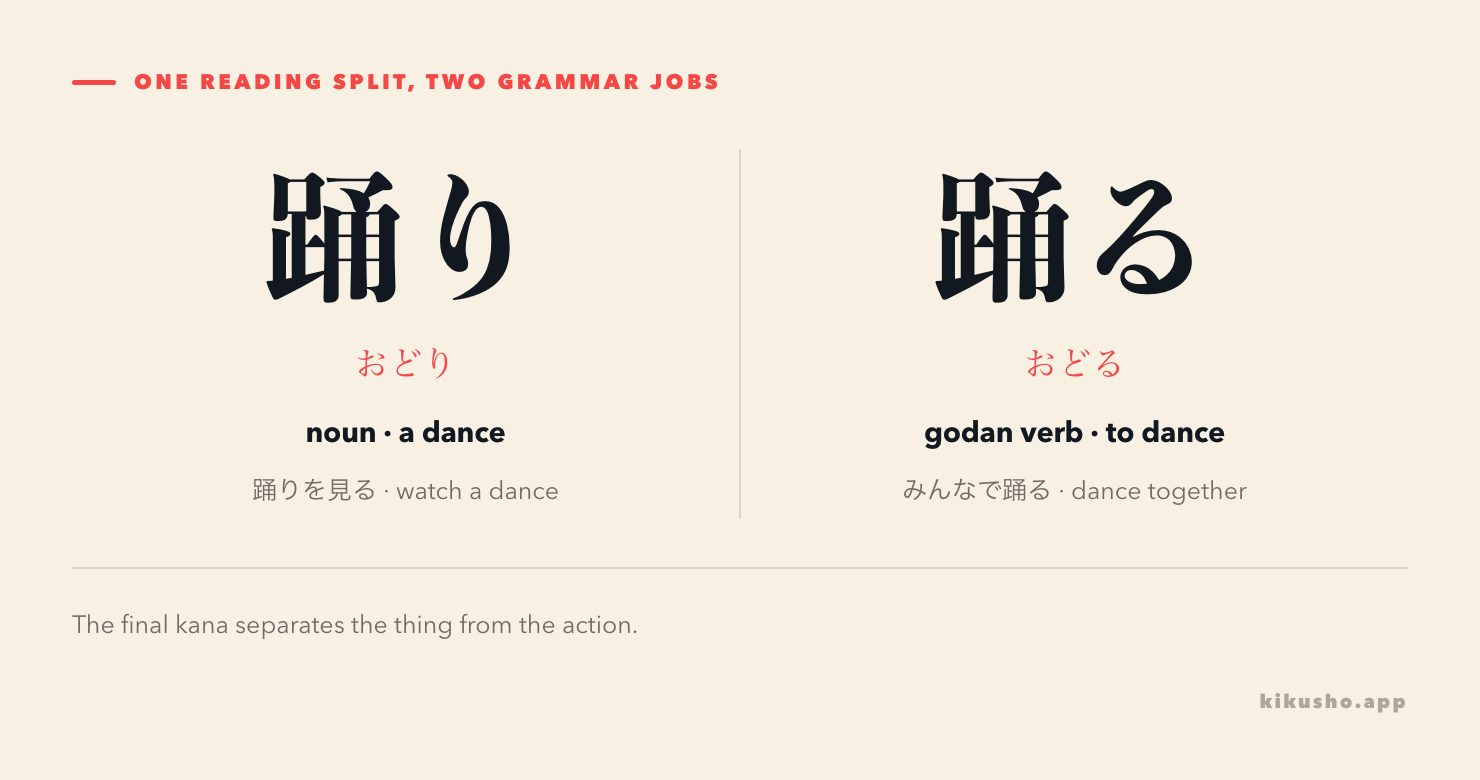
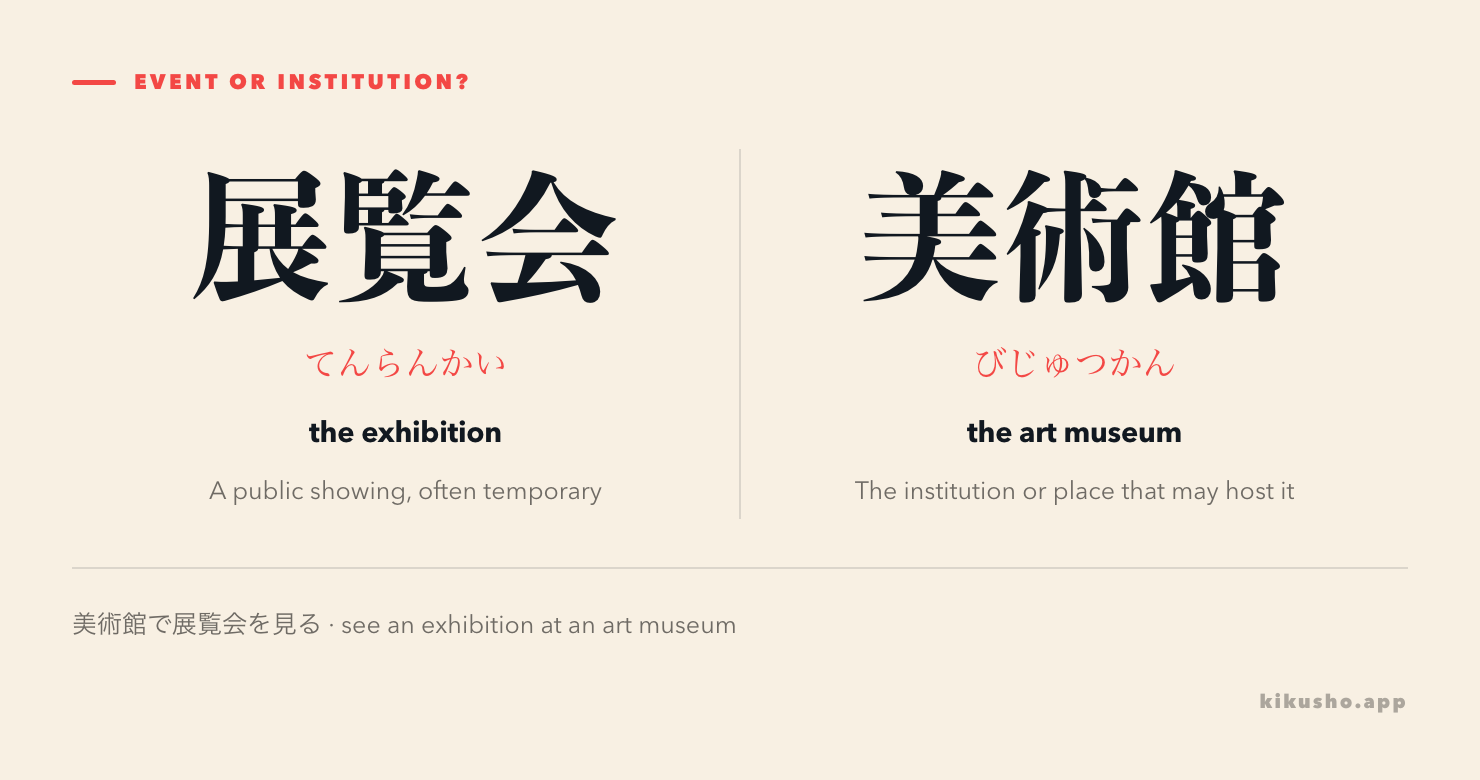
The set has two contrasts worth protecting. 踊り names a dance, while 踊る performs the action. 展覧会 names an event, while 美術館 names the institution or place that may host it.
音 is what you hear; ピアノ is what someone plays
音(おと) is an audible sound. It may come from an instrument, a door, rain or an unknown source:
外から大きな音がしました。
そとから おおきな おとが しました。
I heard a loud sound from outside.
The pattern 音がする literally presents the sound as occurring; in natural English it often becomes “hear a sound.” You can also identify its source with の:
隣の部屋からピアノの音が聞こえます。
となりの へやから ピアノの おとが きこえます。
I can hear the sound of a piano from the next room.
Do not automatically replace 音 with 声(こえ). Modern Japanese normally uses 声 for a person or animal's voice and 音 for a sound that is not being treated as a voice. Kotobank's history and definition of 音 explains that modern おと is centred on sounds from inanimate sources, while こえ is centred on living beings' vocal sound.
ピアノ is the instrument. Its usual partner is 弾く(ひく), the verb used for playing keyboard and stringed instruments:
姉は毎晩ピアノを弾きます。
あねは まいばん ピアノを ひきます。
My older sister plays the piano every evening.
The instrument is marked by を. ピアノをする may be understood in some broad activity contexts, but it does not replace the precise beginner phrase ピアノを弾く. The same verb appears with the guitar in the N5 music and creative-hobbies lesson.
踊り is the noun; 踊る is the verb
The reading changes only at the end, but the grammar changes completely. 踊り(おどり) is a noun meaning a dance or dancing:
広場で伝統的な踊りを見ました。
ひろばで でんとうてきな おどりを みました。
I watched a traditional dance in the square.
踊る(おどる) is the godan verb “to dance”:
音楽に合わせて、みんなで踊りました。
おんがくに あわせて、みんなで おどりました。
We all danced to the music.
Its final る changes with the tense and register: 踊ります is polite non-past, 踊った is plain past, and 踊らない is plain negative. It is not an ichidan verb, so forms such as 踊て or 踊ない are incorrect.
Kotobank defines 踊り as dancing or movement in time with music and 踊る as moving the body to music. The entries overlap in meaning because one is the thing and the other is the action. Keep a verb beside each card to preserve that difference: 踊りを見る and 音楽に合わせて踊る.
お祭り connects the sound, music and dancing
お祭り(おまつり) is a festival or public celebration. The shorter 祭り also exists; お is the common polite or familiar prefix in everyday お祭り.
土曜日に町のお祭りへ行きます。
どようびに まちの おまつりへ いきます。
I am going to the town festival on Saturday.
Use に or へ with 行く to mark the destination. Use で when the festival is the setting for an action:
お祭りで踊りを見て、最後は私たちも踊りました。
おまつりで おどりを みて、さいごは わたしたちも おどりました。
We watched a dance at the festival, and at the end we danced too.
This sentence keeps all three grammatical jobs clear. お祭り is the place or event marked by で, 踊り is the object of 見る, and 踊りました is the action. The Japan Foundation's account of a multicultural festival describes 世界の歌と踊り and お祭り, providing a real institutional example of these words appearing together.
The dictionary entry for 祭り covers both ritual festivals and the broader modern use for festive public events. Context tells you whether a particular お祭り is religious, seasonal, local or promotional; the word itself does not promise one fixed format.
展覧会 is the event; 美術館 is the institution
A 展覧会(てんらんかい) is an exhibition: works or objects are arranged for the public to view, often for a limited period. A 美術館(びじゅつかん) is an art museum or gallery: the institution that collects, preserves, studies or displays art.
駅の近くの美術館で写真の展覧会を見ました。
えきの ちかくの びじゅつかんで しゃしんの てんらんかいを みました。
I saw a photography exhibition at the art museum near the station.
The particles reveal the relationship. 美術館で supplies the location. 展覧会を supplies the object of 見ました. An exhibition can also take place in a department store, school or temporary hall, so a 展覧会 is not automatically a 美術館.
The distinction is structural, not just a learner shortcut. Kotobank defines 展覧会 as a public showing and notes that it is often limited in time, while its 美術館 entry defines a facility that collects, preserves and displays art. The Japan Foundation likewise describes its visual-arts work through exhibitions held with museums and other institutions.
Useful phrases keep the event and place separate:
- 展覧会が開かれる — an exhibition is held
- 展覧会に行く — go to an exhibition
- 美術館に入る — enter an art museum
- 美術館で作品を見る — view works at an art museum
The more advanced N1 arts-production lesson continues from this visitor vocabulary to 曲, 演出, 衣装, 美術 and 上演.
One afternoon, seven decisions
Imagine that a museum district is holding a summer festival:
美術館で新しい展覧会を見ました。外に出ると、ピアノの音が聞こえました。近くのお祭りでは、子どもたちの踊りが始まり、大人も一緒に踊っていました。
びじゅつかんで あたらしい てんらんかいを みました。そとに でると、ピアノの おとが きこえました。ちかくの おまつりでは、こどもたちの おどりが はじまり、おとなも いっしょに おどっていました。
I saw a new exhibition at the art museum. When I went outside, I heard the sound of a piano. At a nearby festival, the children's dance began, and adults were dancing with them too.
Every assigned word has one job. 美術館 is a place, 展覧会 is what the visitor sees, ピアノ identifies the instrument, 音 is what reaches the ears, お祭り is the public event, 踊り names a performance, and 踊る reports what people do.
For a Kikusho card, preserve enough of that relationship to trigger the right word. A card with only “dance” must make you guess between 踊り and 踊る. 踊りを見る and みんなで踊る test the noun and verb separately. In the same way, 美術館で展覧会を見る preserves the place-event distinction in one short line.
A note about the N4 placement
Every assigned spelling-reading record carries an N4 label in Kikusho's dated reference inventory. Both imported snapshots trace back to the same Tanos/Waller list family, so matching labels reflect one placement tradition rather than independent confirmation. Other current study lists also put common items such as 音 and 踊る around N4, but those lists are not an official syllabus.
The JLPT FAQ explains that the former Test Content Specifications, which included vocabulary and kanji lists, are not published for the revised test. Dictionaries verify readings, meanings and usage; cultural sources show the words in context. Neither type of source certifies an official N4 boundary. Treat N4 here as a practical study placement and learn the collocations that make each word usable.
Practice: finish the outing before opening the notes
Scene 1 · read the exhibition
How do you read 展覧会?
A. てんらんかい
B. てんかんらい
C. でんらんかい
D. てんらんえ
Scene 2 · write the institution
Which spelling matches びじゅつかん, “art museum”?
A. 美術会
B. 美術館
C. 展術館
D. 美物館
Scene 3 · choose the noun and verb
Which pair correctly completes 広場で__を見て、私たちも__ました?
A. 踊る / 踊り
B. 踊り / 踊り
C. 踊り / 踊りまし
D. 踊る / 踊る
Scene 4 · separate the event from the place
Which sentence most naturally means “I saw an exhibition at an art museum”?
A. 展覧会で美術館を見ました。
B. 美術館で展覧会を見ました。
C. 美術館を展覧会でしました。
D. 展覧会が美術館を踊りました。
Scene 5 · report a sound
You hear an unexplained sound outside. Which phrase fits?
A. 外で音を弾きました。
B. 外で音がしました。
C. 外で音を踊りました。
D. 外で音に行きました。
Scene 6 · play the instrument
Which phrase naturally means “play the piano”?
A. ピアノを弾く
B. ピアノを歌う
C. ピアノを描く
D. ピアノをする音
Scene 7 · follow the whole route
Read the sentence: お祭りで踊りを見た後、美術館の展覧会に行きました。 What happened first?
A. The speaker danced at the museum.
B. The speaker played piano at the exhibition.
C. The speaker watched a dance at the festival.
D. The speaker heard a sound in the museum.
Answers and explanations
1 · Reading: A, てんらんかい. 展覧会 is read てんらんかい. C incorrectly voices the first sound, while B changes the character order and D drops a syllable.
2 · Orthography: B, 美術館. 美術 is fine art and 館 names a public building or institution. 展覧会 is the event that may be held there; the other spellings do not form the assigned word.
3 · Noun and verb: C. 踊り is the noun and can take を as the object of 見る. 踊りました is the polite past of the godan verb 踊る. The blank appears before ました, so 踊り completes that conjugation.
4 · Event and place: B. 美術館で marks the place of the action, while 展覧会を marks what the speaker saw. A reverses those roles and changes the intended meaning.
5 · Sound pattern: B. 音がする is the standard pattern for a sound being heard or occurring. The other answers attach actions or particles that do not express that situation.
6 · Instrument collocation: A. ピアノを弾く uses the normal verb for playing a keyboard instrument. 歌う is for singing and 描く for drawing; D does not form a natural phrase.
7 · Sequence: C. お祭りで踊りを見た means the speaker watched a dance at the festival. 後 marks that this occurred before going to the museum exhibition.
The route now stays clear in memory: hear an 音, play a ピアノ, watch an 踊り, 踊る at an お祭り, and see a 展覧会 at a 美術館.
Common questions
What is the difference between 踊り and 踊る?
踊り(おどり)is a noun meaning a dance or dancing. 踊る(おどる)is a godan verb meaning to dance. Use 踊りを見る for watching a dance and 音楽に合わせて 踊る for dancing to music.
What is the difference between 展覧会 and 美術館?
展覧会(てんらんかい)is an exhibition, usually a limited event. 美術館 (びじゅつかん)is the art museum or gallery that collects and displays art. A 展覧会 can be held at a 美術館.
How do you say play the piano in Japanese?
Say ピアノを弾く(ピアノをひく). 弾く is the usual verb for playing a keyboard or stringed instrument. The polite form is ピアノを弾きます.
Are these seven words officially N4 vocabulary?
No exhaustive official JLPT vocabulary list exists. Kikusho's dated reference inventory places these seven spelling-reading records at N4 and records no internal disagreement, so N4 is a study placement rather than an official boundary.