On this page
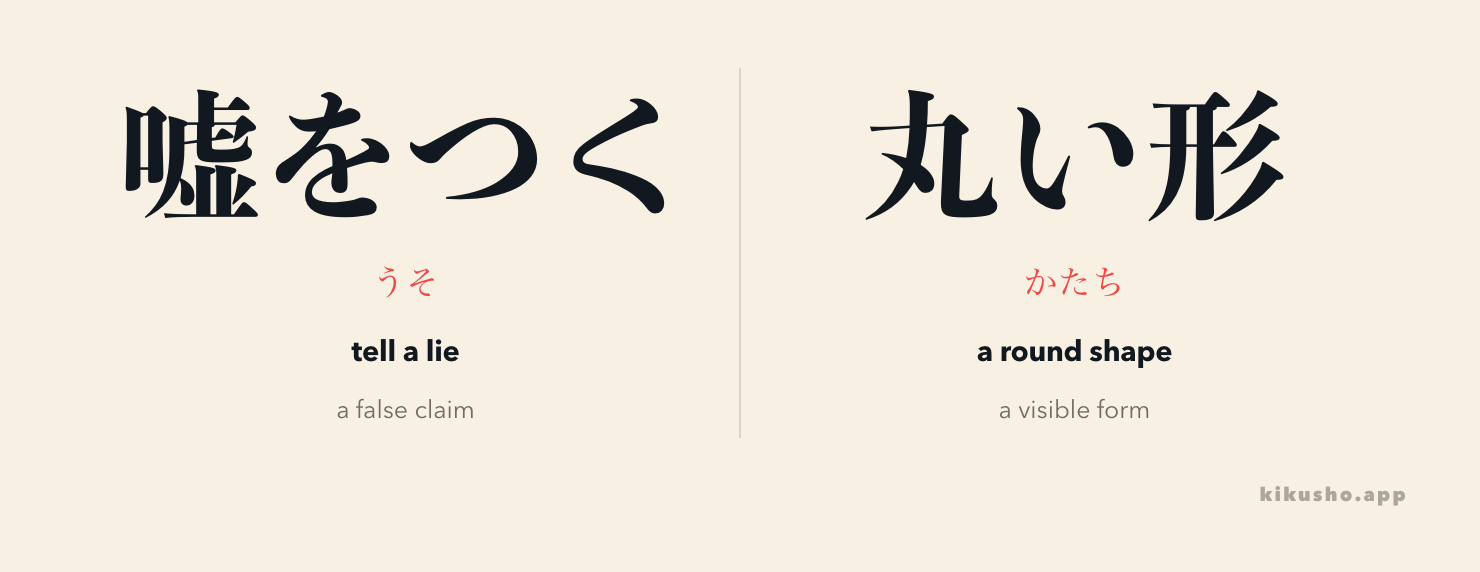
嘘(うそ) is a lie or false statement, 形(かたち) is a visible shape or outward form, 確か(たしか) marks certainty or a remembered fact, 正しい(ただしい) says something is correct, and 間違える(まちがえる) means to mistake one thing for another. The key is not to use one English word “right” for every job.
A school poster competition gives the five words a clear sequence. Students compare the poster’s shape with the instructions, check what they remember, identify the correct answer, and correct a false claim before the result is announced.
Five words for checking a claim
| Word | Core frame | Meaning |
|---|---|---|
| 嘘 | 嘘をつく | tell a lie |
| 形 | 丸い形 | shape or outward form |
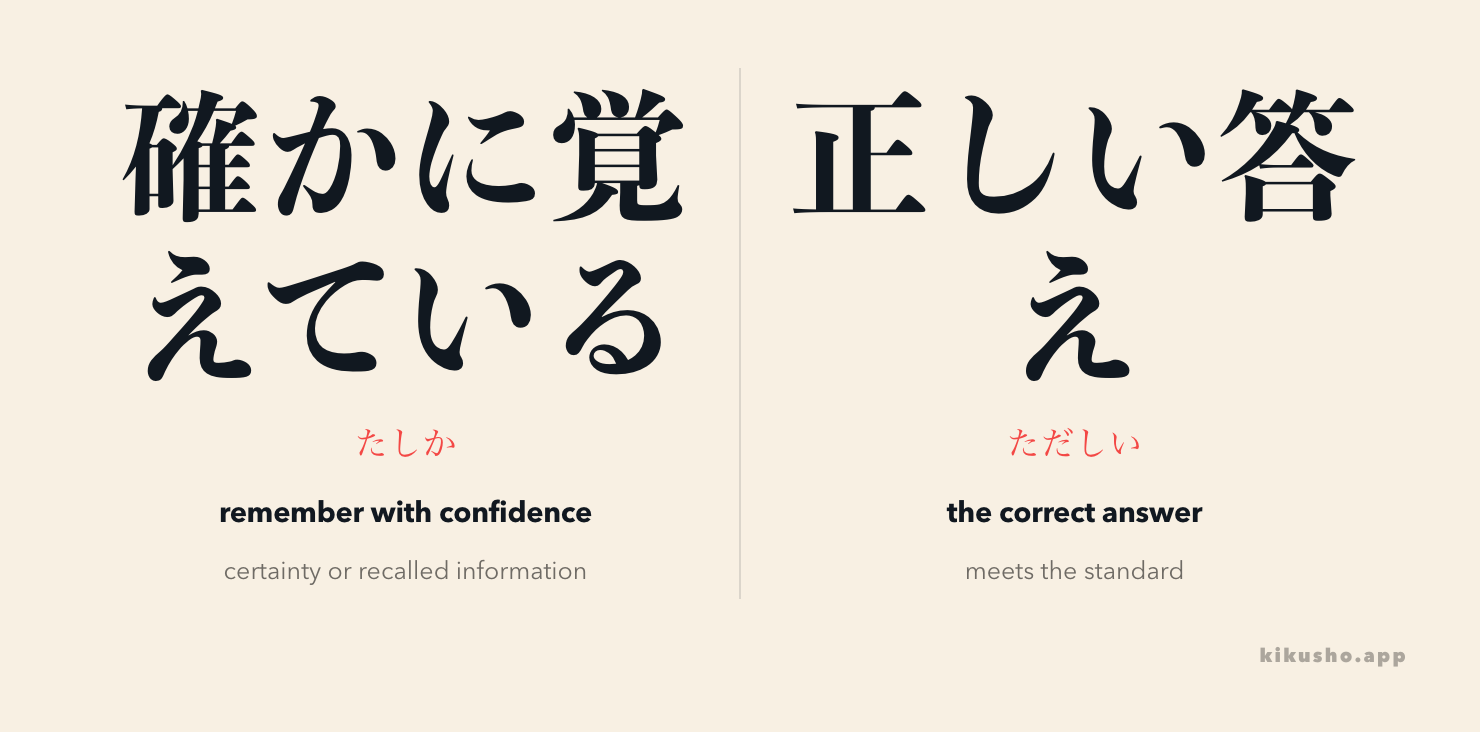
| 確か | 確かに覚えている | certainly / if I remember correctly |
| 正しい | 正しい答え | correct; right |
| 間違える | AをBと間違える | mistake A for B |
嘘 is a false statement; 形 is what can be seen
嘘(うそ) is a noun. The everyday phrase is 嘘をつく, “tell a lie.” It can also mean that something is false or mistaken.
それは嘘です。説明をもう一度読んでください。
それは うそです。せつめいを もういちど よんで ください。
That is false. Please read the explanation again.
Kanjipedia defines 嘘 as something not true and also as an error. JapaneseTest4You’s N4 entry gives the common frame 嘘をつく.
形(かたち) is the physical shape of an object, but it can also refer to an outward form that may not show the whole reality.
このポスターは丸い形の印が必要です。
この ポスターは まるい かたちの しるしが ひつようです。
This poster needs a round-shaped mark.
Kanjipedia’s 形 entry covers a thing’s visible or touchable form and its outward appearance. 形だけ can therefore mean “only the form,” with no real substance behind it.
確か and 正しい answer different questions
確か(たしか) is a na-adjective and adverb. It can mean “certain; reliable,” but 確か〜 also softens a memory: “if I remember correctly.” In that hedging role it works alongside the grammar for marking something as hearsay or your own opinion rather than settled fact.
確か、締め切りは金曜日だったと思います。
たしか、しめきりは きんようびだったと おもいます。
If I remember correctly, I think the deadline was Friday.
この情報は確かですか。
この じょうほうは たしかですか。
Is this information reliable?
Kanjipedia gives 確か three useful senses: certainly correct, reliable, and “probably / if I remember correctly.”
正しい(ただしい) judges correctness, truth, fairness or conformity to a rule:
正しい答えを丸で囲んでください。
ただしい こたえを まるで かこんで ください。
Circle the correct answer.
先生の説明は正しかったです。
せんせいの せつめいは ただしかったです。
The teacher’s explanation was correct.
Kanjipedia’s 正しい entry includes being true, correct and in accordance with reason or rules. Use 確か for confidence in information and 正しい for whether an answer or action meets the standard.
間違える is transitive: name what was confused
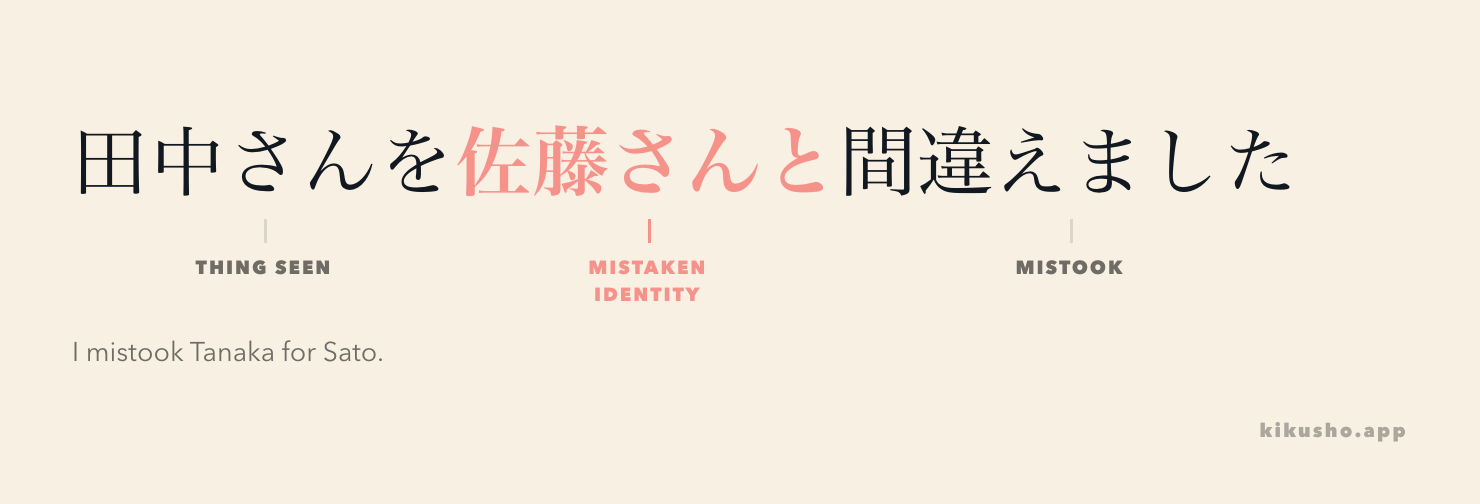
間違える(まちがえる) is an ichidan verb. Use AをBと間違える when a person mistakes A for B:
田中さんを佐藤さんと間違えました。
たなかさんを さとうさんと まちがえました。
I mistook Tanaka for Sato.
問題の番号を間違えないでください。
もんだいの ばんごうを まちがえないで ください。
Please do not get the question number wrong.
The object marked with を is the thing seen or chosen incorrectly. と names the mistaken identity. Compare 答えが間違っている, “the answer is wrong,” with 答えを間違える, “make a mistake with the answer.” This is the transitive-and-intransitive split at work: 間違える names the act someone does, while 間違っている describes the state the answer is left in.
Read the poster check
生徒は、ポスターの形が説明と同じかどうか調べました。確か、必要なのは丸い印でした。しかし、一人の生徒は星の印を正しい形だと間違えました。先生は「それは嘘ではありませんが、答えは正しくありません」と説明しました。
せいとは、ポスターの かたちが せつめいと おなじかどうか しらべました。たしか、ひつようなのは まるい しるしでした。しかし、ひとりの せいとは ほしの しるしを ただしい かたちだと まちがえました。せんせいは「それは うそでは ありませんが、こたえは ただしく ありません」と せつめいしました。
The students checked whether the poster’s shape matched the instructions. If I remember correctly, a round mark was required. However, one student mistook a star mark for the correct shape. The teacher explained, “That is not a lie, but the answer is not correct.”
The final distinction matters: a learner can be mistaken without lying. 嘘 implies falsehood; 間違える can be an honest error.
Where these five sit in N4
All five spelling-and-reading records are filed at N4 in the September 2026 Kikusho inventory. Both baseline word lists agree on that placement; a secondary study site labels 嘘 at N4 in its article while its link still carries an older N3 path, so this lesson trusts the verified reading and use over a URL slug. The JLPT organisers do not publish a fixed vocabulary list, which is why every level claim here rests on the readings and senses checked above.
Practice: check the poster before opening the key
1 · Reading. Choose the kana for 嘘.
- A うそ
- B うそう
- C かたち
- D たしか
2 · Reading. In 正しい答え, choose the reading of 正しい.
- A まちがえる
- B ただしい
- C たしか
- D まさしい
3 · Written form. Which spelling writes かたち (“shape”)?
- A 方
- B 型
- C 形
- D 形ち
4 · Context. You are not completely certain, but you remember the meeting was Tuesday. Fill _、会議は火曜日でした.
- A 正しい
- B 確か
- C 嘘
- D 間違える
5 · Context. Circle the answer that meets the rule. Fill _答えを選んでください.
- A 確かな
- B 正しい
- C 嘘の
- D 間違えた
6 · Usage. Which line says that someone mistook one person for another?
- A 田中さんが佐藤さんを間違えました。
- B 田中さんを佐藤さんと間違えました。
- C 田中さんに佐藤さんを間違えました。
- D 田中さんと佐藤さんが間違えました。
7 · Paraphrase. What does この情報は確かですか ask?
- A Is this information shaped like a circle?
- B Is this information reliable or certain?
- C Is this information a lie told on purpose?
- D Is this information the correct written answer?
8 · Usage. Which sentence separates a lie from an honest mistake?
- A 間違えたから、必ず嘘です。
- B 嘘ではありませんが、答えは正しくありません。
- C 正しいから、形を間違えます。
- D 確かだから、嘘をつきます。
9 · Context. The poster needs a round visible form. Fill 丸い_の印.
- A 嘘
- B 形
- C 確か
- D 正しい
10 · Paraphrase. What does 星の印を正しい形だと間違えました mean?
- A The student lied about the star mark.
- B The student was certain the star mark was round.
- C The student mistook the star mark for the correct shape.
- D The student changed the star mark’s shape.
Poster check answer key
- A · うそ. 嘘 is a lie or false statement.
- B · ただしい. 正しい evaluates an answer or judgment as correct.
- C · 形. 形(かたち) is a visible form or shape.
- B · 確か. 確か introduces a remembered fact with some uncertainty.
- B · 正しい. The answer must meet the stated rule.
- B · 田中さんを佐藤さんと間違えました. AをBと間違える marks the two things confused.
- B · Is this information reliable or certain? 確か asks about confidence in information.
- B · 嘘ではありませんが、答えは正しくありません. An error is not automatically a lie.
- B · 形. The sentence names a round shape.
- C · The student mistook the star mark for the correct shape. The pattern is AをBと間違える.
Review the full frames: 嘘をつく, 丸い形, 確かに覚えている, 正しい答え, and AをBと間違える. They tell you whether the issue is truth, appearance, confidence, correctness or confusion.
Common questions
What is the difference between 確か and 正しい?
確か says something is certain, reliable or probably remembered correctly. 正しい says an answer, judgment, rule or action is correct or right.
How is 間違える used?
It is a transitive verb: use AをBと間違える when someone mistakes A for B, or simply 間違える for making a mistake.