On this page
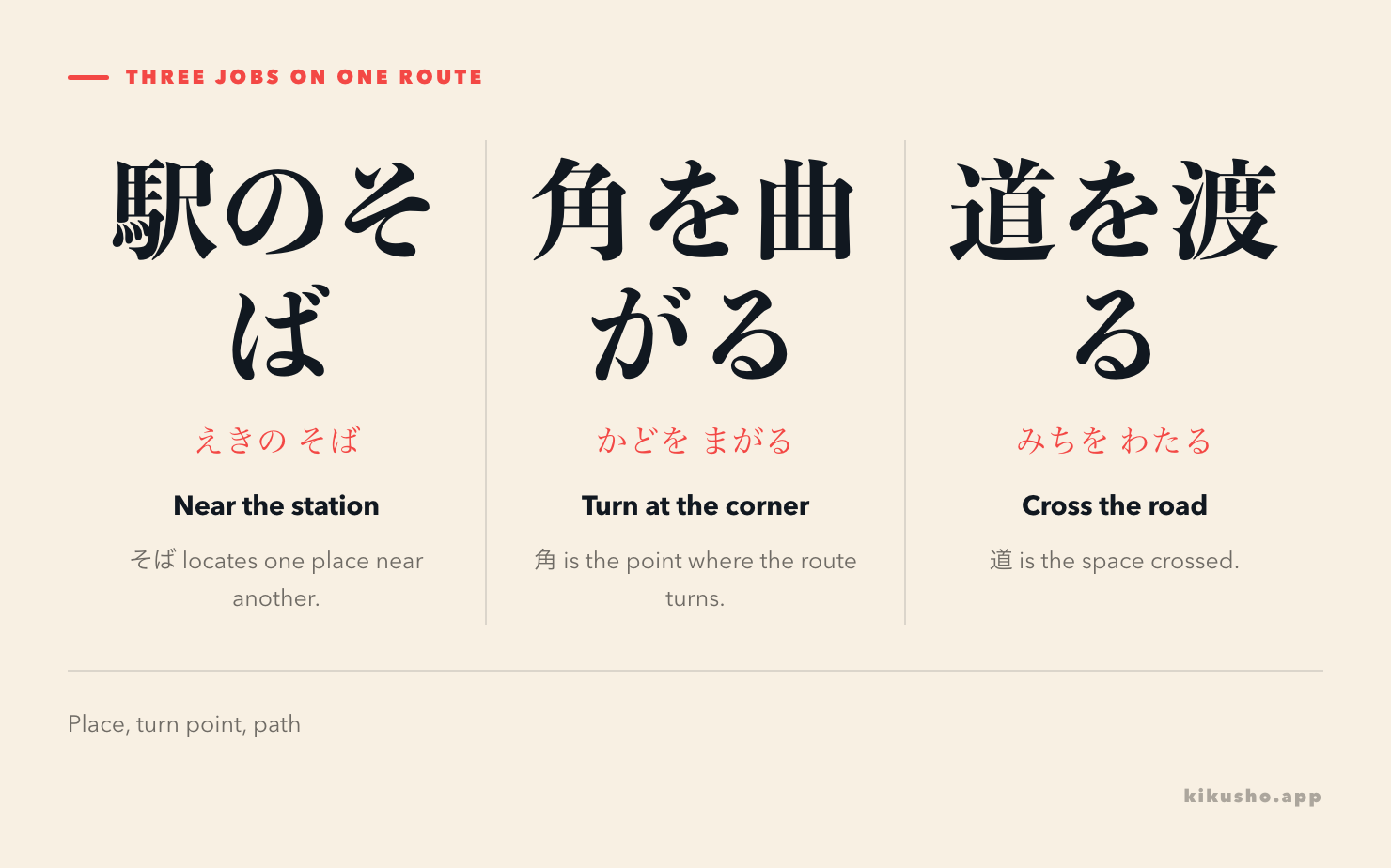
地図を見て、次の角を右に曲がります。銀行は駅のそばです。その前の道を渡ります。 This short route uses all four words in the set: look at a map, turn at a corner, find the bank near the station, then cross the road.
The assigned readings are 地図(ちず), 角(かど), 側(そば) and 渡る(わたる). The route is simple, but two kanji have other common readings and the movement verb uses を in a way that a direct-object rule alone cannot explain.
Four words, one route
| Word | Reading | Word class and sense | Phrase to keep |
|---|---|---|---|
| 地図 | ちず | noun: map | 地図を見る, look at a map |
| 角 | かど | noun: corner of a street, building or object | 次の角を曲がる, turn at the next corner |
| 側 | そば | noun: near, beside; often written そば or 傍 | 駅のそば, near the station |
| 渡る | わたる | Group 1 motion verb: cross, go across | 道を渡る, cross the road |
The Japan Foundation's beginner word list gives 角(かど) and 渡る(わたる) together in a wayfinding lesson. The independently compiled NINJAL learner dictionary entry for 地図 checks the reading, noun class and map sense, while its 側・傍 entry gives そば for a place near a person or thing. These sources verify the Japanese taught here; they do not establish an official JLPT vocabulary list.
地図 gives the route a view from above
地図 is the map itself. You can look at it with 見る, search by means of it with で, or show a location on it with に:
地図を見ます。
ちずを みます。
I look at the map.
地図で駅を探します。
ちずで えきを さがします。
I look for the station on the map.
地図に銀行があります。
ちずに ぎんこうが あります。
There is a bank on the map.
The first を marks what you look at. In the second sentence, 地図で presents the map as the means used to search. In the third, 地図に treats the map as the place where a symbol or label exists. The particles change because the noun's job changes.
角 is the point where the instruction changes
角(かど) is a corner. In directions, it often names the place where you turn:
次の角を左に曲がってください。
つぎの かどを ひだりに まがって ください。
Please turn left at the next corner.
Here 次の角 means “the next corner.” 左に states the new direction, and 角を marks the point followed along the route. The same pattern appears with the larger landmark 交差点(こうさてん), “intersection,” in the N5 town lesson.
The written character does not guarantee the reading. 角(つの) means an animal's horn, while 角(かど) is the corner taught here. A street instruction supplies enough context to choose かど. At N5, keep the full chunk 角を曲がる instead of a bare character.
側(そば) locates something without naming an exact distance
側(そば) means near or beside. Put the reference place before の:
銀行は駅のそばです。
ぎんこうは えきの そばです。
The bank is near the station.
先生のそばに学生がいます。
せんせいの そばに がくせいが います。
There is a student beside the teacher.
The spelling そば is common and avoids confusion with buckwheat noodles, そば/蕎麦, only because the surrounding sentence supplies the meaning. 側 and 傍 can represent the location word. The assigned inventory record uses 側, so this lesson teaches that spelling while showing the forms a beginner is likely to meet.
そば does not promise immediate adjacency. 隣(となり) usually points to a neighboring place, and 横(よこ) names the side of something. The Japanese-language teacher's comparison of 隣, 横 and 側 explains that difference with location sentences. The earlier N5 location lesson develops those related words without treating them as interchangeable.
渡る carries you from one side to the other
渡る(わたる) is a Group 1 verb. Its polite form is 渡ります, its て-form is 渡って, and its plain past is 渡った.
道を渡ります。
みちを わたります。
I cross the road.
橋を渡って、まっすぐ行きます。
はしを わたって、まっすぐ いきます。
Cross the bridge and go straight.
The road and bridge take を, but they are routes crossed rather than direct objects changed by the action. The lesson on を separates this movement use from an object such as 地図 in 地図を見る. The Japan Foundation word list also places 渡る beside street-crossing vocabulary, which supports this concrete beginner use.
Do not confuse 渡る, “cross,” with transitive 渡す(わたす), “hand or pass something to someone.” 道を渡る describes the traveller moving. 友達に地図を渡す means “hand the map to a friend”: there, 地図 is the object transferred.
Read the instruction as a sequence
地図を見てください。次の角を右に曲がってください。銀行は駅のそばです。銀行の前の道を渡ると、公園があります。
ちずを みて ください。つぎの かどを みぎに まがって ください。ぎんこうは えきの そばです。ぎんこうの まえの みちを わたると、こうえんが あります。
Please look at the map. Turn right at the next corner. The bank is near the station. When you cross the road in front of the bank, there is a park.
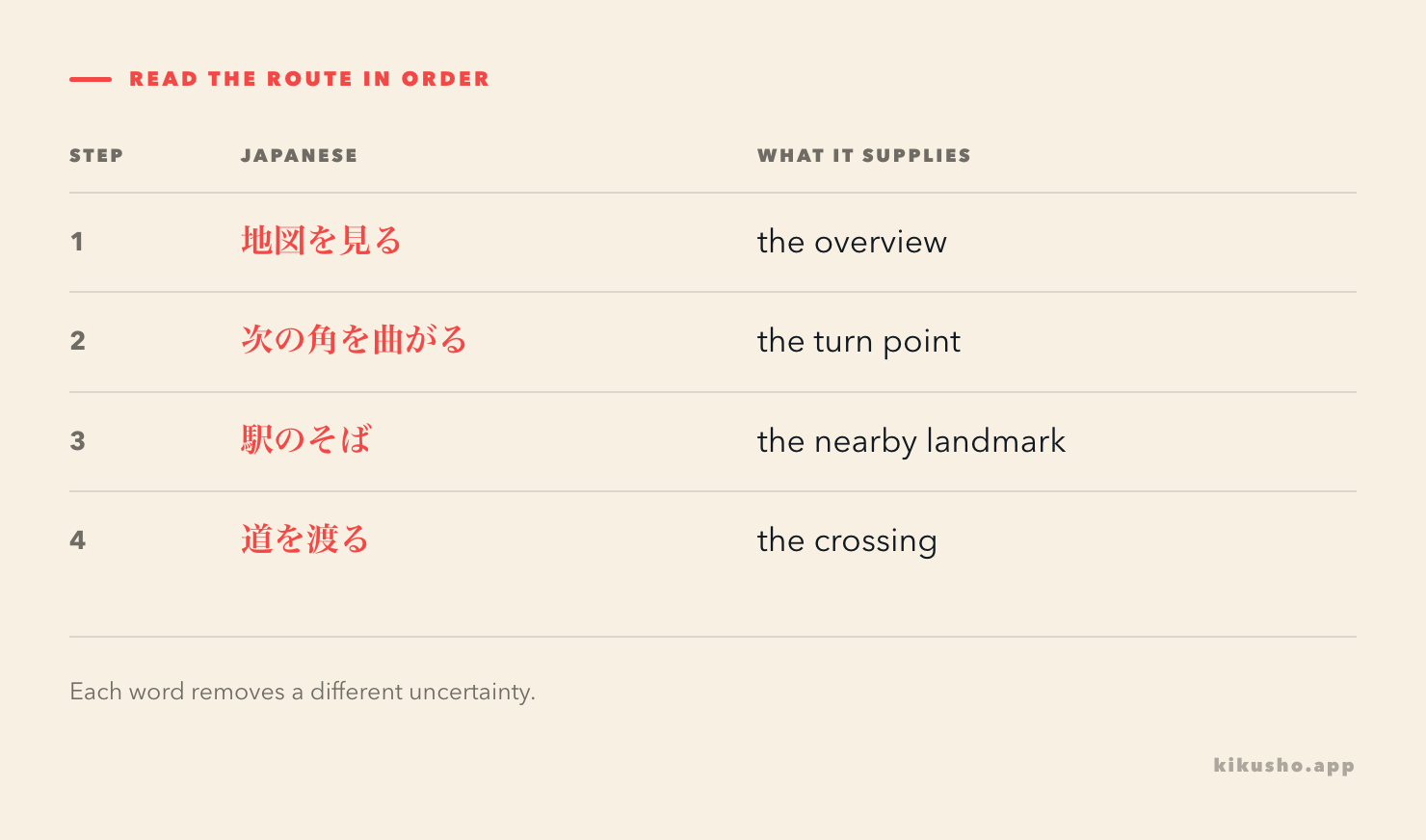
Each word removes a different uncertainty. 地図 gives the overview. 角 gives the turn point. 側 relates one landmark to another. 渡る describes movement across a boundary. Words such as 右, 前 and 駅 come from the linked direction, location and transport lessons; they provide context but receive no new vocabulary coverage here.
If you photograph a station map in Kikusho, keep a route phrase rather than only one label. A card for 角を右に曲がる preserves the かど reading and particle, while 駅のそば preserves the location sense of そば. Review the drafted card before saving so the exact phrase you saw remains attached to the word.
Kikusho's dated inventory places all four spelling-and-reading records at N5. 角, 地図 and 渡る each have two matching observations from the same Tanos/Waller source family; 側(そば) has one. JapaneseTest4You separately lists 地図 and 渡る at N5, and a broader independent N5 location list includes all four forms. Those are study estimates. The JLPT organizers do not publish an exhaustive vocabulary list.
Practice the route
Question 1
What is the reading of 地図?
- ア. じず
- イ. ちず
- ウ. ちづ
- エ. じづ
Question 2
Which spelling matches かど, “corner,” in 次のかどを右に曲がります?
- ア. 側
- イ. 道
- ウ. 角
- エ. 地図
Question 3
Complete the location phrase: 銀行は駅__そばです。
- ア. を
- イ. で
- ウ. に
- エ. の
Question 4
Which sentence means “I cross the road”?
- ア. 道を渡ります。
- イ. 道を見ます。
- ウ. 道にあります。
- エ. 道で曲がります。
Question 5
In 次の角を左に曲がってください, what does 角を identify?
- ア. The map being read
- イ. The point on the route where the turn happens
- ウ. The thing handed to someone
- エ. The place beside the station
Question 6
Write the polite て-form instruction that connects “cross the bridge” to “go straight,” using 橋, 渡る and まっすぐ行きます.
Answers and explanations
1. イ, ちず. 地図 is read ちず. The final kana is ず, even though another reading of 図 begins with ず or と in other words; じず, ちづ and じづ are not this noun's reading.
2. ウ, 角. The assigned spelling-reading pair is 角(かど). 側 is そば here, 道 is みち, and 地図 is ちず.
3. エ, の. 駅のそば means “near the station.” 駅 is the reference place, の connects it to そば, and です completes the location description.
4. ア, 道を渡ります. 渡る means cross or go across. を marks the route crossed. 見ます means look at, あります means exist, and 曲がります means turn, so the other predicates do not describe crossing.
5. イ. 角を identifies the point followed along the route where the turn occurs. 左に supplies the new direction. It is not a map, an object transferred, or the nearby-place phrase 駅のそば.
6. 橋を渡って、まっすぐ行きます。 Change Group 1 渡る to 渡って and connect it to the next action. 橋を is the route crossed; まっすぐ describes continuing straight.
Common questions
How do you say map in Japanese?
Map is 地図(ちず). Common beginner phrases include 地図を見る, look at a map, and 地図で場所を探す, look for a place using a map.
How do you say turn at the corner in Japanese?
次の角を右に曲がってください means “Please turn right at the next corner.” Here 角 is read かど, and を marks the point followed along the route.
Is 側 read そば or がわ?
Both readings exist, but they are different vocabulary records. This lesson teaches 側(そば), near or beside, as in 駅のそば. The same word is often written そば or 傍. 側(がわ) means a side or party in other contexts.
Why does 道を渡る use を if 渡る is intransitive?
In 道を渡る, を marks the route or space crossed. The road is not a direct object being changed. The same route pattern appears in 橋を渡る.