On this page
These fifteen N3 records let you read about rights, obligations, equal treatment, discrimination, community support and economic differences without collapsing several near-synonyms into “fairness” or “help.” The high-value contrasts are 権利・義務, 公正・公平・平等, 区別・差別, and the two homophones 保障・補償.
Fifteen records for social questions
| Headword | Reading | Core meaning | Useful pattern |
|---|---|---|---|
| 援助 | えんじょ, enjo | assistance; aid; support | 援助を受ける |
| 寄付 | きふ, kifu | donation; contribution | 団体に寄付する |
| 義務 | ぎむ, gimu | duty; obligation | 義務を果たす |
| 区別 | くべつ, kubetsu | distinction; differentiation | AとBを区別する |
| 権利 | けんり, kenri | right; entitlement | 権利を守る |
| 公正 | こうせい, kōsei | justice; fairness; impartial correctness | 公正な判断 |
| 公平 | こうへい, kōhei | fairness; impartial treatment | 公平に分ける |
| 差別 | さべつ, sabetsu | discrimination; unjust distinction | 差別をなくす |
| 住民 | じゅうみん, jūmin | resident; inhabitant | 地域の住民 |
| 尊重 | そんちょう, sonchō | respect; regard | 意見を尊重する |
| 平等 | びょうどう, byōdō | equality; equal status or treatment | 男女平等 |
| 保障 | ほしょう, hoshō | protection; security; guarantee of rights or safety | 権利を保障する |
| 補償 | ほしょう, hoshō | compensation for loss or damage | 損失を補償する |
| 貧しい | まずしい, mazushii | poor; lacking resources | 貧しい家庭 |
| 豊か | ゆたか, yutaka | abundant; rich; plentiful | 豊かな自然 |
Kikusho's September 2026 inventory places all fifteen spelling-and-reading records in this N3 lesson. Twelve have no internal disagreement. 公正 has one N3 placement and N2 observations; 保障 and 補償 have N3 records and N1 observations. Those imported baselines largely share Waller/Tanos ancestry, so the differences show placement uncertainty inside one source lineage rather than independent exam evidence. A separately published N3 category list places 権利 and 義務 together under society and law. The official JLPT FAQ publishes no exhaustive current vocabulary list, so each level remains a study estimate.
権利 can be protected; 義務 must be fulfilled
権利(けんり) is a right or entitlement. Common phrases identify what happens to that right:
- 権利がある: have the right
- 権利を得る: obtain a right
- 権利を行使する: exercise a right
- 権利を守る / 保障する: protect / guarantee a right
義務(ぎむ) is a duty or obligation arising from law, a contract, a role or a strong social rule. Use 義務がある, be obliged; 義務を負う, bear an obligation; and 義務を果たす, fulfil a duty. It is narrower than 責任, responsibility, which can also concern accountability for an outcome or one's role in causing it.
労働者には安全な環境で働く権利があり、会社にはその安全を守る義務がある。
ろうどうしゃには あんぜんな かんきょうで はたらく けんりが あり、かいしゃには その あんぜんを まもる ぎむが ある。
Workers have the right to work in a safe environment, and the company has a duty to protect that safety.
The sentence links a person's right to an institution's duty; it does not say every 権利 always creates one identical 義務 for every listener. The N3 government and elections lesson distinguishes 国民, the people or nationals of a state, from other population terms.
尊重 is active regard, not automatic agreement
尊重(そんちょう) means treating a person, right, opinion or principle as worthy of serious regard. Natural objects include 人権を尊重する, respect human rights; 本人の意思を尊重する, respect the person's wishes; and 文化の違いを尊重する, respect cultural differences.
Respecting an opinion does not necessarily mean adopting it. In a meeting, 住民の意見を尊重する says the views should be heard and given appropriate weight. A final decision may still balance several rights, duties and practical constraints.
市は住民一人一人の意見を尊重し、計画をもう一度検討すると約束した。
しは じゅうみん ひとりひとりの いけんを そんちょうし、けいかくを もういちど けんとうすると やくそくした。
The city promised to respect each resident's opinion and reconsider the plan.
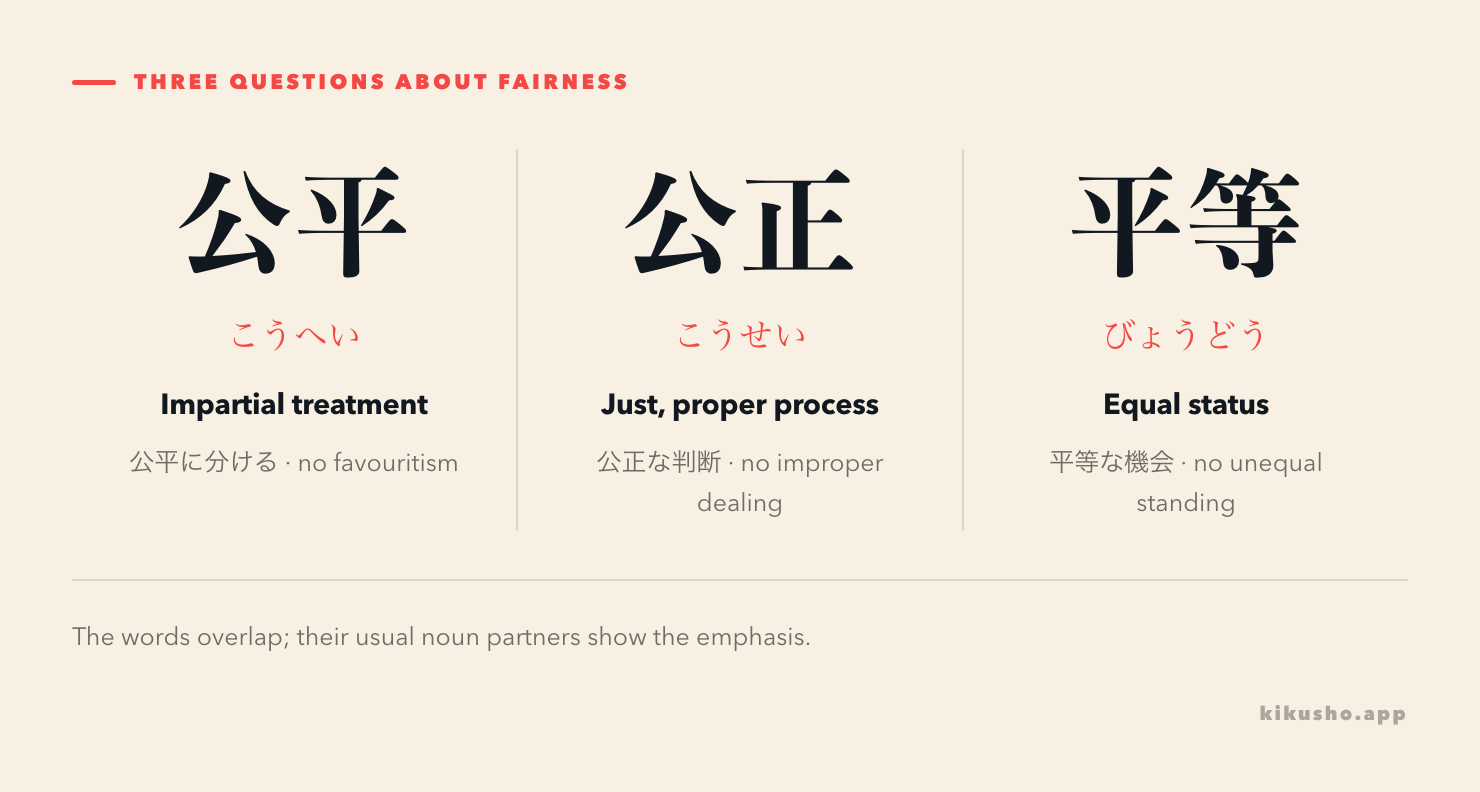
公平, 公正 and 平等 organise different questions
All three can translate part of English “fair,” but their usual partners reveal different emphases.
公平(こうへい) stresses impartial treatment or allocation: no person receives a hidden advantage simply because of favouritism. Use 公平に分ける, divide fairly; 公平な機会, a fair opportunity; and 公平な態度, an impartial attitude.
公正(こうせい) adds the idea of correctness, justice and freedom from improper dealing. It often describes institutional decisions, competition, trade or procedures: 公正な判断, a just and impartial decision; 公正な取引, fair and honest trade. The dictionary usage note says 公平 and 公正 overlap, while 公平 focuses on lack of partiality and 公正 often opposes impropriety or deception.
平等(びょうどう) is equality: people sharing equal status, opportunity or treatment without discrimination. Familiar compounds include 男女平等, gender equality; 法の下の平等, equality under the law; and 平等な権利, equal rights. The 平等 reference centres on equality without bias or discrimination.
選考委員は全員の資料を公平に読み、公正な手続きで候補者を選んだ。応募する機会はすべての住民に平等に与えられた。
せんこう いいんは ぜんいんの しりょうを こうへいに よみ、こうせいな てつづきで こうほしゃを えらんだ。おうぼする きかいは すべての じゅうみんに びょうどうに あたえられた。
The selection committee read everyone's materials impartially and chose candidates through a just procedure. Every resident was given an equal opportunity to apply.
These are tendencies, not walls. 公平 and 公正 frequently overlap, and a real policy can raise several kinds of fairness at once.
区別 notices a difference; 差別 can impose unfair treatment
区別(くべつ) means recognizing a difference or separating categories: 事実と意見を区別する, distinguish facts from opinions; ごみを種類で区別する, separate rubbish by type. The 区別 definition centres on judging that things differ and separating them accordingly.
差別(さべつ) historically and in some dictionary senses can also mean a distinction. In current social discussion, however, it commonly means discrimination: giving a person or group unjustly inferior treatment because of a characteristic. Natural phrases are 差別を受ける, experience discrimination; 差別をなくす, eliminate discrimination; and 年齢による差別, discrimination based on age. The 差別 entry records both the older distinction sense and the modern unfair-treatment sense.
医療上必要な年齢の区別と、年齢だけを理由に能力を決めつける差別は同じではない。
いりょうじょう ひつような ねんれいの くべつと、ねんれいだけを りゆうに のうりょくを きめつける さべつは おなじでは ない。
A medically necessary age distinction is not the same as discrimination that assumes someone's ability solely because of age.
This vocabulary contrast does not decide whether a real policy is lawful or justified. It tells you what claim the writer is making about the difference in treatment.
保障 protects; 補償 makes up for loss
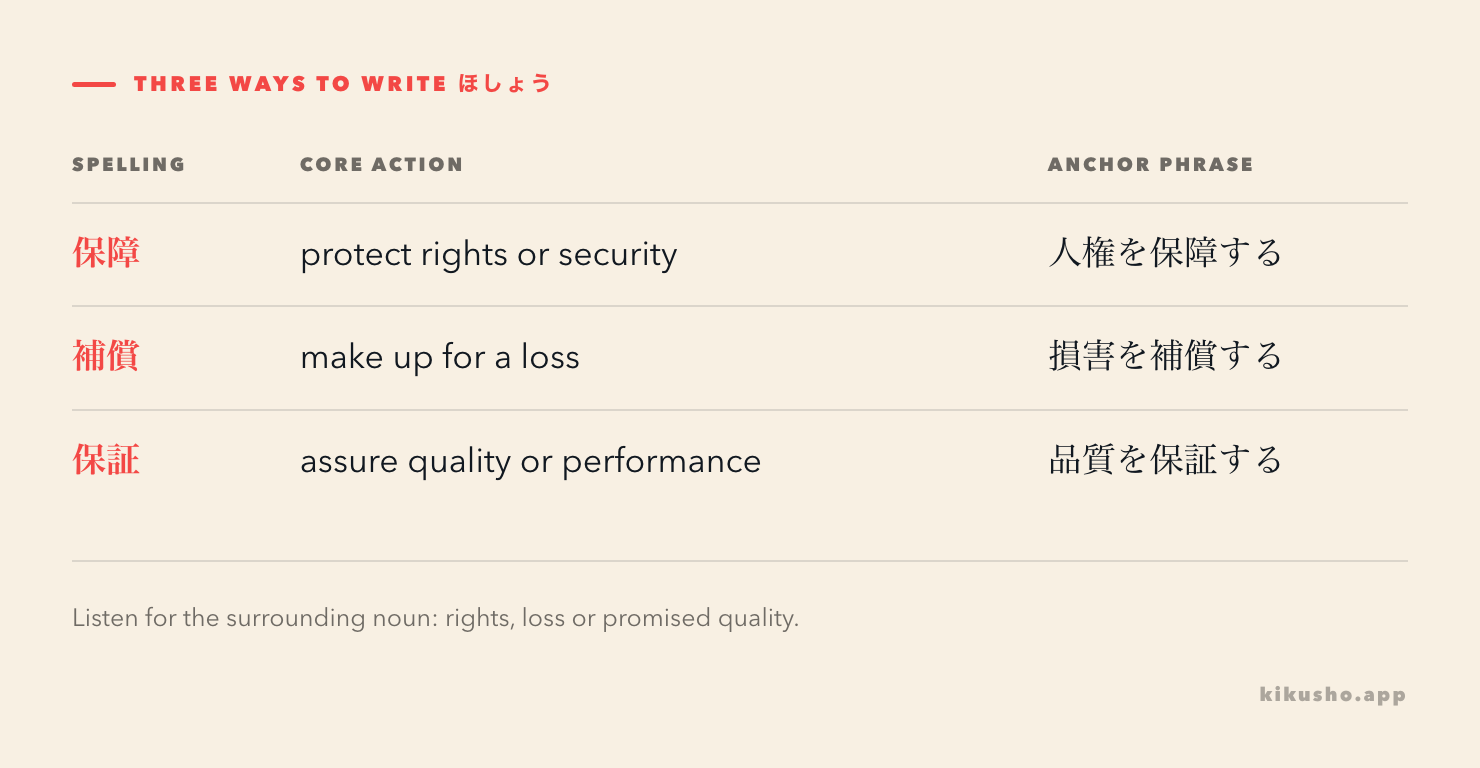
Both words are read ほしょう, so a listening question must be solved from context.
保障 uses 障, obstacle or barrier. It protects a right, safety, status or livelihood so that it is not harmed: 人権を保障する, guarantee human rights; 生活を保障する, secure a livelihood; 社会保障, social security. Kanjipedia defines it as protecting a state or position from infringement.
補償 uses 補, supplement, and 償, compensate. It makes up for a loss or damage that has occurred: 損害を補償する, compensate for damage; 休業補償, compensation for lost work; 補償金, compensation payment. The 補償 definition explicitly centres on making good a loss.
The third homophone 保証 is a prerequisite from the N3 shopping and customer-service lesson. It assures quality, identity, performance or an obligation: 品質を保証する, guarantee quality; 保証期間, warranty period.
The N1 rights and social-issues lesson adds 賠償, compensation tied more strongly to liability for harm, and extends this vocabulary into inequality, poverty, households and fundraising.
制度は最低限の生活を保障し、災害で家を失った住民には損失を補償する。配られた機器には一年間の品質保証が付いている。
せいどは さいていげんの せいかつを ほしょうし、さいがいで いえを うしなった じゅうみんには そんしつを ほしょうする。くばられた ききには いちねんかんの ひんしつ ほしょうが ついている。
The system secures a minimum standard of living and compensates residents who lost homes in the disaster. The distributed equipment comes with a one-year quality warranty.
The identical pronunciation makes the surrounding nouns essential: 生活, 損失 and 品質 point to different kanji.
援助 is help; 寄付 is something freely given
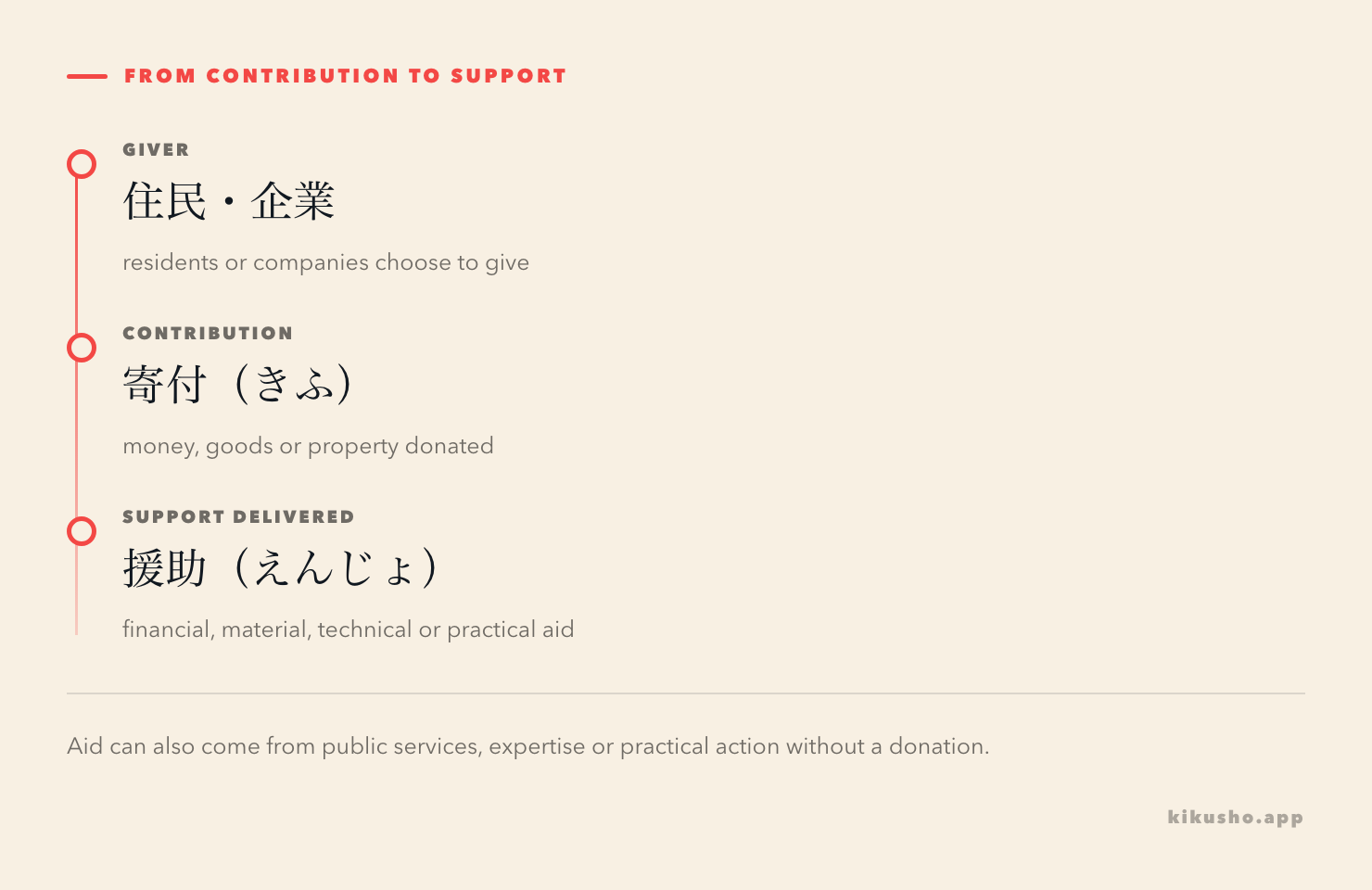
援助(えんじょ) is aid, assistance or support. It can be money, supplies, expertise or action. A person or organisation 援助を受ける, receives aid; a government 技術援助を行う, provides technical assistance.
寄付(きふ) is the voluntary donation of money, goods or property to an organisation or cause. Use 団体に寄付する, donate to an organisation; 本を寄付する, donate books; and 寄付を集める, collect donations. Formal legal writing often uses the variant 寄附. Japan's law on donation solicitation defines a donation as transferring a property right without receiving an equivalent return in its scope provision.
住民が寄付した毛布とお金は、避難している家庭への援助に使われた。
じゅうみんが きふした もうふと おかねは、ひなんしている かていへの えんじょに つかわれた。
The blankets and money donated by residents were used to assist evacuated families.
A donation can finance aid, but not every form of aid is a donation. Paid professional support, government services and practical help can all be 援助.
住民 live in a place; 貧しい and 豊か describe more than cash
住民(じゅうみん) means the people who live in a particular place: 地域住民, local residents; 近隣住民, nearby residents; 住民説明会, residents' briefing. It does not require citizenship. A foreign national living in a town can be a 住民, while a citizen living elsewhere is not necessarily one of that town's residents.
貧しい(まずしい) means poor or lacking resources: 貧しい家庭, a poor household; 資源が貧しい, poor in resources. 豊か(ゆたか) means abundant, plentiful or rich: 資源が豊かだ, rich in resources; 豊かな自然, abundant natural beauty; 想像力が豊かだ, have a rich imagination. It is a な-adjective: 豊かな生活, not 豊か生活.
The pair is not limited to personal wealth. A financially modest town may be 自然が豊か, rich in nature, and a wealthy organisation may still offer 内容の貧しい報告, a report poor in content.
A fictional town meeting uses all fifteen records
海辺の町では、住民の生活を守る新しい計画について説明会が開かれた。市長は、安全な住宅で暮らすことは住民の権利であり、市にはその権利を保障する義務があると説明した。災害で損失を受けた家庭には補償を行い、特に生活が貧しい家庭には追加の援助を提供するという。地元企業から集まった寄付も援助活動に使われる。委員会は、必要に応じた支援の区別は行うが、年齢や国籍による差別は認めないと述べた。すべての人の意見を尊重し、応募の機会を平等にし、限られた住宅を公平に配分する。さらに、選考が公正に行われたかを外部の専門家が確認する。町は財政的には豊かではないが、住民同士の協力は豊かだと市長は話した。
A seaside town held a briefing about a new plan to protect residents' lives. The mayor explained that living in safe housing is a right and that the city has a duty to safeguard that right. Households that suffered disaster losses would receive compensation, while households with especially limited means would receive additional assistance. Donations collected from local companies would also fund the aid. The committee said it would distinguish support according to need but would not permit discrimination based on age or nationality. It would respect everyone's views, provide equal opportunities to apply and allocate the limited housing fairly. Outside experts would also check whether the selection was conducted justly. The mayor said that although the town was not financially wealthy, cooperation among residents was abundant.
The report separates a protected 権利 from the city's 義務, compensation for an actual 損失 from wider 援助, and a needs-based 区別 from prohibited 差別. The N3 speech-verbs lesson continues with the verbs used when residents claim rights or present opinions.
Test the social-issues vocabulary
1 · Obligation. 義務 appears in a report. Choose its reading.
- A. きむ
- B. ぎむ
- C. ぎぶ
- D. きぼ
2 · Residents. Match 住民 to its kana.
- A. じゅみん
- B. じゅうにん
- C. じゅうみん
- D. しゅうみん
3 · Right and duty. Complete: 学生には意見を述べる___があり、学校には安全を守る___がある。
- A. 義務 / 権利
- B. 権利 / 義務
- C. 差別 / 区別
- D. 補償 / 寄付
4 · Three kinds of fairness. Which combination best fits? 資料を___に読み、___な手続きで選び、応募の機会を___にする。
- A. 平等 / 公平 / 公正
- B. 公正 / 平等 / 公平
- C. 公平 / 公正 / 平等
- D. 公平 / 平等 / 公正
5 · Distinction or discrimination. A report separates fact from opinion and condemns racial discrimination. Which sentence says that correctly?
- A. 事実と意見を差別し、人種による区別をなくす。
- B. 事実と意見を区別し、人種による差別をなくす。
- C. 権利と義務を援助し、住民を寄付する。
- D. 公正と公平を補償し、機会を保障になる。
6 · Protection. Which spelling fits 人権をほしょうする?
- A. 保証
- B. 補償
- C. 保障
- D. 保章
7 · Compensation. A storm damages a roof and an insurance payment covers the loss. Which phrase fits?
- A. 損害を補償する
- B. 損害を尊重する
- C. 損害を区別する
- D. 損害を寄付する
8 · Donation and aid. Which sentence is accurate?
- A. Every form of 援助 must be a voluntary donation.
- B. 寄付 can provide money or goods that an organisation later uses for 援助.
- C. 援助 only means a product warranty.
- D. 寄付 means compensation owed for damage.
9 · Respect. 市は住民の意見を尊重した most directly means:
- A. the city automatically adopted every proposal
- B. the city compensated every resident
- C. the city treated residents' views with serious regard
- D. the city classified residents by wealth
10 · Residents and nationality. Which statement is safest?
- A. 住民 means only citizens who can vote nationally.
- B. Anyone born in a country is a resident of every town there.
- C. 住民 means people living in the place under discussion, regardless of whether the sentence establishes citizenship.
- D. 住民 is another reading of 国民.
11 · Rich and poor. Which sentence is natural?
- A. この地域は自然が豊かだ。
- B. この地域は自然を豊かです。
- C. この地域は豊かの自然だ。
- D. この地域は自然が寄付だ。
12 · Connected meaning. 市は生活を保障し、災害による損失を補償する制度を作った。 What is the best paraphrase?
- A. The city created a system that protects livelihoods and compensates disaster losses.
- B. The city promised a product warranty and collected donations.
- C. The city distinguished residents from citizens.
- D. The city treated every difference as discrimination.
Reveal the rights and social-support solutions
- B. 義務 matches ぎむ.
- C. 住民 is read じゅうみん, with a long vowel in じゅう.
- B. The student has a 権利, while the school bears a 義務 to protect safety.
- C. 公平に読む stresses impartial treatment, 公正な手続き stresses a just process, and 平等な機会 expresses equal opportunity.
- B. 区別 fits the neutral distinction between fact and opinion; 差別 fits unjust treatment based on race.
- C. 保障 protects a right from infringement. 保証 assures quality or performance, while 補償 offsets loss.
- A. Damage followed by a payment that makes up the loss calls for 補償.
- B. A 寄付 is the contribution; the organisation may turn it into broader 援助.
- C. 尊重 means giving the opinions serious regard. It does not promise automatic agreement.
- C. 住民 is residence-based; the noun alone does not establish nationality or voting rights.
- A. 豊か is a な-adjective, but before だ it appears as 豊かだ; 自然が豊かだ means the area is rich in nature.
- A. The two homophones do different work: 保障 protects living conditions, while 補償 makes up disaster losses.
Common questions
What is the difference between 権利 and 義務?
権利 is a right or entitlement that a person may exercise or have protected. 義務 is a duty or obligation that a person or institution must fulfil. The words often appear together, but one does not cancel the other.
How are 公平, 公正 and 平等 different?
公平 stresses treatment or allocation without partiality. 公正 stresses justice, correctness and freedom from improper dealing. 平等 is equality: people having equal status, opportunity or treatment. Their uses overlap, so learn the noun each word modifies.
What is the difference between 区別 and 差別?
区別 means recognizing or making a distinction between things. In modern social contexts, 差別 commonly means discrimination or unjustly inferior treatment based on a characteristic. A necessary distinction is not automatically discrimination, but a label can be used to justify it.
What is the difference between 保障 and 補償?
保障 protects a right, safety or livelihood so it is not harmed. 補償 makes up for a loss or damage, often with money. Both are read ほしょう. 保証, also ほしょう, instead assures quality, identity or performance.