On this page
The nine assigned N3 words trace a project from 開始(かいし), its formal commencement, to 完成(かんせい), the point when the finished result is ready. Along the way, events 起こる(おこる), problems 生じる(しょうじる), people 延ばす(のばす) deadlines, schedules 延びる(のびる), teams 断つ(たつ) connections, 留める(とめる) materials in place, and finally 終える(おえる) the work.
A student exhibition provides one connected setting. The team starts preparations, handles a printing problem, extends the deadline, cuts the power before a repair, fastens notices to the wall, finishes the work and opens a completed display.
Nine N3 words across one project
| Word | Reading | Core frame | Role in the timeline |
|---|---|---|---|
| 開始 | かいし | 準備を開始する | commence preparations |
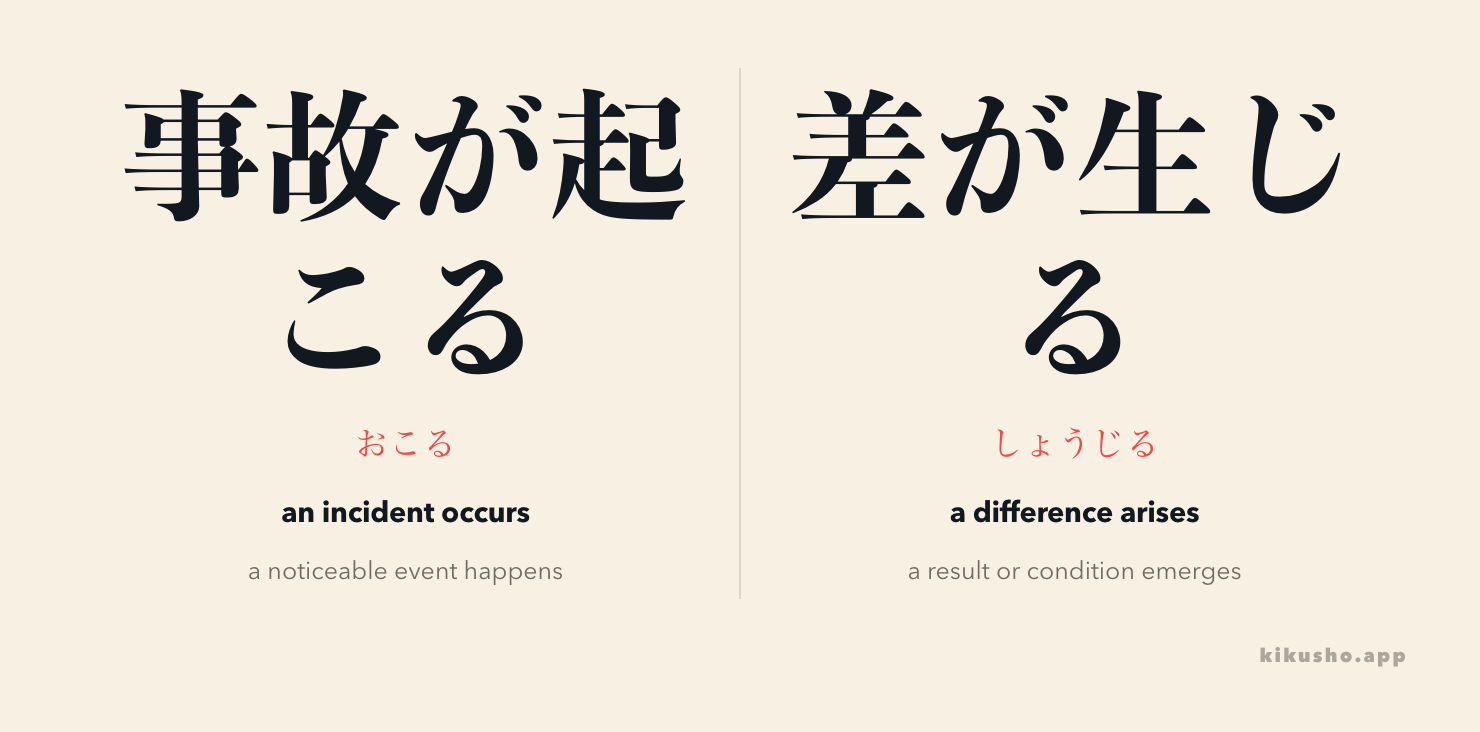
| 起こる | おこる | 事故が起こる | an incident occurs |
| 生じる | しょうじる | 色に差が生じる | a difference arises |
| 延ばす | のばす | 締め切りを延ばす | extend the deadline |
| 延びる | のびる | 締め切りが延びる | the deadline is extended |
| 断つ | たつ | 電気を断つ | cut off the electricity |
| 留める | とめる | 紙を壁に留める | fasten paper to the wall |
| 終える | おえる | 作業を終える | finish the work |
| 完成 | かんせい | 展示が完成する | the display is completed |
The N4 prerequisite lesson separates several everyday ways to open and stop something. This N3 set moves into project language: formal phase labels, events that arise, deliberate interruption, schedule changes and the difference between finishing an activity and producing a finished result.
開始(かいし) marks a formal commencement
開始(かいし) is a noun and する-verb meaning “start” or “commencement.” It appears in announcements, schedules, procedures and reports:
学生たちは九月一日に展示会の準備を開始しました。
がくせいたちは くがつ ついたちに てんじかいの じゅんびを かいししました。
The students began preparing for the exhibition on September 1.
受付開始は午前九時です。
うけつけ かいしは ごぜん くじです。
Registration begins at 9 a.m.
始める works naturally in ordinary conversation, while 開始する sounds more administrative or formal. Compare 練習を始める with 調査を開始する. JapaneseTest4You's N3 開始 entry lists it as a noun and する-verb and illustrates formal actions such as negotiations, investigations and treatment beginning. The N2 formal-boundaries lesson continues that register with 休業, 締め切る and 終了 in public notices.
起こる and 生じる both present something as arising
Neither verb names a person who directly creates the event. The event or result normally takes が, but the register and preferred nouns differ.
起こる(おこる): an event happens
起こる(おこる) is an intransitive godan verb. It commonly describes an accident, fire, argument, change, problem or other noticeable event:
印刷中に小さな事故が起こりました。
いんさつちゅうに ちいさな じこが おこりました。
A small accident occurred during printing.
なぜこの問題が起こったのか調べましょう。
なぜ この もんだいが おこったのか しらべましょう。
Let us investigate why this problem occurred.
The past form is 起こった, with a small っ. This word is the intransitive partner of N4 起こす, “cause something / wake someone.” 事故が起こる reports the occurrence; 事故を起こす presents an actor or cause that brings it about. Kanjipedia defines 起こる through the ideas of beginning, issuing and arising.
生じる(しょうじる): a result or condition arises
生じる(しょうじる) is an ichidan verb with a more formal, analytical tone. It often appears with 差, 問題, 誤解, 損害, 必要 or 変化:
画面と印刷した紙の色に差が生じました。
がめんと いんさつした かみの いろに さが しょうじました。
A difference arose between the colors on screen and on the printed paper.
計画を変えると、新しい問題が生じる可能性があります。
けいかくを かえると、あたらしい もんだいが しょうじる かのうせいが あります。
Changing the plan may cause a new problem to arise.
起こる foregrounds an event happening. 生じる often frames something as an effect, discrepancy or condition produced by circumstances. They overlap with 問題が起こる/問題が生じる, but 生じる is more at home in an explanation or report. JapaneseTest4You's N3 生じる entry supplies examples with imbalance and conflict arising.
延ばす and 延びる change the length of time
This pair follows the transitive/intransitive pattern taught in the two-views lesson. 延ばす presents a decision-maker acting on a period or deadline; 延びる presents the period or deadline as becoming longer.
延ばす(のばす): someone extends or postpones something
先生は作品の締め切りを三日延ばしました。
せんせいは さくひんの しめきりを みっか のばしました。
The teacher extended the deadline for the works by three days.
The object marked by を may be a deadline, meeting, period, route or life span. With a date or deadline, 延ばす can mean moving it later. Kotobank's dictionary entry under 伸ばす/延ばす distinguishes the 延ばす spelling for delaying a time or date.
Do not automatically write 伸ばす. That spelling is preferred for making hair, ability, an arm or a physical object longer. 期限を延ばす focuses on temporal extension.
延びる(のびる): something is prolonged or runs longer
締め切りが三日延びたので、作品を直す時間ができました。
しめきりが みっか のびたので、さくひんを なおす じかんが できました。
Because the deadline was extended by three days, we had time to revise the work.
会議が予定より三十分延びました。
かいぎが よていより さんじゅっぷん のびました。
The meeting ran thirty minutes longer than planned.
The basic pair is therefore 先生が締め切りを延ばす versus 締め切りが延びる. Kanjipedia's 延びる entry specifically gives things or time becoming longer and a meeting continuing beyond schedule.
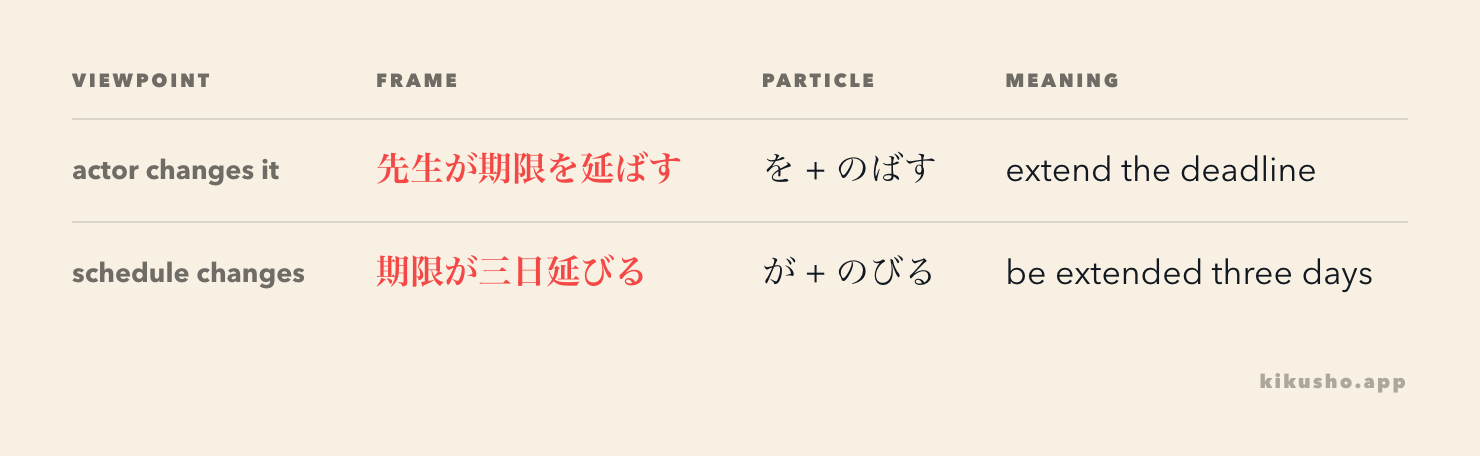
断つ(たつ) cuts an ongoing connection
断つ(たつ) is a transitive godan verb. It means to sever a connection, block a route or supply, or deliberately abstain from something:
修理の前に、機械への電気を断ってください。
しゅうりの まえに、きかいへの でんきを たって ください。
Before the repair, please cut off the electricity to the machine.
作業中は外部との連絡を断ちました。
さぎょうちゅうは がいぶとの れんらくを たちました。
During the work, we cut off contact with the outside.
Its past and て-forms use a small っ: 断った, 断って. Unlike a temporary press of a stop button, 断つ suggests severing continuity or access. It also appears in 酒を断つ, to abstain from alcohol. Kanjipedia's 断つ entry covers cutting a connection, blocking a route and giving something up.
留める(とめる) keeps something in place or in mind
留める(とめる) is an ichidan verb. The kanji 留 focuses on holding, retaining or fastening:
注意書きをテープで壁に留めました。
ちゅういがきを テープで かべに とめました。
We fastened the notice to the wall with tape.
先生の助言を心に留めておきます。
せんせいの じょげんを こころに とめて おきます。
I will keep the teacher's advice in mind.
This spelling contrasts with N4 止める(とめる), which halts movement, operation or flow. Compare 機械を止める, stop the machine, with 紙を壁に留める, fasten the paper to the wall. Kanjipedia gives three core senses: detaining someone, fixing something so it does not come loose, and preserving something in memory.
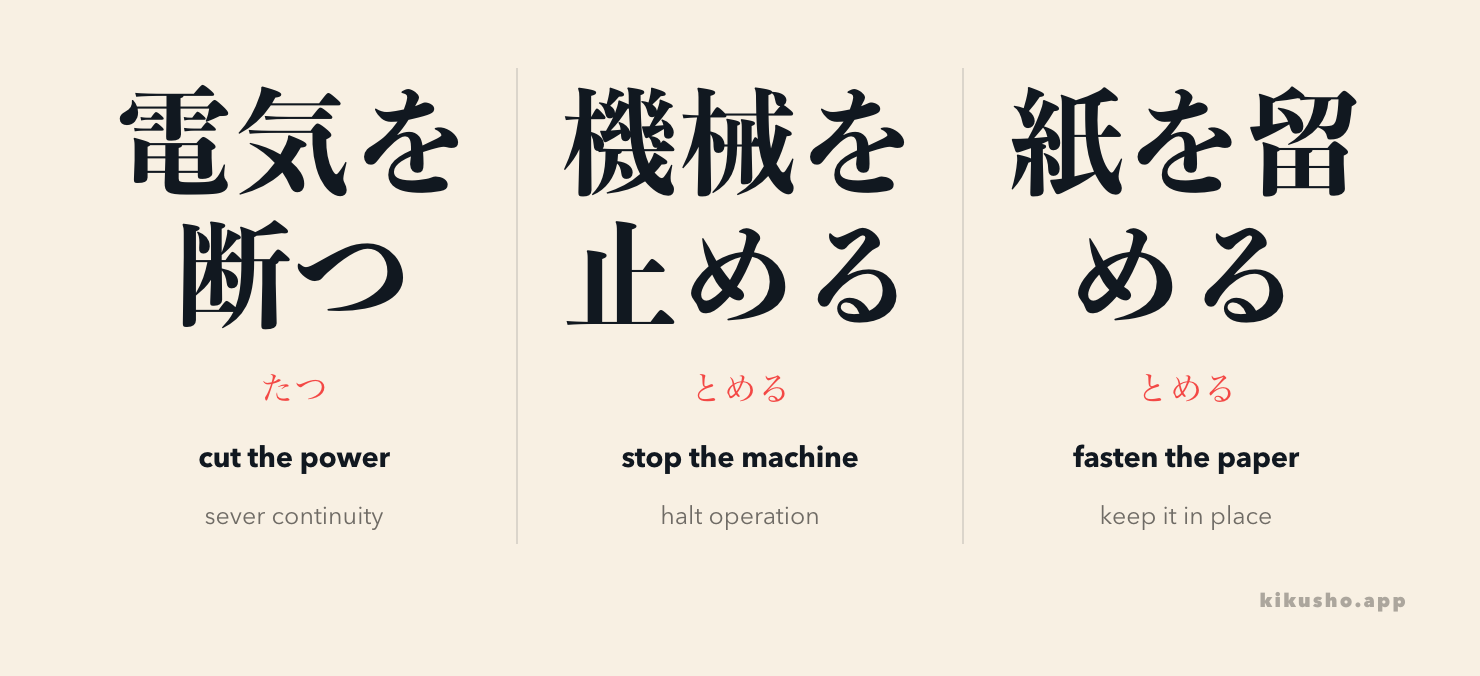
終える finishes work; 完成 marks a finished result
These words both point toward completion, but they answer different questions.
終える(おえる): who finishes which activity?
終える(おえる) is a transitive ichidan verb. The actor brings a bounded activity, duty, study period or task to its endpoint:
学生たちは金曜日までにすべての作業を終えました。
がくせいたちは きんようびまでに すべての さぎょうを おえました。
The students finished all the work by Friday.
The basic contrast is 作業が終わる, the work ends, versus 学生が作業を終える, the students finish the work. Kotobank's 終える entry defines it as bringing something one has continued to its conclusion.
完成(かんせい): is the product fully made?
完成(かんせい) is a noun and する-verb. It says that all necessary parts have been made and the result is finished:
展示パネルがついに完成しました。
てんじパネルが ついに かんせいしました。
The exhibition panels were finally completed.
学生たちは模型を完成させました。
がくせいたちは もけいを かんせいさせました。
The students completed the model.
Use Xが完成する when the finished product is the subject. Use Xを完成させる when someone causes that result to become complete. Kanjipedia defines 完成 as everything being made and fully finished.
Finishing an activity does not guarantee a finished product. A team can 作業を終える because time ran out while the model remains incomplete. When the model is actually ready, 模型が完成する describes the achieved result.
Read the complete exhibition report
九月一日に展示会の準備を開始しました。印刷中に機械の事故が起こり、画面と紙の色に差が生じました。そのため、先生は締め切りを三日延ばし、準備期間が延びました。修理の前に電気を断ち、注意書きを壁に留めました。金曜日に作業を終え、土曜日の朝に展示が完成しました。
くがつ ついたちに てんじかいの じゅんびを かいししました。いんさつちゅうに きかいの じこが おこり、がめんと かみの いろに さが しょうじました。そのため、せんせいは しめきりを みっか のばし、じゅんび きかんが のびました。しゅうりの まえに でんきを たち、ちゅういがきを かべに とめました。きんようびに さぎょうを おえ、どようびの あさに てんじが かんせいしました。
We began preparing for the exhibition on September 1. During printing, a machine accident occurred, and a color difference arose between the screen and the paper. The teacher therefore extended the deadline by three days, and the preparation period became longer. Before the repair, we cut the electricity and fastened a warning to the wall. We finished the work on Friday, and the exhibition was complete on Saturday morning.
The report moves through four kinds of boundary: formal commencement, an event or result arising, continuity being extended or cut, and work reaching a finished product.
Why these words are taught at N3
Kikusho's September 2026 reference inventory places all nine exact spelling-and-reading records in this N3 lesson. Its two main N3 baselines agree on 終える, 起こる, 開始, 完成, 生じる, 断つ and 留める. For 延ばす and 延びる, one baseline places them at N3 while another places them at N2.
That disagreement is recorded rather than hidden. The readings and sentence frames are stable even when publishers choose different teaching stages. The JLPT organisers do not publish a fixed vocabulary syllabus, so third-party levels are study estimates rather than official assignments.
Practice: follow the project before opening the key
1 · Accident pronunciation. Choose the kana that matches 起こる in 事故が起こる.
- A おきる
- B おこす
- C おこる
- D いかる
2 · A longer meeting. What pronunciation belongs to 延びる in 会議が延びる?
- A のびる
- B のばす
- C えんびる
- D ひきる
3 · Report vocabulary. The report uses しょうじる for a difference arising. Which kanji form matches?
- A 正じる
- B 生じる
- C 発じる
- D 成じる
4 · Formal commencement. Pick the written word かいし.
- A 開始
- B 会始
- C 開指
- D 改始
5 · Incident or result. A visible accident happens during printing. Fill 印刷中に事故が_.
- A 完成しました
- B 留めました
- C 起こりました
- D 延ばしました
6 · Schedule control. The teacher deliberately moves the deadline three days later. Fill 先生が締め切りを三日_.
- A 延びました
- B 延ばしました
- C 生じました
- D 終えました
7 · Result state. All parts of the display are ready. Fill 展示パネルが_.
- A 完成しました
- B 作業を終えました
- C 開始しました
- D 断ちました
8 · Kanji choice. Which sentence means “fasten the notice to the wall”?
- A 注意書きを壁に止める。
- B 注意書きを壁に留める。
- C 注意書きを壁に断つ。
- D 注意書きが壁を延びる。
9 · Paraphrase. What does 準備期間が三日延びました report?
- A Someone shortened the preparation period by three days.
- B The preparation period became three days longer.
- C The team finished preparation in three days.
- D A three-day problem arose during preparation.
10 · Usage. Which pair keeps the activity/result distinction clear?
- A 学生が作業を終える/模型が完成する
- B 学生が作業を完成/模型を終えるが
- C 学生が作業に起こる/模型が開始する
- D 学生が作業を延びる/模型が留める
Exhibition answer key
- C — おこる. 起こる reports that an incident happens; 起こす means to cause one.
- A — のびる. 延びる presents the meeting as running longer.
- B — 生じる. It often describes a difference, problem or effect arising.
- A — 開始. Both kanji contribute to the idea of beginning or commencement.
- C — 起こりました. A concrete incident is presented as occurring.
- B — 延ばしました. The teacher acts on 締め切りを, so the transitive verb fits.
- A — 完成しました. The display panels are the finished result and take が.
- B — 注意書きを壁に留める. 留める means to fasten or keep in place.
- B — The preparation period became three days longer. が plus 延びる reports the schedule's change.
- A — 学生が作業を終える/模型が完成する. The first finishes an activity; the second reaches a completed product state.
Review these words as frames rather than isolated translations: 準備を開始する, 事故が起こる, 差が生じる, 期限を延ばす, 期限が延びる, 電気を断つ, 紙を留める, 作業を終える, and 作品が完成する. The particles and nouns make every boundary visible.
Common questions
What is the difference between 起こる and 生じる?
Both can mean that something occurs. 起こる is common for events, incidents, changes and feelings that happen. 生じる is more formal and often presents a problem, difference, effect or need as arising from a situation.
What is the difference between 終える and 完成?
終える means an actor finishes an activity, as in 作業を終える. 完成 says that a product or structure reaches a finished state, as in 作品が完成する.
What is the difference between 延ばす and 延びる?
延ばす is transitive: someone extends a deadline or period, so the thing extended takes を. 延びる is intransitive: the deadline or period becomes longer and normally takes が.
How is 留める different from 止める?
留める focuses on keeping, fastening or retaining something in a place or in memory. 止める focuses on halting motion, operation or flow. Both can be read とめる, so the kanji and object clarify the intended sense.