On this page
コーヒー、お願いします is a short way to request coffee when it is on the menu; お水、ください asks for water. For a first meal, learn the words that identify drinks, dishes, ingredients and the place to eat before trying to turn every noun into an order.
Why these seventeen words belong together
The September 2026 Kikusho reference inventory assigns seventeen spelling-and-reading entries to this N5 food-and-drink lesson. Some identify something you might request, such as コーヒー or パン. Others help you read or ask about the menu: 食べ物 and 飲み物 are broad categories, 砂糖, 塩 and 醤油 name seasonings, and 食堂 names a place. Recognize each word's job, then attach it to a phrase that fits that job.
The Japan Foundation's Irodori word list checks many of the readings and food senses below, while its restaurant lesson shows requests with お願いします and ください. These are everyday beginner words, not a promise of exam coverage: the JLPT organizers do not publish an exhaustive vocabulary syllabus. Two Waller-derived study lists place 醤油(しょうゆ) at N5 and N2. They disagree, but they are not independent votes about the level. Learn the word for the table; do not infer a fixed test placement from this page.
The seventeen words, readings and useful partners
| Japanese and reading | Meaning and word type | A phrase for the meal |
|---|---|---|
| おいしい(おいしい) | い-adjective; delicious | このパンはおいしいです (this bread is delicious) |
| お酒(おさけ) | noun; alcohol or alcoholic drink; sometimes sake in context | お酒を飲みます (I drink alcohol) |
| お茶(おちゃ) | noun; tea, often ordinary Japanese tea in context | お茶を飲みます (I drink tea) |
| 牛乳(ぎゅうにゅう) | noun; milk | 牛乳を飲みます (I drink milk) |
| 紅茶(こうちゃ) | noun; black tea | 紅茶を飲みます (I drink black tea) |
| コーヒー(こーひー) | noun; coffee, normally written in katakana | コーヒー、お願いします (coffee, please) |
| 魚(さかな) | noun; fish | 魚を食べます (I eat fish) |
| 砂糖(さとう) | noun; sugar | コーヒーに砂糖を入れます (I put sugar in coffee) |
| 塩(しお) | noun; salt | 塩を使います (I use salt) |
| 醤油(しょうゆ) | noun; soy sauce; also written しょうゆ | 醤油を使います (I use soy sauce) |
| 食堂(しょくどう) | noun; dining hall, cafeteria or simple eatery | 食堂で食べます (I eat at the cafeteria) |
| 食べ物(たべもの) | noun; food | 食べ物があります (there is food) |
| 肉(にく) | noun; meat | 肉を食べます (I eat meat) |
| 飲み物(のみもの) | noun; drink or beverage | 飲み物があります (there are drinks) |
| パン(ぱん) | noun; bread, normally written in katakana | パンを食べます (I eat bread) |
| 水(みず) | noun; water | 水を飲みます (I drink water) |
| 野菜(やさい) | noun; vegetables | 野菜を食べます (I eat vegetables) |
The full table is selectable so you can keep a reading and phrase with each word. コーヒー and パン are usually written in katakana even though the reading is shown in hiragana for study. お酒 is broader than a guaranteed glass of rice wine; the drink offered or discussed decides which alcohol is meant. The Japan Foundation word list gives the food and drink senses, and the Tokyo University of Foreign Studies entry for 食堂 uses it for a cafeteria or dining hall rather than a dish.
The pattern: recognize a menu item, then request it
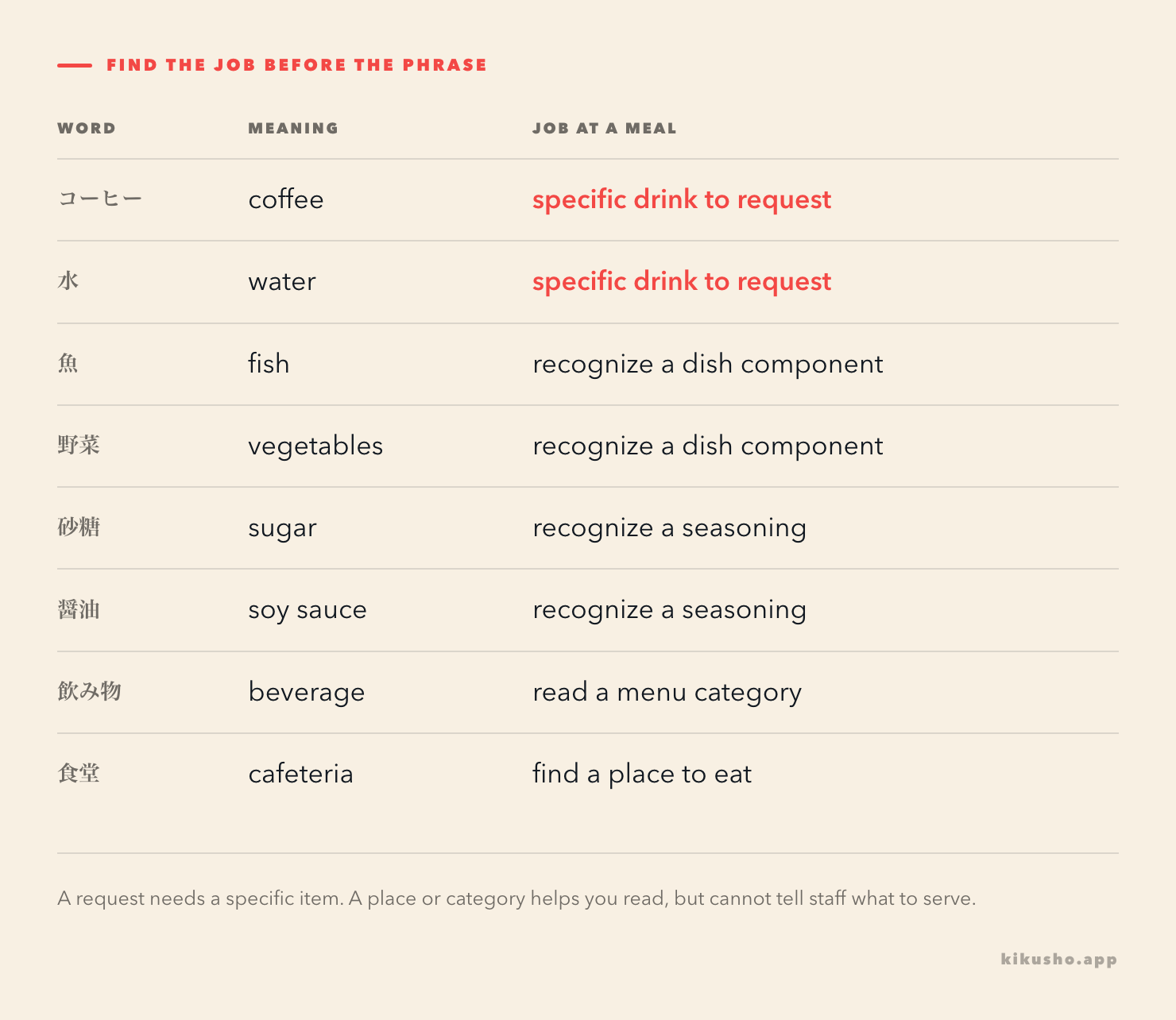
At a counter, コーヒー、お願いします works when coffee is offered. In the Irodori restaurant dialogue, customers use [menu item]、お願いします for their order and お水、ください for water. お願いします and ください make short requests polite. You can use these whole patterns before learning every verb form, but the noun still needs to name the thing you want.
That is why 飲み物、お願いします is too broad if the staff needs to know which drink, while 食堂、お願いします names a place rather than an item. 食べ物 is the category “food”; 魚, 肉, 野菜 and パン are more specific, but a restaurant may offer them only as part of a named dish. Check the actual menu before ordering. The guide to reading a Japanese menu explains how a dish name, set meal and price give the rest of the information.
Tea and seasonings break the ordering shortcut
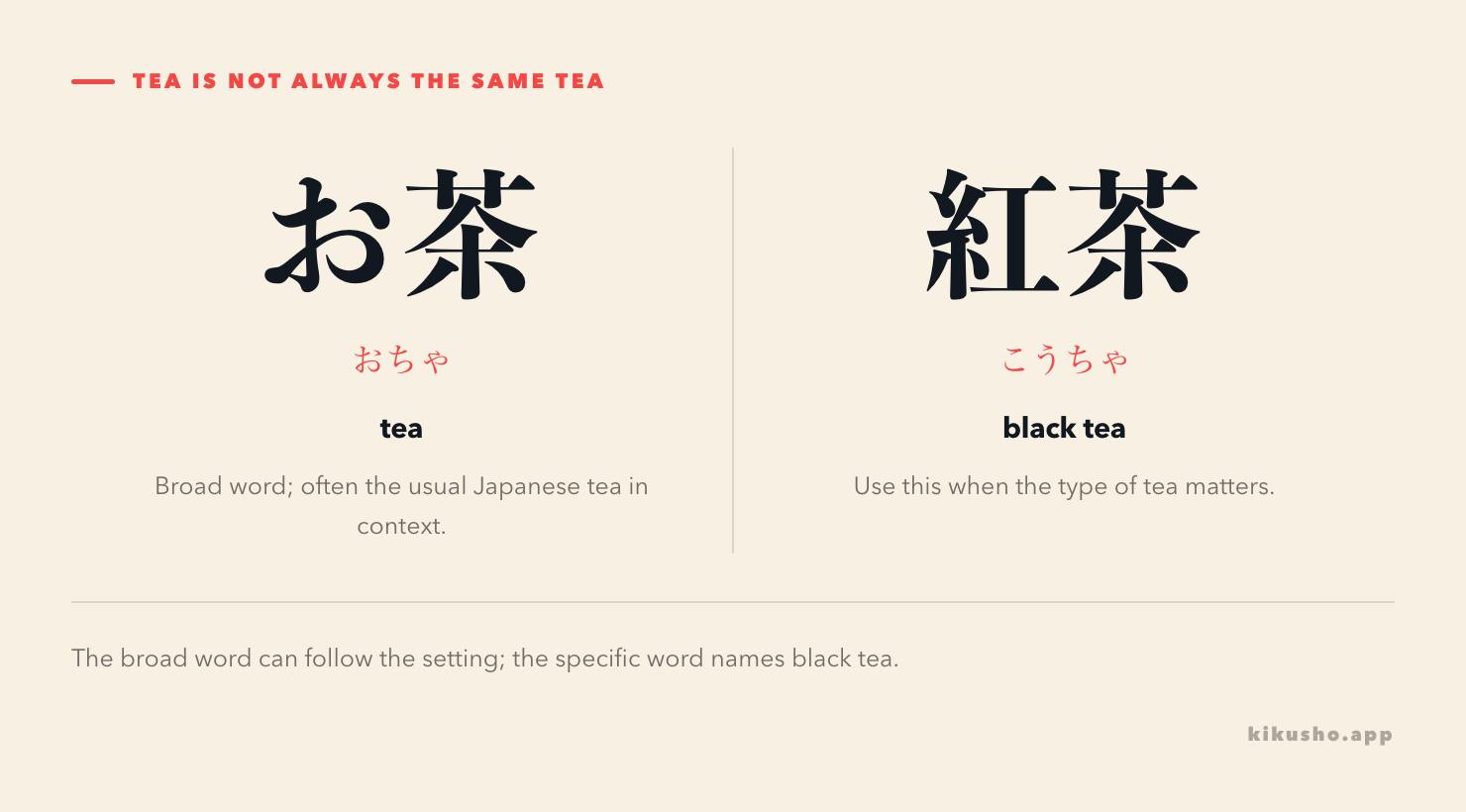
お茶(おちゃ) means tea and can be used broadly; in a particular setting it may refer to the usual Japanese tea. 紅茶(こうちゃ) specifically means black tea. The Japan Foundation's note on tea explains the broad and green-tea uses of お茶, while Kanji Pedia's 紅茶 entry confirms the black-tea sense. If you need a specific kind of tea, name it or ask what is available rather than assuming お茶 settles the choice.
砂糖, 塩 and 醤油 are seasonings, not meal names. Kanji Pedia's 調味料 entry groups sugar, salt and soy sauce as seasonings; the Japan Foundation's food worksheet pairs sugar with coffee. 醤油 is the assigned modern kanji spelling; しょうゆ is also commonly written in hiragana, while that dictionary prints the older 醬油 form. The university's しょうゆ example uses soy sauce with sashimi. Remember the reading しょうゆ independently of its spelling, and look for it as an ingredient or condiment.
Which words will help at the first meal
Start with a drink you can name, such as 水, お茶, 紅茶 or コーヒー. Then use 魚, 肉 and 野菜 to recognize what a dish contains. おいしい lets you describe a food after tasting it: このパンはおいしいです. 食堂 helps you identify where people eat; 食べ物 and 飲み物 help you sort what a menu lists. You can study the verbs in these phrases in the N5 everyday-verb lesson, especially 食べます and 飲みます.
Check yourself
Question 1: kanji reading. Write the reading of 紅茶 in hiragana. What kind of tea does it name?
Question 2: spelling. Which written word has the reading しょうゆ and means soy sauce?
- A. 砂糖
- B. 醤油
- C. 牛乳
- D. 食堂
Question 3: context. You want a drink that is available on the menu. Complete the short polite request for coffee: ___、お願いします.
Question 4: context. A sign says 食堂. Does it name a drink, a seasoning, or a place to eat? Explain your choice.
Question 5: paraphrase. A menu mentions 飲み物. Is that one particular beverage? Give two more specific drink words from this lesson.
Question 6: usage. You want to say “I put sugar in coffee.” Write a sentence using 砂糖, コーヒー, に, を and 入れます in the order that expresses that meaning.
Answers and explanations
Answer 1. こうちゃ, black tea. お茶(おちゃ) is the broader tea word; the two readings and meanings are not interchangeable.
Answer 2. B, 醤油(しょうゆ). 砂糖(さとう) is sugar, 牛乳(ぎゅうにゅう) is milk, and 食堂(しょくどう) is a dining hall or cafeteria. Each has a different reading and job.
Answer 3. コーヒー: コーヒー、お願いします. The drink is named before the polite request. It makes sense only if coffee is actually offered; 飲み物 alone would not identify which drink.
Answer 4. A place to eat. 食堂(しょくどう) can name a cafeteria, dining hall or simple eatery. A drink such as 紅茶 and a seasoning such as 塩 belong to different parts of the meal.
Answer 5. No. 飲み物(のみもの) is the category “drink” or “beverage.” 水 and 紅茶 are two more specific answers; お茶, 牛乳, コーヒー or お酒 also work. The category alone does not identify what to serve.
Answer 6. コーヒーに砂糖を入れます. に marks the coffee as the destination for the addition, and を marks the sugar as what is put in. Reversing the nouns would mean putting coffee into sugar.
When you see a menu, first decide whether a word names a drink, a dish component, a seasoning or the place. That distinction tells you which words can complete a request and which words help you read what is offered.
Common questions
Can I order every word in this list by saying it alone?
No. コーヒー or 水 can name a drink to request if it is available. 食堂 is a place, 食べ物 and 飲み物 are categories, and 砂糖, 塩 and 醤油 are seasonings. Check the menu, then request an actual item.
Does お茶 always mean green tea?
No. お茶 can mean tea broadly and may mean the ordinary Japanese tea in a particular setting. 紅茶(こうちゃ) specifically means black tea.
Is 醤油 an official JLPT N5 word?
There is no exhaustive official JLPT vocabulary list. Two descendants of one study-list family place 醤油(しょうゆ) at N5 and N2, so its everyday meaning is useful here without promising a particular exam level.