On this page
牛肉、豚肉、鶏肉 tell you which meat is in a dish; 甘い、辛い、薄い tell you what its flavour is like. Add 卵、バター、果物, and you have nine words that move from a supermarket label to a simple conversation about cooking.
These nine words turn broad food categories into useful details
The earlier lesson on Japanese food and drink words teaches broad categories such as 肉, 魚 and 野菜. This set begins one step later. It names three kinds of meat, three other ingredients, and three adjectives that describe taste.
The Kikusho reference inventory assigns nine spelling-and-reading records to this lesson. Its N5 placement comes from study lists, not an official test syllabus: the JLPT organizers say that vocabulary lists are no longer published. The Japan Foundation's Irodori contents guide independently uses 牛肉、豚肉、鶏肉、卵、甘い、辛い and 味が薄い in lessons about ingredients and taste. Japan's Agency for Cultural Affairs food vocabulary page confirms the everyday readings for the meat words, 卵 and 果物.
The set: readings, meanings and phrases
| Japanese and reading | Word type and core meaning | A useful phrase |
|---|---|---|
| 甘い(あまい) | い-adjective; sweet | このケーキは甘いです (this cake is sweet) |
| 薄い(うすい) | い-adjective; thin, light or weak | このスープは味が薄いです (this soup has a light flavour) |
| 辛い(からい) | い-adjective; spicy, hot or pungent | このカレーは辛いです (this curry is spicy) |
| 牛肉(ぎゅうにく) | noun; beef | 牛肉を使います (I use beef) |
| 果物(くだもの) | noun; fruit | 果物を食べます (I eat fruit) |
| 卵(たまご) | noun; egg | 卵を二つ買います (I buy two eggs) |
| 鶏肉(とりにく) | noun; chicken meat | 鶏肉を入れます (I add chicken) |
| バター(ばたー) | noun; butter | パンにバターをぬります (I spread butter on bread) |
| 豚肉(ぶたにく) | noun; pork | 豚肉を買います (I buy pork) |
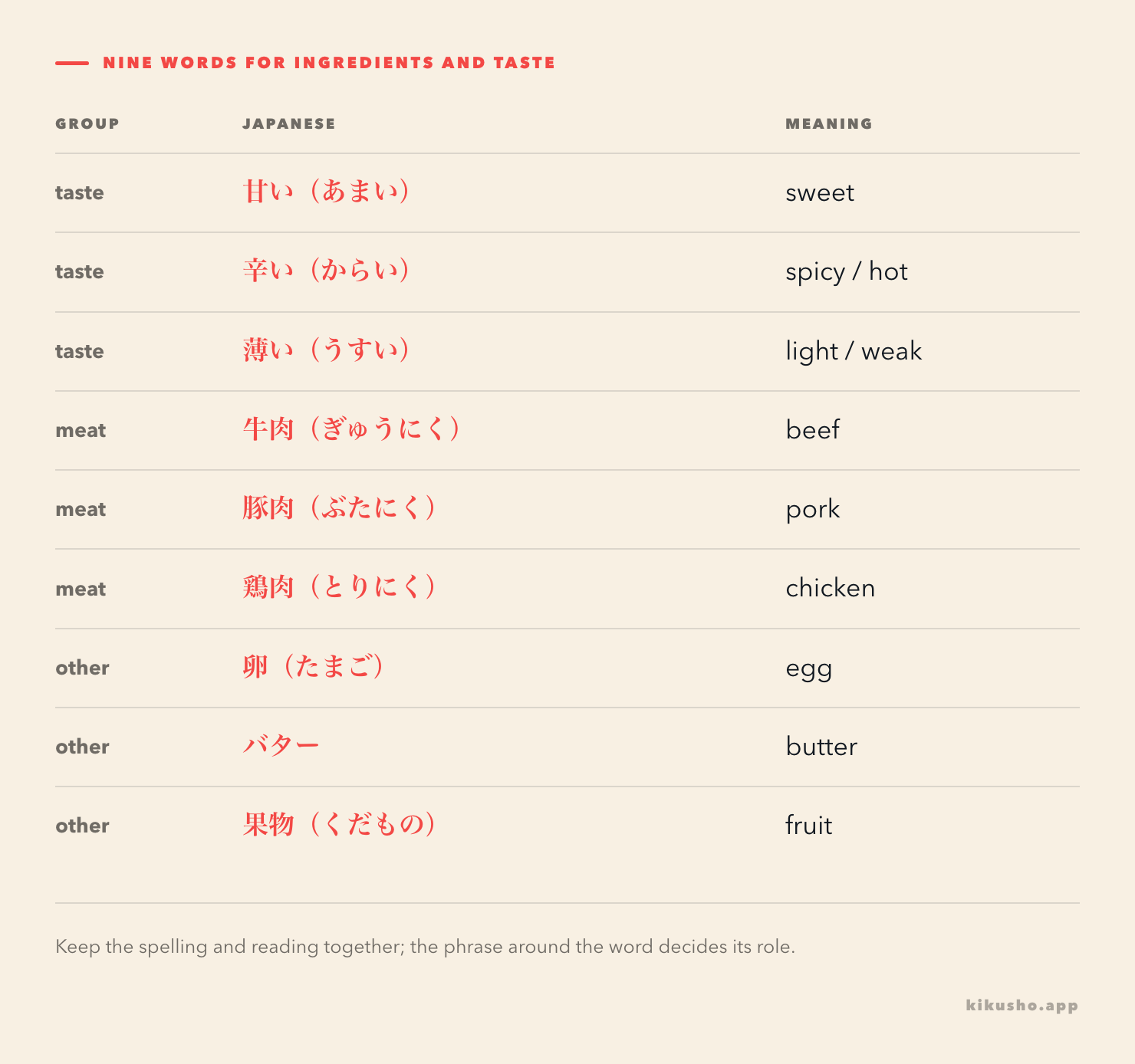
The table keeps the spelling and reading together. バター normally stays in katakana; the hiragana ばたー is a reading aid, not the spelling you should choose on a label. 果物 can refer to fruit as a category, so Japanese does not need a separate plural form in 果物を食べます.
Animal plus 肉 gives three specific ingredients
You already know 肉(にく), “meat.” Put the animal before it and the category becomes specific:
- 牛肉(ぎゅうにく): beef
- 豚肉(ぶたにく): pork
- 鶏肉(とりにく): chicken meat
The pattern is visible even though the first kanji does not use one uniform kind of reading. Learn each whole word rather than trying to pronounce the animal from shape alone. The Agency for Cultural Affairs guide prints the group as (牛・豚・鶏)肉 with the readings ぎゅう・ぶた・とり + にく. Irodori also uses 鶏肉とか、エビとか、きのことかが入ってます, a natural ingredient answer meaning that it contains things such as chicken, shrimp and mushrooms.
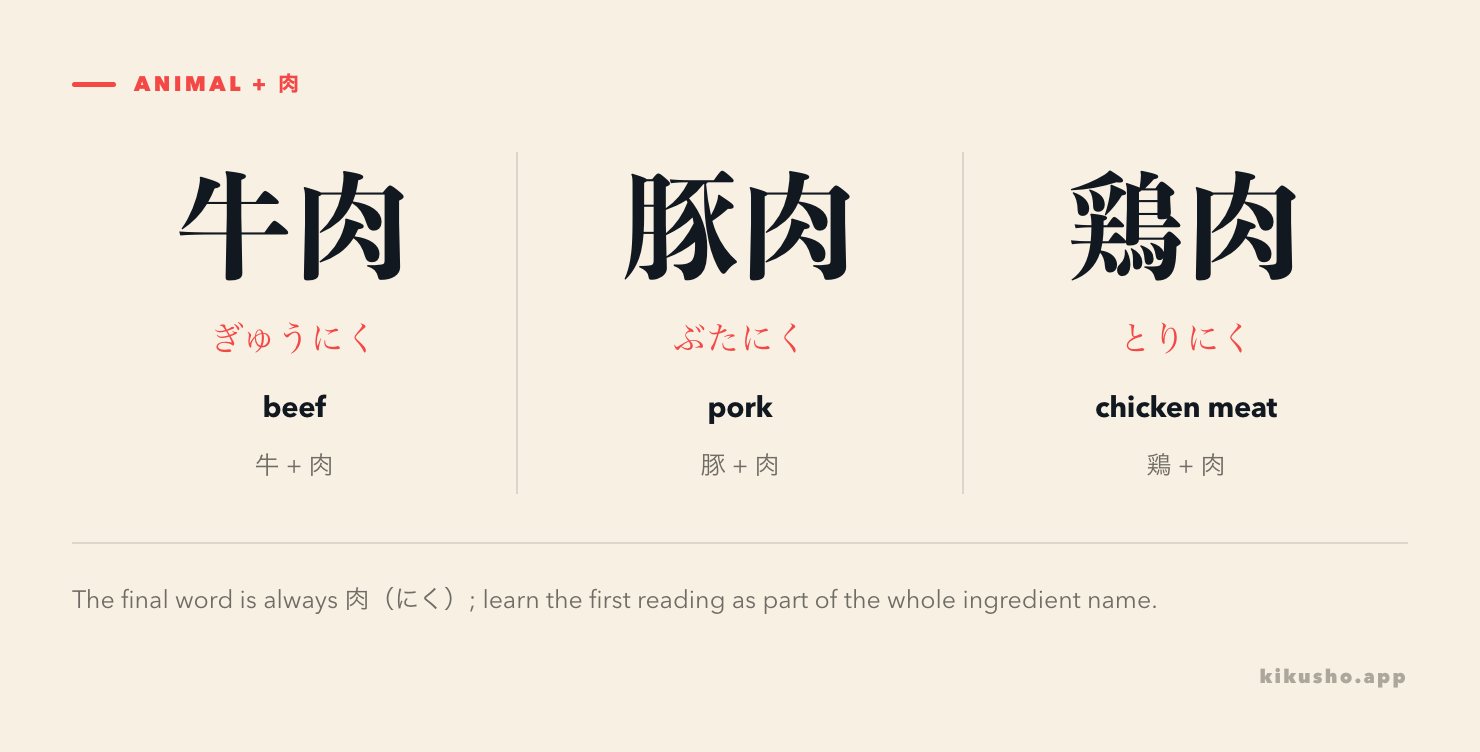
On a packet or menu, 牛肉のカレー, 豚肉のカレー and 鶏肉のカレー identify the ingredient before the dish. In a sentence, を marks what you buy or use: 牛肉を買います and 鶏肉を使います. The N5 everyday verb lesson gives the larger patterns for 買う, 使う and 作る.
Sweet, spicy and light measure different things
The three adjectives do not form a single scale. 甘い describes sweetness, 辛い describes a strong spicy or pungent sensation in the examples here, and 薄い describes low strength or concentration. A curry can be both 甘い and 辛い. A soup can have plenty of ingredients while its 味が薄い.
Kanji Pedia defines 甘い first through a sugary taste, while also recording non-food senses such as lenient. Its entry for 薄い covers physical thinness as well as a light colour or flavour. That is why 薄いパン describes thin bread, but 味が薄いスープ describes mildly flavoured soup. It is not automatically a complaint that the food is bad.
The same spelling 辛い hides two readings. In このカレーは辛いです, read it からい: the からい dictionary entry gives the tongue-stimulating food sense. つらい means painful, distressing or hard. A separately published N3 list matched the headword 辛い through つらい, so the curriculum records a level disagreement; that match does not change the reading or food sense taught here.
Egg, butter and fruit behave as ingredients, not dish names
卵, バター and 果物 can appear inside a dish, but they do not tell you how it was prepared. 卵の料理 means an egg dish; 卵を使います says that you use egg. パンにバターをぬります describes an action with butter. 果物は甘いです makes a general statement about fruit, while この果物は甘いです describes the fruit in front of you.
This noun role matters when you read a menu. A label containing 卵 tells you an ingredient; it does not promise an omelette. The full dish name supplies the missing information. The lesson on 料理 and other する nouns explains why 料理 can mean a prepared dish while 料理します means to cook.
Three short exchanges make the set usable
Ingredient words answer 何が入っていますか, “What is in it?” A simple reply is 牛肉と卵が入っています, “It contains beef and egg.” When the broad word 肉 is already visible, 何の肉ですか, “What kind of meat is it?” can lead to 豚肉です or 鶏肉です.
Taste words answer a different question: 味はどうですか, “How does it taste?” The answer may be 甘いです, 辛いです, or 味が薄いです. Keeping the noun and adjective roles separate stops a common beginner error: 辛い describes the dish, while 鶏肉 names what is in it. Irodori's ingredient-and-taste unit builds its activities around these same jobs: identifying what a dish contains and commenting on its flavour.
A curry packet can place 牛肉 and 辛い in the same small block of text. In Kikusho, you can photograph that label, highlight up to five expressions, check each generated card, and keep the example that preserves the food context. Saving このカレーは辛い protects the reading からい better than saving the kanji alone.
Check the words in context
Question 1: reading. Supply the hiragana for 牛肉, then identify the ingredient in English.
Question 2: orthography. Which spelling matches とりにく, “chicken meat”?
- ア. 牛肉
- イ. 鶏肉
- ウ. 豚肉
- エ. 果物
Question 3: context. The soup needs more seasoning because its flavour is weak. Complete the sentence: このスープは味が___です.
- ア. 甘い
- イ. 辛い
- ウ. 薄い
- エ. 鶏肉
Question 4: paraphrase. Which English sentence best matches この果物は甘いです?
- ア. This fruit is sweet.
- イ. This butter is spicy.
- ウ. This meat is thin.
- エ. This egg is mild.
Question 5: context. You want to buy pork. Complete ___を買います.
- ア. 牛肉
- イ. 卵
- ウ. 豚肉
- エ. バター
Question 6: reading and sense. In このカレーは辛いです, how do you read 辛い, and what does it mean here?
Answers and explanations
Answer 1. ぎゅうにく, beef. 牛 supplies ぎゅう in this compound, followed by 肉(にく).
Answer 2. イ. 鶏肉. The assigned everyday reading is とりにく. 牛肉 is beef, 豚肉 is pork, and 果物 is fruit.
Answer 3. ウ. 薄い. 味が薄い says that the flavour is light or weak. 甘い and 辛い name particular taste qualities, while 鶏肉 is a noun.
Answer 4. ア. This fruit is sweet. この means “this,” 果物 means fruit, and 甘い means sweet in this food context.
Answer 5. ウ. 豚肉. 豚肉を買います means “I buy pork.” The other choices name beef, egg and butter.
Answer 6. Read it からい; here it means spicy or hot in flavour. つらい uses the same spelling for a different word meaning painful or hard, but the curry context selects からい.
Common questions
What is the difference between 肉, 牛肉, 豚肉 and 鶏肉?
肉(にく)is the broad word for meat. 牛肉(ぎゅうにく)specifies beef, 豚肉(ぶたにく)specifies pork, and 鶏肉(とりにく)specifies chicken meat. The animal name comes before 肉.
How do I read 辛い when it describes food?
Read it からい when it means spicy, hot or pungent in a food context, as in このカレーは辛いです. The reading つらい means painful or hard and is a separate word written with the same kanji.
Does 薄い mean that food tastes bad?
No. 味が薄い means the flavour is light, mild or weakly seasoned. It describes strength rather than quality, so mild soup can still be good.
Are these officially designated JLPT N5 words?
The JLPT does not publish an exhaustive official vocabulary list. Kikusho's dated reference inventory places these spelling-and-reading entries at N5 from study-list evidence and records disagreements instead of presenting the placement as an official syllabus.